How to choose between traditional residential rentals and Disney-area vacation homes for maximum ROI
So you're thinking about buying an Orlando investment property—smart move! Central Florida's booming population, year-round tourism, and strong job market make it one of the hottest real estate investment markets in the country. But here's where it gets interesting: unlike most cities, Orlando offers two completely different investment strategies that attract very different types of investors.
On one side, you've got the traditional long-term rental game—buying a home in a residential neighborhood and leasing it to families or young professionals for a year or more. On the other, there's the short-term vacation rental hustle—purchasing a property near Walt Disney World or Universal and renting it out nightly on Airbnb or Vrbo to tourists. Both can be incredibly profitable, but they're fundamentally different businesses with different rules, returns, and headaches.
Let's break down everything you need to know about both strategies so you can decide which Orlando investment property path makes sense for you. Whether you're a hands-off investor seeking steady cash flow or an active operator chasing higher returns, we've got you covered.
Understanding Orlando's Unique Investment Landscape
First, let's acknowledge what makes Orlando special in the investment world. Most cities offer either strong residential rental markets or decent vacation rental opportunities. Orlando? We've got both in spades, and that's not an accident.
The residential rental market is booming thanks to Orlando's explosive population growth—we're adding about 1,000 new residents every week. Companies like Amazon, KPMG, and countless tech startups are bringing thousands of jobs to Central Florida, and these new residents need places to live. Areas like Lake Nona, Winter Park, and Baldwin Park are seeing strong demand for quality long-term rentals.
Meanwhile, Orlando's tourism industry—anchored by Disney World, Universal Orlando, and SeaWorld—pulls in over 75 million visitors annually. That's a lot of people who need somewhere to stay, and increasingly, they're choosing vacation rentals over hotels for the space, amenities, and value. The catch? These properties must be in designated short-term rental zones to operate legally.
The Critical Zoning Difference
Here's the thing most new investors miss: you can't just buy any house in Orlando and turn it into a vacation rental. Orange County (where Orlando proper sits) has strict zoning that prohibits short-term rentals in most residential neighborhoods. The county wants to preserve the character of traditional neighborhoods and prevent them from turning into de facto hotel districts.
Short-term vacation rentals are primarily permitted in specific areas of Kissimmee and unincorporated Osceola County, where proximity to Walt Disney World makes the vacation rental model the norm rather than the exception. Communities like Champions Gate, Reunion, Davenport, and Windsor at Westside were purpose-built with vacation rentals in mind.
This zoning reality is the single biggest factor that determines your investment strategy before you even start looking at properties. It's not about which model is "better"—it's about which model is legal for the property you're considering.
Long-Term Residential Rentals: The Steady Income Play
Let's start with the more traditional investment: long-term residential rental properties. These are your bread-and-butter rentals—single-family homes, townhouses, or condos leased to individuals or families for six months, a year, or longer.
Where to Buy Long-Term Rentals
For long-term rentals, you want to focus on areas with strong job growth, good schools, and solid infrastructure. Think about where people actually want to live, not where tourists want to visit. Popular neighborhoods for long-term investment properties include:
- East Orlando: Near UCF and the growing research park area, attracting young professionals and graduate students
- South Orlando: Hunter's Creek, Meadow Woods—family-oriented communities with reasonable price points
- Lake Nona: Higher-end rentals in this master-planned medical city attract healthcare professionals and executives
- Winter Park Area: Premium rentals for professionals who want that upscale Orlando lifestyle
- Seminole County: Lake Mary, Oviedo, Winter Springs—excellent schools drive strong rental demand from families
The Numbers: What to Expect
A typical long-term rental property in the Orlando metro area might look like this (numbers vary widely by neighborhood and property quality):
- Purchase Price: $250,000 - $400,000
- Monthly Rent: $1,500 - $2,500
- Annual Gross Income: $18,000 - $30,000
- Expenses (property tax, insurance, HOA, maintenance): $5,000 - $8,000 annually
- Net Operating Income: $13,000 - $22,000 (before mortgage)
The cash-on-cash return typically ranges from 6-10% annually, assuming you put 20-25% down. Not sexy numbers compared to vacation rentals, but here's what makes them attractive...
Pros of Long-Term Residential Rentals
- Steady, predictable income: One tenant, one lease, 12 months of consistent rent
- Lower management intensity: After the initial setup, these mostly run on autopilot
- Fewer regulations: No special licenses required in most areas
- Lower operating costs: Tenant pays utilities; you're not furnishing or constantly cleaning
- Easier financing: Traditional mortgages with better rates and terms
- Lower insurance costs: Standard homeowner policies work fine
- Longer tenant relationships: Good tenants often stay for years, reducing turnover costs
- Appreciation potential: Properties in residential neighborhoods typically appreciate steadily
Cons of Long-Term Residential Rentals
- Lower gross returns: You're typically looking at 6-10% cash-on-cash vs. potentially double that with vacation rentals
- Tenant dependency: One bad tenant or extended vacancy hits hard
- Longer eviction process: If you need to remove a problem tenant, Florida's eviction process takes 2-3 months minimum
- Wear and tear: Some tenants treat properties better than others (hopefully yours are in the former category!)
- Limited tax deductions: You miss out on some of the aggressive write-offs available to vacation rental operators
Short-Term Vacation Rentals: The High-Octane Strategy
Now let's talk about the sexy cousin: short-term vacation rentals. These are fully furnished properties near the theme parks, rented out nightly or weekly primarily to tourists. Think Airbnb and Vrbo meets Mickey Mouse.
Where to Buy Vacation Rentals
Location is everything for vacation rentals. Specifically, you want to be within 15 minutes of Disney World's main entrance. The closer you are, the higher your occupancy rates and nightly prices. Top areas include:
- Champions Gate: Golf course community with large homes, 10 minutes to Disney
- Reunion: Luxury resort community with three golf courses, water park, and resort amenities
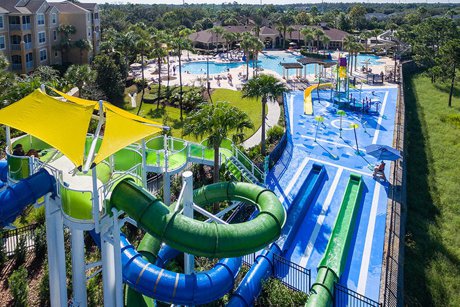
- Windsor at Westside: Family-friendly community with a clubhouse that has lazy rivers and water slides
- Solara Resort: Newer development with amazing clubhouse facilities
- Davenport: More affordable entry point, still close to parks
- West Kissimmee: Variety of communities at different price points
Notice what's not on this list? Pretty much anywhere in Orlando proper. Most vacation rental communities are in unincorporated Osceola County or Kissimmee, where short-term rentals are specifically permitted.
The Numbers: What to Expect
A typical vacation rental property in the Disney area might look like this:
- Purchase Price: $350,000 - $600,000 (larger homes with pools)
- Annual Gross Income: $40,000 - $80,000+ (highly variable based on occupancy)
- Operating Expenses: $15,000 - $25,000 annually
- Property management (20-30% of gross income)
- Utilities (you pay all of them)
- Pool maintenance
- Higher insurance
- Property taxes
- HOA fees
- Repairs and maintenance (more frequent than long-term)
- Furnishings and replacements
- Linens, cleaning supplies, welcome baskets
- Net Operating Income: $25,000 - $55,000 (before mortgage)
Cash-on-cash returns can range from 10-20%+ in good years, but these are more variable than long-term rentals. A bad year or poor management can quickly turn positive cash flow negative.
Pros of Short-Term Vacation Rentals
- Higher income potential: Gross income can be 2-3x what you'd get from long-term rentals
- You can use it: Block out weeks for personal use (though this impacts revenue)
- Aggressive tax deductions: Everything from pool toys to Disney tickets can potentially be deducted
- Depreciation benefits: Can depreciate furnishings over 5 years instead of 27.5 for the property
- Flexibility: Can adjust pricing dynamically based on demand
- Less tenant dependency: Hundreds of short stays vs. one long-term tenant means diversified risk
- Property condition: Professional cleaning after every stay means issues get caught quickly
Cons of Short-Term Vacation Rentals
- High management intensity: Bookings, guest communication, maintenance, cleaning coordination—it never stops
- Variable income: Busy season (holidays, summer) is great; off-season can be rough
- Higher operating costs: Everything costs more—insurance, utilities, management, maintenance
- More regulations: License requirements, tax collection, inspections in some jurisdictions
- Harder financing: Many lenders require 20-30% down for vacation rental properties
- Competition: Thousands of similar properties competing for bookings
- Wear and tear: Different guests every few days means more maintenance and replacement costs
- Economic sensitivity: During recessions or events like COVID-19, tourism tanks and so does your income
What the Experts Won't Always Tell You
Now for some real talk from our experience working with investors in both markets...
About Vacation Rental Management Companies
Most vacation rental investors use property management companies because running a vacation rental remotely is basically impossible. These companies charge 20-30% of your gross revenue, which sounds steep—but here's what they actually do: handle all bookings, coordinate cleaning between guests, arrange maintenance, respond to guest issues 24/7, restock supplies, and manage your listing across multiple platforms.
The quality of management companies varies wildly. Some are fantastic, treating your property like their own and maximizing your revenue. Others are glorified answering services that do the bare minimum. Do your homework, check references, and ideally visit their other properties before signing.
The Hidden Cost of Furnishing
When buying a vacation rental, budget an additional $30,000-$50,000+ for furniture, appliances, kitchenware, linens, pool equipment, games, and decorations. Yes, really. Guests expect fully equipped homes with comfortable beds, plenty of dishes, pool floaties, games, and themed rooms. Cheap out on furnishings and watch your reviews (and bookings) tank.
Plus, furniture takes a beating. Expect to replace sofas every 3-5 years, mattresses every 5-7 years, and small appliances even more frequently.
About Long-Term Rental Management
Many long-term rental owners self-manage because it's relatively simple: find a tenant, collect rent, handle occasional maintenance. Property management companies for long-term rentals typically charge 8-10% of monthly rent. Whether you need management depends on whether you live nearby and have the time and temperament to handle tenant calls, showings, and occasional middle-of-the-night emergencies.
The Bottom Line: Which Strategy Is Right for You?
Here's our take after helping hundreds of investors navigate Orlando's rental property market: there's no universal "best" choice—it genuinely depends on your situation, goals, and personality.
Choose long-term residential rentals if you:
- Want steady, predictable income with minimal management hassle
- Prefer lower risk and can accept lower returns
- Are investing for long-term wealth building and appreciation
- Don't have time to actively manage a property
- Prefer investing in growing residential areas rather than tourist zones
- Want simpler financing with lower down payments
Choose short-term vacation rentals if you:
- Want maximum income potential and are willing to work for it
- Can handle income variability and higher risk
- Have capital for higher down payments and furnishing costs
- Either enjoy active management or can afford quality management companies
- Want to occasionally use the property yourself
- Understand and can navigate the more complex regulatory environment
The beauty of the Orlando market? You can actually do both. Many savvy investors build portfolios with a mix of stable long-term rentals providing base income and vacation rentals offering higher returns but requiring more attention. Diversification isn't just for stock portfolios!
And remember: successful real estate investing in Orlando isn't just about picking the right strategy—it's about buying the right property in the right location at the right price. That's where our local expertise comes in handy. We know which neighborhoods are trending up, which vacation rental communities are oversaturated, and where the smart money is investing right now.
For comprehensive information about property taxes, zoning regulations, and property records in the Orlando area, visit the Orange County Property Appraiser and Osceola County Property Appraiser websites. For vacation rental licensing requirements, check the Osceola County official regulations.
Ready to explore Orlando investment properties? Whether you're interested in long-term residential rentals or short-term vacation properties, we can help you find the right opportunity. Check out our Best Places to Live in Orlando guide for residential investment areas, or explore vacation rental hotspots like Champions Gate and Reunion. Contact us for personalized investment property guidance tailored to your goals and budget!