Orlando's Four Counties Compared: Orange, Seminole, Osceola & Lake
Picking where to live in metro Orlando starts with picking a county. Here's the honest breakdown.
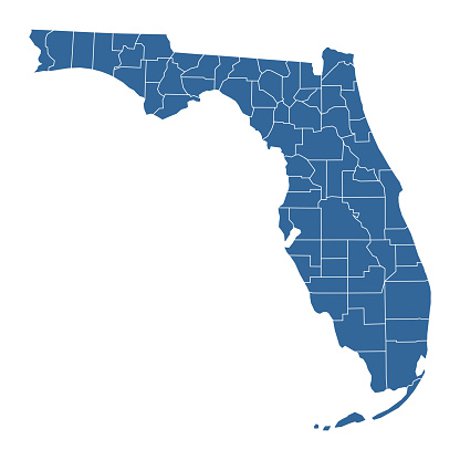
Metro Orlando is made up of four counties—Orange, Osceola, Seminole, and Lake—home to roughly 2.9 million residents combined as of mid-2024. Orange County is the largest and most expensive, with an early-2026 median sale price near $429,000, while Lake County is the most affordable at about $365,000. Orange, Seminole, and Lake each earned an "A" district grade in Florida's 2024-25 school report, while Osceola earned a "B." Osceola (about 4.7% growth in 2023-24) and Lake (about 4.1%) are the fastest-growing of the four, as buyers move outward chasing lower costs.
Here's something people moving to "Orlando" usually don't realize: there is no County of Orlando. The metro area is actually four counties stitched together, and the county line you land on quietly decides your property tax bill, which public schools your kids are zoned for, who picks up your trash, and how long you'll sit on the highway every morning.
The official Orlando-Kissimmee-Sanford metro stretches across Orange, Osceola, Seminole, and Lake counties—about 2.9 million people as of mid-2024 and, by the numbers, one of the fastest-growing big regions in the country. Before you fall in love with a listing, it's worth understanding the four very different places those listings sit in. (For the wider lay of the land, our guide to the geography of Orlando pairs well with this one.)
Let's be real about one thing up front: there is no "best" county here. There's only the best fit for your budget, your commute, and your priorities. Here's how the four stack up.
The Four Counties at a Glance
The modern county map dates back well over a century—Osceola, for instance, was carved out of Orange and Brevard in 1887. Today the rough mental model looks like this: Orange County is the dense, job-rich core; Seminole County is the established suburban north; Osceola County is the fast-growing, tourism-shaped south; and Lake County is the hillier, lake-dotted west.
One pattern explains a lot of recent Central Florida real estate: roughly two-thirds of the metro's net migration since 2020 has landed in Lake or Osceola—the two more affordable counties—even though they hold only about a third of the population. Orange and Seminole have actually seen residents move out to those cheaper neighbors. Affordability is steering the whole region.
Orange County: The Center of Gravity
This is the big one—home to Downtown Orlando, the theme parks, the airport, most of the region's jobs, and over 1.4 million residents. It's also the most varied: you can buy a modest starter home or a lakefront estate in Winter Park, raise a family in the master-planned Lake Nona area, or land somewhere in between.
Orange schools earned an "A" district grade for a second straight year. The trade-offs are real, though: the early-2026 median sale price sat near $429,000—the highest of the four—and Orange owns the region's worst traffic. That headline price is also misleading, because Orange spans both luxury enclaves and budget-friendly neighborhoods; the county "median" is almost meaningless until you zoom into a specific area.
Seminole County: Established Suburbia
North of Orange sits the metro's most mature suburban county, anchored by cities like Lake Mary, Sanford, and Altamonte Springs. Seminole is the family-and-commuter county: an "A" school district known for strong STEM and advanced coursework, walkable established neighborhoods, and access to both I-4 and SunRail for getting into Orlando.
The catch is that Seminole is largely built out, so there's less new construction and inventory than down south. Its early-2026 median ran around $395,000. Notably, Seminole's growth has slowed to a crawl (just over 1% in 2023-24)—and it's been losing residents to cheaper counties—precisely because that established, land-scarce character keeps prices firm.
Osceola County: The Growth Frontier
South and southeast of Orange, Osceola is where Central Florida is expanding fastest—about 4.7% in a single year. It's anchored by Kissimmee and Disney-adjacent Celebration, with St. Cloud and Poinciana adding fast-growing options, and the tourism-heavy US-192 corridor running through it.
For buyers, the appeal is straightforward: lots of new construction and an early-2026 median near $385,000. Osceola's district carries a "B" grade, but that number undersells the trajectory—the district just posted a record share of graduates earning college or career credits. The honest cautions are tourism-driven traffic and infrastructure that's racing to keep up with all those new rooftops.
Lake County: Hills, Lakes & Small Towns
To the west, Lake County offers something genuinely rare in Florida: rolling hills. Add hundreds of namesake lakes, historic small towns like Mount Dora, the booming city of Clermont, and a deep bench of 55-plus communities, and you get a different pace of life entirely.
Lake quietly earned an "A" district grade in 2024-25 (up from a B the year before) and posts the metro's most affordable median—around $365,000. It's also the second-fastest-growing county, at roughly 4.1%. The honest trade-off is distance: from much of Lake County, the drive to Orlando-area job centers is the longest of the four, so the savings can come back as windshield time.
How to Actually Choose
Stack the four up and a few cross-cutting truths emerge. On price, the early-2026 order runs Lake (about $365K) below Osceola (about $385K), then Seminole (about $395K), with Orange highest (about $429K)—but the spread within any single county dwarfs the gaps between them, so a county median is a starting hint, not an answer. Our honest look at Orlando's cost of living goes deeper.
On schools, three of the four are "A" districts and Osceola is a "B" that's climbing—but because county lines are also school-district lines, your zoned school matters far more than the countywide letter. The four school districts compared breaks this down, and you can verify any school's grade through the Florida Department of Education.
On commute, geography rules: Orange is closest to the jobs but slammed with traffic, Seminole has the best transit options, Osceola depends on which end you're on, and Lake usually means the longest haul—often down Interstate 4. On taxes, all four enjoy Florida's lack of a state income tax and the same homestead exemption; property-tax millage differs only modestly between them (see our property tax and homestead guide).
What the Neighbors Know
The four-county picture sorts out pretty cleanly once you know your priorities. Want the most jobs, amenities, and variety, and can stomach the traffic and price? Orange. Want established A-rated schools and the easiest commute into the city? Seminole. Want a new build and more house for the money? Osceola. Want hills, lakes, small-town charm, and the lowest prices—and don't mind a longer drive? Lake.
Just remember the one rule that trips up newcomers: the county line is a tiebreaker, not a destiny. Every one of these counties contains both bargains and splurges, quiet cul-de-sacs and busy corridors, so the smart move is to pick your top two or three on paper, then test-drive specific neighborhoods inside them. That's where the real differences live. 🏡
For official county services, tax, and government information, visit Orange County, Osceola County, Seminole County, and Lake County directly. Regional growth data referenced here comes from the Orlando Economic Partnership.
Trying to decide which corner of metro Orlando fits you best? Browse homes by county—Orange, Seminole, Osceola, and Lake—or contact us for personalized relocation advice tailored to your budget and commute!