Gatorland: Hunter's Creek's Iconic Wildlife Attraction and Living Piece of Florida History
From its legendary gator-mouth entrance to zip lines soaring over crocodiles, Gatorland has been Central Florida's wild heart since 1949
Gatorland is a 110-acre wildlife theme park and preserve located at 14501 S. Orange Blossom Trail in south Orlando, immediately north of the Hunter's Creek community. Founded in 1949 by Owen Godwin and still family-owned, it is one of Central Florida's oldest continuously operating attractions. Gatorland houses thousands of alligators and crocodiles, including four rare leucistic "white" alligators, along with a free-flight aviary, petting zoo, natural breeding marsh, and live shows. The park is open daily from 10 AM to 5 PM; standard adult general admission is approximately $29, with Florida resident discounts available at the gate. The Screamin' Gator Zip Line spans 1,200 feet from towers standing over seven stories tall above the animal habitats.
Here's something that surprises relocators scoping out south Orlando: Hunter's Creek has a theme park basically in its backyard. Not just any theme park — one that's been roaring since before Walt Disney World was even a glimmer in a Florida swamp. Gatorland, the self-proclaimed "Alligator Capital of the World," sits right on South Orange Blossom Trail just north of the Hunter's Creek subdivision, making it one of the most accessible major attractions to any Central Florida residential community.
While visitors from across the globe make pilgrimages to Gatorland, Hunter's Creek residents get to treat it like a neighborhood amenity — a wild, scaly, thoroughly Florida one. Let's dig into what makes this place so special and what it means to live this close to a living piece of state history.
Over 75 Years of "Old Florida" That Never Got Old
Gatorland opened in 1949, founded by Owen Godwin, who started with a modest collection of alligators along the old Orange Blossom Trail highway corridor. Long before Universal Studios, SeaWorld, and the Disney empire reshaped Central Florida, this was the kind of roadside attraction that defined the state's identity — a place where Florida's authentic wild side was the main event.
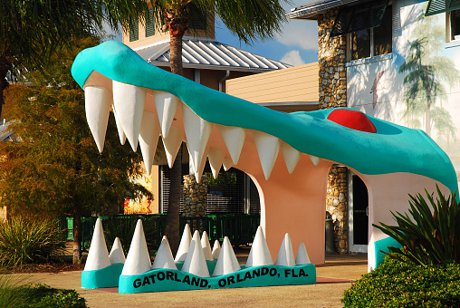
What's remarkable is that Gatorland is still family-owned and still very much itself. In a region where every square mile seems absorbed by corporate entertainment, that's genuinely rare. The park has grown from a simple alligator farm to a 110-acre wildlife preserve, but the "Old Florida" DNA runs through everything here — including the iconic concrete alligator mouth entrance you literally walk through, a landmark since the 1960s.
One Hollywood footnote worth knowing: Gatorland's natural alligator breeding marsh served as a filming location for Indiana Jones and the Temple of Doom in 1984. That marsh is still there, still full of gators, and still just as atmospheric.
What's Actually Inside (It's More Than Just Gators)
The name says "Gatorland" but this place has evolved into a full wildlife preserve. Yes, the alligators and crocodiles are the stars — we're talking thousands of them, ranging from hatchlings you can hold to 14-foot monsters that have been here for decades. Among the most extraordinary residents are four leucistic "white" alligators, a genetic rarity found at only a handful of facilities in the world.
Beyond the reptiles, the 110 acres hold a free-flight aviary with tropical birds including macaws and cockatoos, a petting zoo with tortoises, capybaras, and deer, the natural alligator breeding marsh with a boardwalk and observation tower, the Gator Gully Kids Splash Park (included with admission), a Flamingo Island habitat, and Pearl's Smokehouse — because of course there's food at an alligator park, and of course the menu is exactly what you're imagining.
The Live Shows
Three live shows are included with general admission: the Gator Jumparoo, where handlers coax massive gators to leap four to five feet out of the water for food; Alligators: Legends of the Swamp, an educational presentation with close-up animal interaction; and the Up-Close Encounter, featuring reptiles and other wildlife you wouldn't normally see this near. Plan at least 3–4 hours to catch shows, explore habitats, and do the place justice.
The Screamin' Gator Zip Line: Not for the Faint of Heart
Gatorland added a serious adrenaline element when it launched the Screamin' Gator Zip Line — a 1,200-foot zip line system launching from towers more than seven stories tall. You're not just soaring above the treetops; you're sailing directly over Cuban and Nile crocodiles and the alligator breeding marsh below. Multi-level launch pads extend the experience, and the views from the top are legitimately spectacular.
The zip line is a separate ticket add-on from general admission. For Hunter's Creek residents, this is the kind of thing you can realistically do on a Saturday afternoon without making a whole production of it — proximity has its privileges.
Tickets, Hours, and What Locals Actually Pay
Standard general admission runs approximately $29 for adults and $21 for children ages 3–12 (children under 3 are free). That's a bargain compared to any of the major theme parks nearby, and it's all-inclusive for general admission attractions and shows.
Here's the real insider tip: Florida residents can purchase discounted tickets at the gate with proof of a Florida ID — rates have run as low as $17.50 for adults during promotional periods. Annual passes are also available and make serious financial sense for Hunter's Creek residents who'll realistically visit multiple times a year. The park is open daily from 10 AM to 5 PM, including all holidays, with last admission at 4 PM. Weekday mornings are the quietest; April through May offers the added spectacle of alligator breeding season, when the marsh comes alive with courtship displays.
Gatorland also runs a conservation mission worth mentioning: the park regularly accepts nuisance alligators rescued by trappers — animals that would otherwise be euthanized for their hide and meat. Living near Gatorland means living near an active wildlife conservation operation, which adds a dimension to the place that most Central Florida attractions simply don't have. For more on the region's wildlife parks and recreation options, browse our SeaWorld Orlando guide and Kissimmee Lakefront Park guide.
What This Means for Hunter's Creek Residents
Hunter's Creek is a planned community of roughly 20,000 residents in south Orlando, bordered by Williamsburg to the north and Kissimmee to the south. Its position along SR 441 and SR 417 makes it one of south Orlando's most accessible communities — Orlando International Airport is about 10 minutes away, Walt Disney World roughly 15–20 minutes, and Dr. Phillips' Restaurant Row a short hop up the Florida Turnpike.
Gatorland sits immediately north of the Hunter's Creek subdivision — so close that Gatorland's own driving directions cite Hunter's Creek as the landmark before you arrive. For residents, that means spontaneous family outings, easy entertainment for visiting relatives, and a legitimate backyard bragging right. The Hunter's Creek Town Center and The Loop shopping center keep daily conveniences just as close as the gators.
What the Locals Know
Gatorland is one of those Central Florida institutions that tourists discover and residents take for granted — until they think about it from an outsider's perspective and realize how genuinely cool it is. Where else in the country do you have a 75-year-old, family-owned wildlife preserve with white alligators, a zip line over crocodiles, and a movie filming history literally steps from your neighborhood?
Buy the annual pass. Bring out-of-town guests here first. Let the kids feed a baby gator. And appreciate the fact that Hunter's Creek's most famous neighbor has been doing its own thing, on its own terms, since 1949 — and shows absolutely no signs of stopping. 🐊
For hours, special events, and current Florida resident discounts, visit the official Gatorland website before your visit.
Curious about living in south Orlando near Gatorland and all the area has to offer? Explore the Walt Disney World resident guide for another major neighbor, check out the Florida Turnpike guide for commuting context, or browse Kissimmee homes and surrounding communities to find your perfect Central Florida fit.