Kissimmee Prairie Preserve: Florida's Only International Dark Sky Park
Where the Milky Way is visible with the naked eye — and it's only a road trip away from Orlando
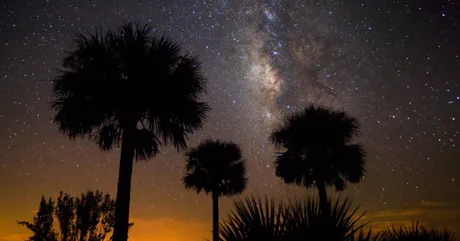
Kissimmee Prairie Preserve State Park is a 54,000-acre Florida state park located approximately 25 miles north of Okeechobee at 33104 NW 192nd Ave, Okeechobee, FL 34972. In 2016, it became Florida's first International Dark Sky Park as designated by the International Dark-Sky Association, and it remains one of only two such designations in Florida. The park is open daily from 8 a.m. until sunset with a $4 per vehicle entrance fee. Campers can stay overnight at the Kilpatrick Hammock Campground for $16 per night, with five dedicated astronomy pad sites available for stargazers. The park is roughly 90–100 miles south of Orlando — approximately a 1.5 to 2-hour drive from the metro area.
Here's something most Floridians don't know: you can see the Milky Way with your naked eye from inside this state — no telescope required. That fact alone makes Kissimmee Prairie Preserve State Park one of the most extraordinary natural assets in Central Florida, and yet it flies under the radar for most residents living in the Orlando metro.
We're talking about a place so far removed from light pollution that astronomers, astrophotographers, and stargazing enthusiasts drive hours just to set up camp here. For anyone living in communities like Horizon West, Dr. Phillips, or Kissimmee — this is the kind of weekend adventure that reminds you why you moved to Florida in the first place. Wide-open skies, complete silence, and more stars than you've probably ever seen in your life.
What Makes This Park So Special?
Kissimmee Prairie Preserve earned its status as Florida's first International Dark Sky Park in 2016 from the International Dark-Sky Association. It's one of only two such designations in all of Florida, and it's the only Florida State Park with this distinction.
The reason it qualifies is simple geography. At 54,000 acres in Okeechobee County — one of the least densely populated counties in the state — the preserve sits far enough from any major city to maintain truly dark skies. When you're in the campground, scenic vistas stretch uninterrupted for up to 8 miles with no buildings, no cell towers, and no sign of civilization. On a clear night near the new moon, the Milky Way appears as a glowing band arching across the sky. Visitors routinely capture it with nothing more than a smartphone on night mode.
Beyond the night skies, this is also the largest remaining tract of Florida dry prairie — an ecosystem that once covered millions of acres but now survives on only 9% of its original range. Part of the Everglades headwaters, shaped by cycles of flooding and fire, the park is home to 48 listed native species. It's a legitimately rare natural landscape that ecologists consider irreplaceable.
A Brief History: Cowboys, the Military, and Open Prairie
Long before this became a state park, it was Florida cattle country. Early pioneers inherited the sprawling herds left behind by Spanish explorers, driving cattle across these prairies to coastal ports and railroad depots. During World War I, the U.S. military acquired the land for training missions — traces of that era remain, including unexploded ordinances in restricted portions of the preserve. Over time, the state recognized the ecological importance of protecting one of Florida's last functioning dry prairie systems, and the International Dark-Sky designation in 2016 brought it the global attention it richly deserved.
Camping Here: What You Need to Know
Here's the important catch: Kissimmee Prairie Preserve closes 15 minutes after sunset. If you want to experience the night sky — which is the main event — camping is the only option for most visitors. Day-trippers are turned away at the gate after sundown.
The Kilpatrick Hammock Campground offers 35 family campsites with water and electricity, a spacious bathhouse with showers and laundry, and a canopy of live oak trees overhead. Nightly rates are $16 per site plus tax and a $6.70 nonrefundable reservation fee. Maximum RV length is 65 feet. Reserve up to 11 months in advance at the Florida State Parks website or call 800-326-3521.
For stargazers, the park offers a dedicated astronomy pad area with five tent sites positioned for open sightlines to the sky. After dark, only red-spectrum lights are allowed (red light doesn't disrupt night vision), and campfires are prohibited. You must arrive before sunset and check in with the ranger on duty.
For a more comfortable stay, glamping safari tents through Timberline Glamping offer A/C and heat, a Keurig, mini-fridge, hammocks, fire pit, and your choice of two queen beds or a king plus bunks. The park also maintains an equestrian campground with 10 sites featuring 50-amp electrical service, water, and individual paddocks.
Wildlife, Birding, and Daytime Adventures
Don't sleep on the daytime experience either. Kissimmee Prairie is a world-class birding destination, home to six federally threatened and endangered species. The Florida grasshopper sparrow is among North America's most endangered birds, while the crested caracara, burrowing owl, swallow-tailed kite, sandhill crane, and bald eagle all make regular appearances. Wild turkeys strut through the campground daily, and the "gator hole" along the trail is a reliable spot for alligator sightings.
The park claims the most butterfly diversity of any Florida state park, with spring and fall bringing wildflower blooms and migratory activity. Over 100 miles of dirt service roads wind through the preserve, open to hikers, cyclists, and equestrians. Ranger-led prairie buggy tours run on weekends from November through March — up to 8 passengers, two times a day — and come highly recommended by everyone who's taken one.
For more outdoor recreation ideas across the broader Central Florida region, check out our guides to Lake Apopka Wildlife Drive Florida resident information and Wekiwa Springs State Park Florida resident information — both excellent day trips from the Orlando suburbs.
Getting There: The Honest Logistics
Let's be real — this park is remote by design, and that remoteness is exactly what makes the dark skies possible. From Orlando, it's approximately 90–100 miles south, making it about a 1.5 to 2-hour drive. From Horizon West or Dr. Phillips, plan on roughly 1 hour 45 minutes via the Florida Turnpike or US 27 south.
The address is 33104 NW 192nd Ave, Okeechobee, FL 34972. The typical route: Florida Turnpike to Exit #193 at Yeehaw Junction, west on SR 60, south on US 441 for about 18 miles, west on County Road 724, then north on Peavine Trail for 5 miles to the park entrance. Once inside the gate, the campground is another 5 miles in on an unpaved road — check conditions before you go after heavy rain.
Critical prep before you leave civilization: fill your gas tank (the nearest station is 12 miles from the campground), stock up on supplies in Okeechobee (~25 miles) or Sebring (~48 miles), pack DEET insect repellent, bring red-spectrum flashlights for the astronomy pads, and expect very limited cell service throughout the park.
When to Go: Timing Your Visit
The single most important factor for stargazing? Moon phase. Plan around the new moon for the most dramatic views — a full moon will wash out the Milky Way. Most astronomy clubs and park rangers recommend checking lunar calendars before booking.
Seasonally, October through April is the sweet spot: comfortable temperatures, fewer afternoon thunderstorms, and significantly lower mosquito pressure. Florida summers are technically possible, but more than one camper has reported that even heavy-duty DEET couldn't keep them outside long enough to stargaze properly on summer nights. You've been warned.
One final bonus: rocket launches from Cape Canaveral are visible from the astronomy area on clear nights — a genuinely unique Florida experience, watching a rocket arc over dark prairie sky while the Milky Way glows overhead.
What the Locals Know
Kissimmee Prairie Preserve is not a casual Saturday afternoon outing — it's a destination you plan for and remember for years. The combination of a world-class dark sky designation, one of Florida's most intact ecosystems, exceptional birding, and genuinely remote camping makes it unlike anything else in the state.
For Central Florida residents — whether you're in Dr. Phillips, Horizon West, or anywhere else in the metro — this is the kind of place that resets your sense of perspective. When was the last time you saw the Milky Way? Out here, it's just a normal Tuesday night. 🌌
Go in fall or winter, book your astronomy pad well in advance, bring bug spray and a red flashlight, and leave your phone on airplane mode. The universe is putting on a show — and the ticket is just $4.
For current hours, campsite availability, and to make reservations, visit the official Kissimmee Prairie Preserve State Park page on the Florida State Parks website.
Thinking about making Central Florida your home base for adventures like this? Explore our Horizon West Parks guide and Dr. Phillips Parks guide to see what outdoor recreation looks like right in your backyard — or contact us for personalized relocation advice!