Everything Orlando residents need to know about taking the train
Before Brightline brought sleek high-speed rail to Central Florida, before I-95 became a parking lot, and long before budget airlines made flying routine, there was Amtrak. And guess what? Nearly a century after Orlando's beautiful Mission Revival train station opened in 1926, Amtrak is still here, still running, and still offering something no other transportation mode can match: the unhurried pleasure of watching America roll past your window while you relax in a reclining seat.
If you've only thought of Amtrak as a relic from a bygone era or something your grandparents used, it's time to reconsider. For Orlando residents, Amtrak provides direct connections to major East Coast cities – New York, Washington D.C., Philadelphia, Charleston, Savannah, Miami – without the stress of driving, the hassle of flying, or the cramped quarters of a bus. Plus, you get to ride in and out of one of Florida's most beautiful historic stations, located right in downtown Orlando.
Whether you're a current Central Florida resident curious about train travel, a prospective mover evaluating the region's connectivity, or someone who just wants to understand all your transportation options, here's everything you need to know about Amtrak service from Orlando.
The Orlando Amtrak Station: A Historic Gem
Let's start with the station itself, because it's genuinely special. The Orlando Health/Amtrak Station (officially named for its proximity to Orlando Health's main campus) is located at 1400 Sligh Boulevard, about one mile south of downtown's central business district. This isn't some utilitarian concrete box – it's a beautifully restored 1926 Mission Revival building complete with twin domed towers, a long shady arcade, and hand-designed signage that's survived nearly a century.
The Atlantic Coast Line Railroad built this station at a cost of $500,000 (equivalent to about $8 million today), and when it opened in January 1927, more than 6,000 visitors came to tour the new facility. That's how significant railroad travel was to Orlando's identity. The city designated it a historic landmark in 1978, and major restoration projects in 1990 and 2015 have kept this architectural treasure in excellent condition.
Today, the station serves both Amtrak's long-distance trains and SunRail, Central Florida's commuter rail system. The facility includes ticket windows, waiting areas, restrooms, free WiFi, vending machines, and a Hertz rental car desk (though staffing can be inconsistent). It's open daily from about 7:30 AM to 8:00 PM, with extended hours to accommodate late trains.
In fiscal year 2024, the Orlando station served 134,580 Amtrak passengers and generated over $13.4 million in ticket revenue, making it one of Amtrak's busier Florida stations.
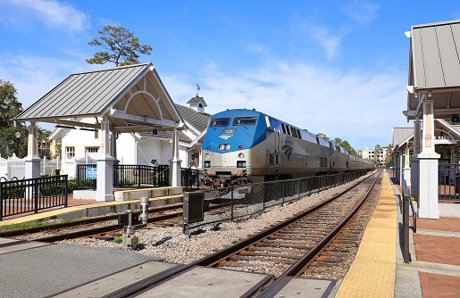
What Trains Serve Orlando?
Orlando is currently served by two daily Amtrak routes, both traveling the Eastern Seaboard:
The Silver Meteor (Trains 97/98)
This is the main train connecting Orlando to New York City and Miami. The Silver Meteor has been running since 1939, when it was introduced as the first diesel-powered streamliner between New York and Florida. It's one of Amtrak's iconic long-distance routes.
Northbound (Train 98): Departs Orlando around 10:07 AM daily, arriving New York Penn Station around 6:54 AM the next day (approximately 21 hours total). Stops include Jacksonville, Savannah, Charleston, Richmond, Washington D.C., Baltimore, Wilmington, Philadelphia, and New York.
Southbound (Train 97): Departs Orlando around 1:04 PM daily, arriving Miami around 6:59 PM the same evening (approximately 6 hours). Stops include Kissimmee, West Palm Beach, Fort Lauderdale, and Miami.
The Silver Meteor offers coach seats, business class (on some segments), and private sleeping rooms (roomettes, bedrooms, and accessible bedrooms). Sleeping car passengers get complimentary meals in the dining car with traditional dining service featuring seasonal menus. Coach passengers can purchase food from the café car.
The Floridian (Trains 40/41)
This is a newer route that launched in November 2024 as a temporary combination of the former Capitol Limited and Silver Star trains. The Floridian connects Orlando to Chicago via Washington D.C., providing one-seat service between the Midwest and Florida for the first time in decades.
Northbound (Train 40): Departs Orlando around 1:22 PM daily, arriving Chicago Union Station around 9:45 AM two days later (approximately 44 hours total). Stops include Kissimmee, Tampa, Jacksonville, Savannah, Washington D.C., Pittsburgh, Cleveland, and Chicago.
Southbound (Train 41): Departs Orlando around 6:34 PM daily, arriving Miami around 11:40 AM the next day. This train serves the Tampa route, making it the primary way to reach Tampa by train from Orlando (the other option is connecting motorcoach service).
The Floridian provides the same accommodations as the Silver Meteor: coach, sleeping rooms, traditional dining for sleeper passengers, and café service. This route is particularly popular with Midwest snowbirds heading to Florida for winter.
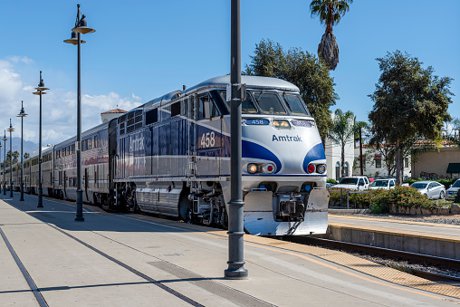
The Auto Train Connection (From Sanford)
While not technically an Orlando service, it's worth mentioning the Auto Train, which operates from Sanford (about 25 miles north of Orlando) to Lorton, Virginia (near Washington D.C.). This unique train lets you bring your car along, driving it onto the train at one end and off at the other.
The Auto Train is incredibly popular with snowbirds and anyone relocating between Florida and the Mid-Atlantic/Northeast. You avoid 900+ miles of driving but still have your car when you arrive. The train departs daily in each direction, with the journey taking about 17 hours overnight. All passengers must have a vehicle – you can't ride the Auto Train as a walk-on passenger.
If you live in north Orlando, Lake Mary, or Heathrow, the Sanford Auto Train station might be more convenient than the downtown Orlando station for certain trips.
Why Choose Amtrak Over Driving or Flying?
Let's be honest about what Amtrak offers and what it doesn't. It's not the fastest option – flying is quicker for long distances, and sometimes driving is too. It's not always the cheapest – though it can be competitive, especially for groups or sleeper accommodations. What Amtrak offers is a different travel experience altogether.
The Real Advantages:
- Space and Comfort: Coach seats are significantly wider and more spacious than airline seats, with ample legroom and no middle seats. You can walk around freely, stretch your legs, visit the café car, or just move to the lounge car for scenery viewing.
- Downtown to Downtown: Amtrak stations are typically located in city centers, not 30 miles out in the suburbs like most airports. From Orlando's station, you're minutes from downtown. From New York Penn Station, you're in Manhattan. No airport shuttles, no long drives.
- Scenery: Train tracks often follow coastlines, rivers, and routes that highways don't access. The view from Virginia through the Carolinas is genuinely beautiful, and watching the Florida coast from West Palm Beach to Miami is lovely.
- Productivity or Relaxation: Free WiFi (though sometimes spotty), power outlets at every seat, room to work or read, and the ability to move around make trains far more conducive to getting things done than planes or cars.
- Sleeper Accommodations: For overnight trips, private sleeping rooms transform train travel. You get a bed, shower access, meals included, and you arrive rested rather than exhausted from driving or cramped from an overnight flight.
- Environmental Impact: Trains produce significantly less carbon emissions per passenger mile than driving or flying – if that matters to you.
- No Security Theater: While there is security screening, it's minimal compared to airports. Arrive 30 minutes before departure for a stress-free boarding process.
 The Honest Drawbacks:
- Schedule Limitations: Just one or two trains per day on each route means limited flexibility. Miss your train, and you're waiting until tomorrow.
- Delays: Amtrak runs on tracks owned by freight railroads in most areas, and freight trains get priority. Delays of 30 minutes to 2+ hours are common, especially on long-distance routes. On-time performance for the Silver Meteor averages around 50%, with average delays of 65+ minutes.
- Travel Time: 21 hours to New York, 44 hours to Chicago – these are significant time investments. If you're pressed for time, flying makes more sense.
- Station Amenities: The Orlando station is nice but doesn't have extensive food options or shopping. Come prepared or plan to walk to nearby establishments (there's a Subway and hospital cafeteria nearby).
- Limited Destinations: Amtrak only goes where the tracks go. Many cities and regions aren't accessible by train.
What It Actually Costs
Amtrak pricing is dynamic, similar to airlines – book early for better prices, and expect higher fares for peak travel times (holidays, weekends, summer). Here's a general sense of what to expect:
Coach Seats:
- Orlando to Miami: $30-60 (6 hours)
- Orlando to Jacksonville: $35-70 (3 hours)
- Orlando to Savannah: $50-100 (7 hours)
- Orlando to Washington D.C.: $100-200 (16 hours)
- Orlando to New York: $120-250 (21 hours)
- Orlando to Chicago: $150-350 (44 hours)
Sleeper Accommodations:
For overnight trips, private rooms cost significantly more but include all meals, priority boarding, and dedicated attendant service. A roomette (sleeps 2) from Orlando to New York might run $400-800+ depending on date. Bedrooms (larger, with private bathroom) cost even more. For couples or families splitting the cost, sleepers can be surprisingly competitive with flying and hotel stays combined.
Comparison: For Orlando to Miami, Brightline is usually faster (3.5 hours vs. 6 hours) and comparably priced. For Orlando to New York, flying is faster (2.5 hours vs. 21 hours) but when you factor in airport time, Amtrak's downtown-to-downtown service becomes more appealing for some travelers. For Orlando to Tampa, Amtrak's connecting motorcoach is fine, but driving is more flexible.
Practical Tips for Riding Amtrak from Orlando
Book Early: Amtrak releases tickets 11 months in advance. Popular travel dates (Thanksgiving, Christmas, spring break) sell out quickly, especially sleeping rooms. Book as early as possible for best selection and prices.
Join Amtrak Guest Rewards: Free to join, you earn points on travel that can be redeemed for free trips. Points don't expire as long as you have activity every 24 months.
Check Schedules Carefully: Trains don't run at multiple times per day – there's typically just one northbound and one southbound train daily. Plan accordingly.
Arrive 30-45 Minutes Early: While boarding is less stressful than airports, you need time to park, get tickets (if not already done), check baggage if needed, and find your way to the platform.
Pack Snacks and Water: While the café car has food available, it's limited and not always cheap. Bringing your own supplies is smart, especially for long trips.
Download Entertainment: WiFi on trains is available but can be unreliable. Download movies, books, podcasts, and work files before boarding.
Bring Layers: Train temperature can vary significantly between cars. Bring a sweater or light jacket even in summer.
Consider Sleeper for Overnight Trips: If you can afford it, a roomette transforms an overnight train trip from endurance test to pleasant experience. You get a bed, privacy, meals, and you arrive rested.
Be Flexible About Delays: Assume trains will be late. Don't book important appointments for the day of arrival. Build buffer time into your plans.
Parking: The Orlando station has free parking available. It's generally safe but not monitored. For extended trips, consider asking a friend for a ride or using Uber/Lyft.
Who Actually Uses Amtrak from Orlando?
Based on ridership patterns and anecdotal observation, here's who typically rides Amtrak:
Snowbirds: Retirees traveling between Florida and Northeast/Midwest home bases, especially those using the Auto Train or long-distance sleepers.
Budget Travelers: People seeking cheaper alternatives to flying, especially when booking far in advance or traveling shorter distances like Orlando to Miami.
Train Enthusiasts: People who genuinely enjoy train travel and prefer it to other modes for the experience itself.
Environmentally Conscious Travelers: Those prioritizing lower carbon emissions.
People with Time: Retirees, students on break, or anyone whose schedule prioritizes experience over speed.
Families: Particularly for shorter trips like Orlando to Miami, trains offer space for kids to move around that cars and planes don't.
Business Travelers: A small but dedicated group who value the ability to work productively during travel and arrive downtown rather than at suburban airports.
How Amtrak Fits Into Orlando Living
For most Orlando residents, Amtrak probably won't be your primary transportation mode. You'll still fly for business trips to California, drive to visit family in Tampa, and rely on your car for daily life. But having Amtrak as an option adds versatility to your transportation toolkit.
Living in downtown Orlando, College Park, or other central neighborhoods makes the Amtrak station more accessible and usable. If you're in Lake Nona or Winter Garden, it's less convenient but still doable.
The station's integration with SunRail also matters. If SunRail eventually extends to the airport or theme parks (as proposed), the connection at the Orlando Health/Amtrak station becomes more valuable for both residents and visitors.
Check out our Orlando Neighborhoods Guide to explore different areas of metro Orlando and understand how location affects access to transportation hubs like the Amtrak station.
The Future of Amtrak in Orlando
Amtrak's future in Florida has both promise and uncertainty. The Floridian route is currently temporary (due to tunnel work in New York), and it's unclear whether it will become permanent. There's perennial discussion about restoring the Silver Star's direct Tampa service or adding new routes, but nothing concrete.
The bigger question is whether Brightline's high-speed rail will eventually connect to Amtrak, either through shared stations or coordinated ticketing. Currently, they operate completely separately – Brightline at MCO, Amtrak downtown. Some advocates push for better integration to create a seamless Florida rail network.
Nationally, Amtrak has received significant infrastructure funding in recent years for track improvements, new equipment, and station upgrades. Whether this translates to better service, more routes, or improved on-time performance remains to be seen.
For now, the Orlando station continues serving its 134,000+ annual passengers, maintaining a transportation tradition that dates back nearly a century. That's pretty remarkable in car-centric Florida.
The Bottom Line: Is Amtrak Right for You?
Amtrak from Orlando is best for people who:
- Value the journey as part of the experience, not just a means to an end
- Have time flexibility and don't need to arrive at precise times
- Are traveling to cities on the East Coast route (New York, D.C., Miami, etc.)
- Want more space and comfort than planes or buses offer
- Are willing to trade speed for a more relaxed travel experience
- Can book far enough in advance to get decent prices
Amtrak from Orlando is probably not right for you if:
- You're on a tight schedule and need to arrive at specific times
- You're traveling somewhere not on the rail network
- You value speed above all else
- You're booking last-minute (prices will be high)
- You have very low tolerance for delays or schedule changes
Personally, I think every Central Florida resident should take Amtrak at least once, even if it's just a day trip to Miami or a weekend in Savannah. There's something special about train travel that you can't experience any other way. The rhythm of the rails, the scenery sliding past, the space to think and relax – it's a throwback to an earlier era when getting there was part of the adventure, not just an inconvenience to endure.
Plus, you get to experience that beautiful 1926 Orlando station. That alone is worth a trip. 🚂
For current schedules, fares, and bookings, visit the official Amtrak website or call 1-800-USA-RAIL.
Want to learn more about getting around Central Florida and what makes Orlando a great place to live? Browse our Orlando Neighborhoods Guide or Contact Us for personalized relocation advice!