Spring Hammock Preserve: Ancient Cypress North of Orlando
1,500 acres of old-growth swamp, record-setting bald cypress, and the legend of The Senator — just 20 miles north of downtown Orlando
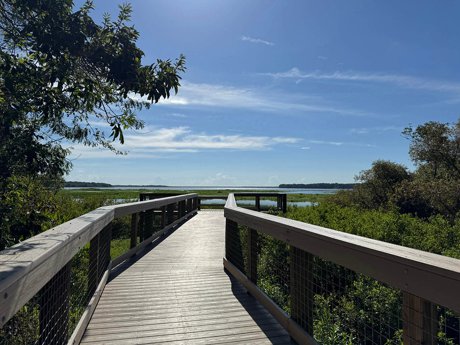
Spring Hammock Preserve is an approximately 1,500-acre nature preserve in Seminole County, Florida, on the western shore of Lake Jesup, about 20 miles north of downtown Orlando. The preserve protects old-growth bald cypress, floodplain forest, and hydric hammock, and it includes both Big Tree Park and Soldiers Creek Park. Big Tree Park was home to The Senator, a roughly 3,500-year-old bald cypress destroyed by arson in 2012; a clone named The Phoenix and the roughly 2,000-year-old Lady Liberty tree still stand there. Admission is free, the preserve is open sunrise to sunset, and a new ADA-accessible Osprey Trailhead with boardwalks opened in 2025. The address is 2985 Osprey Trail, Longwood, FL.
Here's something most people moving to Central Florida never realize: about 20 miles north of downtown Orlando, behind a busy stretch of US 17-92, sits a 1,500-acre swamp older than almost anything else in the state. We're talking trees that were already ancient when the Roman Empire was a going concern.
That's Spring Hammock Preserve, and if you're scoping out the north Orlando suburbs — Longwood, Winter Springs, and Lake Mary — it's a local gem worth knowing before you pick a zip code. It's free, it's quiet, and it's home to a tree story so dramatic it made national news.
What Exactly Is Spring Hammock Preserve?
Spring Hammock Preserve is a roughly 1,500-acre natural area managed by Seminole County, on the western edge of Lake Jesup in the St. Johns River watershed. About two-thirds of it is swamp — a rare mix of floodplain forest and "hydric hammock," an ecologist's term for low, soggy woodland that stays wet most of the year.
What makes it special is its age. The preserve holds record-setting ancient bald cypress, the largest known stand of tulip poplars in Florida, and rare species like the bipinnate cuplet fern, the Okeechobee gourd, and the gopher tortoise. In 2025 it became Florida's 11th forest — and Seminole County's first — recognized by the Old-Growth Forest Network. This is real old-growth, not a manicured city park.
The preserve also wraps around two parks: Big Tree Park and Soldiers Creek Park, which adds ball fields and picnic pavilions.
The Senator: Florida's Most Famous Tree
Now for the story everyone asks about. For thousands of years, Big Tree Park was home to The Senator — a bald cypress estimated at roughly 3,500 years old and once considered one of the oldest trees on Earth. It was named in 1927 after state senator M.O. Overstreet, who donated the land. At its tallest it reached around 165 feet, until a 1925 hurricane left it at about 125 feet.
Here's the heartbreaking part: on January 16, 2012, The Senator was destroyed by fire after a woman lit a blaze inside its hollow trunk. A 3,500-year-old survivor of lightning, hurricanes, and the logging boom was gone in a single night.
But the story doesn't end there. Researchers had quietly cloned the tree from cuttings in the 1990s, and after the fire the county planted one — a roughly 50-foot specimen named The Phoenix — at the park in 2013. About 40 feet from where The Senator once towered, its companion Lady Liberty, a roughly 2,000-year-old cypress, is still alive and nearly 90 feet tall. For the full history of all three trees, see our guide to Big Tree Park.
Trails, Boardwalks, and the Brand-New Osprey Trailhead
Spring Hammock offers about 3.5 miles of trails and boardwalks through the cypress and hammock. Two long-distance routes also pass through: the paved Cross Seminole Trail, which bisects the preserve west to east, and a segment of the Florida National Scenic Trail.
Access just got a major upgrade, too. After a trio of 2004 hurricanes wrecked the original boardwalk to Lake Jesup, much of the trail system sat closed for years. Seminole County broke ground on a fix in October 2024 and cut the ribbon on a new Osprey Trailhead in September 2025 — new boardwalks, a pavilion, ADA-accessible paved paths, and improved bridge crossings. If you bounced off this place years ago, it's worth another look.
Why Should Orlando-Area Residents Care?
Fair question. Real, walkable nature is harder to find than you'd think in a metro built around theme parks and toll roads. Spring Hammock is a genuine escape hatch — a place where, despite the faint hum of 17-92, you can feel a thousand miles from civilization five minutes from the suburbs.
There's also a community angle locals love. The preserve hosts the Seminole County Environmental Studies Center, where the school district runs its legendary "Mud Walk" — a swamp slog that's been a rite of passage for Seminole County fifth graders for decades. If you've got kids researching Winter Springs or Longwood schools, odds are they'll end up here covered in muck one day. For the bigger picture on local education, see our Seminole County Public Schools Guide.
Visiting Spring Hammock Preserve: The Practical Stuff
Here's what to know before you go:
- Address: 2985 Osprey Trail, Longwood, FL 32779 (the Osprey Trailhead with accessible parking)
- Hours: Daily, sunrise to sunset — gates close at dusk
- Cost: Free
- Dogs: Leashed dogs welcome
- Restrooms: Across CR 419 at Soldiers Creek Park
- Phone: Seminole County, 407-665-2211
Getting there: From Interstate 4 in Longwood, head east on SR 434 for about 3.8 miles, turn left onto US 17-92, go 2.6 miles, then right onto SR 419 for 0.6 mile, and left onto Osprey Trail. The accessible parking is at the end of the road.
Local tip: Go on a weekday morning — the trails are quietest, the cypress light is gorgeous, and the afternoon storms haven't rolled in yet. Pack bug spray in warm months and wear shoes you don't mind getting muddy; this is a swamp, after all.
Living Near the Preserve: The Real Deal
If proximity to nature factors into your home search, the suburbs ringing Spring Hammock — Longwood, Winter Springs, and Lake Mary — put it within easy reach. But let's be real about both sides.
The Pros:
- Free, year-round access to genuine old-growth wilderness minutes from home
- Established, well-regarded north Orlando suburbs with strong Seminole County schools
- Connection to the regional trail network (Cross Seminole Trail) for biking and walking
- A quieter, more mature feel than the booming west-Orange-County boomtowns
The Cons:
- It's a working swamp — expect mud, bugs, and seasonal flooding on side trails
- The preserve borders busy commercial corridors, so it's not totally tucked away
- North Orlando commutes lean on I-4, which has its own well-documented personality
If you love cypress and boardwalks but want options closer to the theme-park side of town, two more favorites: Tibet-Butler Preserve in Windermere and the Lake Apopka Wildlife Drive. Trail lovers should also bookmark the Seminole Wekiva Trail.
What the Neighbors Know
Spring Hammock Preserve isn't on the tourist brochures, and that's exactly why locals love it. It reminds you Central Florida had a deep, wild history long before the first roller coaster — a 1,500-acre pocket of ancient swamp where you can stand near a 2,000-year-old tree on a Tuesday morning, for free, 20 minutes from Downtown Orlando.
For the north Orlando suburbs, it's a quiet but real selling point — and with the new boardwalks open, there's never been a better time to see it for yourself. 🌳
For current hours, trail status, and event details, visit the official Spring Hammock Preserve page on the Seminole County website.
Curious about life in Seminole County's north Orlando suburbs? We're building out our coverage of this area — contact us for personalized relocation advice, or browse our Central Florida community guides to find the neighborhood that fits you best!