US 17-92: Central Florida's Original Main Street
Before I-4 took over, this was the road that tied Orlando together — and it's quietly reinventing itself
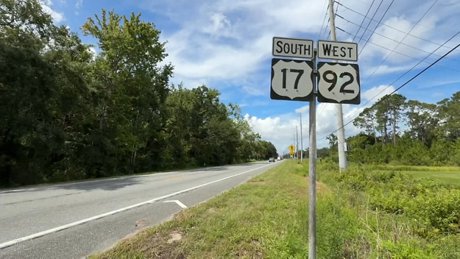
US 17-92 is a surface highway through Central Florida formed where U.S. Route 17 and U.S. Route 92 run concurrently. It serves as a major north-south corridor connecting Sanford, the Seminole County suburbs, Winter Park, Orlando, and the southern metro toward Kissimmee, running roughly parallel to Interstate 4. US 92 alone is about 181 miles long, running entirely within Florida from St. Petersburg to Daytona Beach. The 17-92 corridor was Central Florida's main highway before I-4 opened, and large stretches of it are now the focus of long-running redevelopment efforts in Seminole County, Winter Park, and Maitland.
So you've memorized I-4 and you've got the 408 and 417 down. But spend a week driving around Orlando and you'll keep hitting a road that everyone just calls "17-92." It cuts through half the metro, it's lined with everything from vintage motels to brand-new apartments, and odds are you'll end up on it whether you planned to or not.
Here's the thing: 17-92 isn't glamorous. It's not a toll road that whisks you anywhere fast. But understanding it tells you a lot about how Central Florida actually grew up — and if you're house-hunting anywhere east of the theme-park bubble, it's worth knowing what living near it really means.
Let's take the tour.
So What Is 17-92, Exactly?
Quick geography lesson (we promise it's painless). 17-92 isn't one highway — it's two. U.S. Route 17 and U.S. Route 92 happen to share the same pavement through much of Central Florida, a setup road nerds call a "concurrency." Rather than make you pick a favorite, the signs just stack both numbers together: 17-92.
US 92 on its own is about 181 miles long and lives entirely in Florida, running from St. Petersburg all the way to Daytona Beach. US 17 piggybacks on it for roughly half that distance. The combined route runs largely parallel to Interstate 4 — which is exactly why most through-traffic now takes I-4 and leaves 17-92 to the locals.
From Main Drag to "Remember When": A Quick History
Before I-4 sliced through the region in the 1960s, 17-92 was the way you traveled Central Florida. It was the original main thoroughfare connecting the area's towns, the road your grandparents would've driven from Sanford to Orlando back when Orlando was still a citrus-and-cattle town.
When I-4 opened, it siphoned off the fast traffic almost overnight. 17-92 settled into a second act as a local commercial spine — the place for car dealerships, diners, strip plazas, and the occasional gloriously retro neon sign. That faded-glory vibe is still there in stretches, and it's a big reason so many cities along the corridor have spent decades trying to spruce it back up (more on that below).
The 17-92 Road Trip: Kissimmee to Sanford
Picture driving the corridor south to north. Here's roughly what you'd pass:
- The south end (Osceola County): Down near Kissimmee, 17-92 tangles up with Orange Blossom Trail (US 441) and Highway 192, forming the busy commercial backbone of the southern metro. This stretch also runs near the eastern edge of the Hunter's Creek area, close to where the SR 417 Eastern Beltway begins its loop around town.
- Through Orlando: 17-92 threads up through south Orlando and into the urban core near Downtown Orlando, where it crosses paths with just about every major road in the metro.
- Winter Park & Maitland: The corridor slips past Park Avenue's shops just to the east, an interesting contrast of polished and workaday side by side.
- Seminole County: This is where 17-92 gets seriously busy — Fern Park, Casselberry, Longwood, Altamonte Springs, Lake Mary, and Sanford. You'll roll past Altamonte Mall and the fountains of Cranes Roost Park along the way.
- The north end: Up in Sanford, 17-92 runs near Orlando Sanford International Airport before continuing toward DeBary and DeLand in Volusia County.
One genuinely handy thing: SunRail, our commuter train, shadows the 17-92 corridor for almost its entire length. So if traffic on 17-92 isn't your thing, there's often a train station within a few minutes of it.
The Great 17-92 Makeover
Here's where it gets interesting. For decades, the cities along 17-92 have been working to transform that tired commercial strip into something more walkable and attractive. Seminole County and its cities created a multi-jurisdictional redevelopment effort for the corridor years ago, and Winter Park, Maitland, and Casselberry have run their own redevelopment programs along their slices of 17-92. Winter Park even expanded its redevelopment area along the corridor as recently as 2024.
The road itself has gotten real attention, too. Back in 2015, a roughly $80 million flyover opened where 17-92 meets Highway 436 (Semoran Boulevard) in Casselberry — long considered one of the busiest intersections in the entire state. And in early 2025, FDOT wrapped up a project rebuilding the I-4 and 17-92 interchange near downtown Sanford, adding turn lanes, smoother ramps, and pedestrian safety upgrades.
The honest takeaway: 17-92 is a work in progress. Some stretches feel freshly reinvented; others are still waiting their turn.
Should You Live Along the 17-92 Corridor?
Let's be real about the trade-offs, because plenty of great neighborhoods sit just off this road.
The Pros:
- Central location — you're rarely far from downtown, the airports, or I-4
- Generally more affordable home prices than the newer master-planned suburbs out west
- SunRail commuter stations sprinkled all along the corridor
- Mature, tree-lined established neighborhoods (especially around Winter Park and Maitland)
- Walkable redevelopment districts popping up in Casselberry, Maitland, and beyond
The Cons:
- Traffic and signal-heavy driving — this is a surface road, not an expressway
- Some commercial stretches still look dated or in transition
- Noise and congestion right along the road itself (look a block or two off it)
Our Take:
If you value being central and want more house for your money, the neighborhoods tucked just off 17-92 are worth a serious look — just shop a street or two back from the highway. Much of the corridor's heart runs through Seminole County and the Winter Park area, so it's a great fit for buyers eyeing the established eastern and northern metro rather than the brand-new western suburbs. You can browse listings across Orange County and Osceola County to get a feel for what's out there.
What the Neighbors Know
17-92 will never be the prettiest road in town, and it'll never be the fastest. But it's woven into the fabric of Central Florida in a way the shiny toll roads just aren't. It's where the region started, it's where a surprising amount of daily life still happens, and it's slowly becoming something nicer one redevelopment project at a time.
The local move? Use it like a resident: know which intersections to avoid at 5 p.m., keep SunRail in your back pocket, and remember that some of the best-value neighborhoods in the metro are hiding just off this unassuming old highway. Not bad for a road most newcomers drive right past. 🚗
For current project information, lane closures, and corridor improvements, visit the Florida Department of Transportation's official US 17-92 project page.
Trying to figure out which Central Florida neighborhood fits your commute, budget, and lifestyle? Explore our community guides for Kissimmee and Hunter's Creek, or Contact Us for personalized relocation advice. We'll help you find the right spot — on 17-92 or anywhere else in the metro!