Lakeside Orlando: Lake Eola, Leu Gardens & Lake Apopka
Three very different ways to spend a day on the water — a downtown icon, a botanical hideaway, and Florida's greatest comeback lake
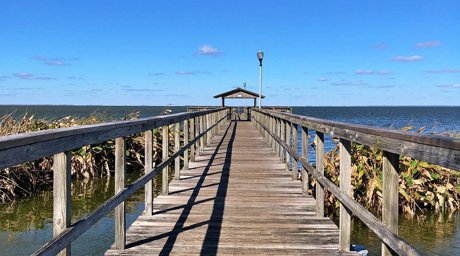
Lakeside Orlando spans three very different experiences. Lake Eola Park is a free 23-acre downtown Orlando park built around a sinkhole lake, with swan paddle boats (Tuesday–Sunday, about 10 a.m.–7 p.m.), a 0.9-mile loop path, and a Sunday farmers market. Harry P. Leu Gardens is a 50-acre botanical garden on Lake Rowena about 4 miles northeast of downtown; admission is $15 for adults and $10 for children 4–17, free the first Monday of each month. The Lake Apopka North Shore Wildlife Drive is a free 11-mile one-way drive northwest of Orlando, open Fridays, Saturdays, Sundays, and federal holidays from 7 a.m. to 3 p.m., with more than 360 bird species on what was once Florida's most polluted large lake.
Here's something most people moving to Orlando don't realize: this is a city built on water. Central Florida has more lakes than anyone bothers to count, and how you spend time on them says a lot about the life you're after here.
So we picked three. Not because they're similar, but because they're not. One is a downtown postcard you can walk to on a lunch break. One is a ticketed botanical garden where the loudest sound is a fountain. And one is a former environmental disaster that's quietly become one of the best wildlife-watching spots in the state. Pick your vibe.
Lake Eola: Orlando's Front Porch
If Orlando has a town square, it's Downtown Orlando's Lake Eola Park. The land was donated to the city in 1883, and the lake at its center isn't a man-made pond — it's an actual sinkhole, roughly 23 acres and about 4,500 feet around. (Very Florida.) The illuminated Linton E. Allen Memorial Fountain is an official city icon, and it still puts on a short light-and-music show after dark.
Day to day, this is where Orlando comes to breathe. There's a 0.9-mile paved loop runners and dog-walkers treat as the city's unofficial track, a playground, the Walt Disney Amphitheater for free concerts, and a Sunday farmers market that's been a downtown ritual for three decades. The signature move is renting a swan-shaped pedal boat — they run Tuesday through Sunday, hold up to five people, and cost a few bucks for a lap around the fountain.
Best part: the park itself is free. For the full rundown on parking, swan-boat hours, and event days, see our deep dive on Lake Eola Park, and if you want the wider neighborhood picture, our look at Downtown Orlando's Cultural Core covers the museums and venues within walking distance.
Harry P. Leu Gardens: 50 Acres of Quiet on Lake Rowena
About four miles northeast of downtown, tucked between the city core and Winter Park, Harry P. Leu Gardens proves Orlando isn't all roller coasters. It's a 50-acre botanical garden wrapped around the shore of Lake Rowena, with more than 40 plant collections threaded by three miles of shaded pathways.
The history is part of the charm. Harry and Mary Jane Leu bought the property and its 1888 farmhouse in 1936, filled the grounds with plants from their travels — including some 240 camellia varieties — and deeded the estate to the City of Orlando in 1961, its 65th anniversary now falling in 2026. Today you'll find Florida's largest formal rose garden, a tropical stream garden, a butterfly garden, and the restored Leu House, a National Register home open for guided tours Tuesday through Sunday (closed in July).
Here's the practical stuff: admission is $15 for adults and $10 for kids 4–17, with members, children under 4, and active-duty military free. The Gardens open at 9 a.m. daily, closing at 5 p.m. (6 p.m. in summer, with late Thursdays). The money-saving tip locals love: it's free for everyone the first Monday of each month. Go early — Orlando heat is real, and the morning light through the cypresses is the whole point. Our full guide to Leu Gardens covers the seasonal blooms worth timing a visit around.
Lake Apopka: Florida's Greatest Comeback Story
Now, let's address the elephant in the room. Lake Apopka, northwest of the city near Apopka and the western edge of Winter Garden and Ocoee, spent decades as Florida's most polluted large lake. We're not going to pretend otherwise.
The hard history
Lake Apopka is the state's fourth-largest lake, but a 1941 levee carved off 20,000 acres of its northern shore for muck farming, setting up decades of trouble. The farms pumped phosphorus-heavy water back in, citrus plants and sewage added to the load, and algae blooms wiped out the underwater plants fish and birds depended on. The low point came in 1998–1999, when a die-off of more than a thousand birds on the former farmland became one of the worst such incidents in U.S. history.
The turnaround
What happened next is the part worth knowing. Cleanup was authorized under the 1987 Surface Water Improvement and Management Act, and the St. Johns River Water Management District has spent the decades since reflooding wetlands and filtering the water. Phosphorus is down, water clarity is up, and native aquatic plants are returning. In 2015 the district opened the Lake Apopka Wildlife Drive — an 11-mile, one-way driving loop through the restored North Shore that celebrated its tenth anniversary in 2025.
Today it's one of the top three birding areas in all of Florida, alongside Everglades National Park and Merritt Island, with more than 360 species recorded plus alligators, bobcats, and otters. The drive is completely free and open to vehicles Fridays, Saturdays, Sundays, and federal holidays from 7 a.m. to 3 p.m. (all cars must exit by 5 p.m.); the entrance is at 2850 Lust Road in Apopka. Cyclists and hikers can use the route Monday through Thursday. For a wider history of the lake, see our overview of Lake Apopka, and the parallel paved route of The West Orange Trail connects nearby communities to the same restored landscape. For more green space in the area, browse our comprehensive Ocoee parks and recreation guide and Winter Garden parks and recreation guide.
Which One's Right for You?
They're three genuinely different days out, so here's the honest breakdown:
- Lake Eola — Best for an easy, free, walkable outing in the heart of the city. The trade-off is downtown parking and weekend crowds.
- Leu Gardens — Best for a calm, shaded, kid- and grandparent-friendly couple of hours. The trade-off is the ticket price (skip it on the free first Monday).
- Lake Apopka Wildlife Drive — Best for wildlife, photography, and a true escape. The trade-offs are real: it's a 40–45-minute drive from downtown, open weekends and holidays only, and it's a slow one-way loop with no bail-out points once you're in.
What the Neighbors Know
Locals don't think of these as tourist stops — they're part of the weekly rhythm. Lake Eola is the after-work walk and Sunday-market habit. Leu Gardens is where you take out-of-town family who think Orlando is only theme parks. And Lake Apopka is the standing reminder that Central Florida's landscape isn't static: a lake written off a generation ago is now a place people drive across the metro to see.
For anyone relocating here, that's the real takeaway. Water shapes where and how you live — from downtown condos overlooking Lake Eola to family neighborhoods spreading toward the Apopka shoreline. And the honest note on Apopka: its recovery is ongoing, not finished, which is exactly what makes the comeback worth watching. 🦩
For official hours, tickets, and details, visit the City of Orlando's Lake Eola Park page, the Harry P. Leu Gardens website, and the St. Johns River Water Management District's Lake Apopka Wildlife Drive page.
Trying to figure out which Orlando-area community fits your lifestyle — downtown energy, leafy and walkable, or open space near the water? Explore our neighborhood guides for Downtown Orlando, Ocoee, and Winter Garden, or contact us for personalized Central Florida relocation advice!