The Neighborhood Blog

The Neighborhood Blog features a variety of community, attraction and development update information for communities throughout the Orlando Metro and Central Florida Region.

April 22, 2026

Windermere's Proximity to Orlando Theme Parks: Disney, Universal, and SeaWorld Drive Times

Windermere's Proximity to Orlando Theme Parks: Disney, Universal, and SeaWorld Drive Times

The real numbers on how close Windermere actually is to Central Florida's big three

Fireworks over Cinderella's Castle at the Magic Kingdom at Walt Disney World

Windermere, FL sits roughly 6 miles north of the Walt Disney World boundary, with typical drive times of 15–20 minutes to Magic Kingdom and 20–25 minutes to Epcot or Hollywood Studios via SR 429 and Western Way. Universal Orlando Resort is approximately 10–13 miles east, a 15–25 minute drive via Apopka-Vineland Road and Turkey Lake Road. SeaWorld Orlando is about 10–12 miles southeast, an 18–25 minute drive via Sand Lake Road and Central Florida Parkway. All three major Orlando theme park resorts are reachable from Windermere in under 30 minutes in normal traffic, which is why the town attracts Disney executives, annual passholders, and families who want theme park access without living inside the tourist corridor.

"If I live in Windermere, how long does it actually take to get to the theme parks?" It's one of the most common questions we hear from relocating buyers. The short answer: closer than you'd think. The longer answer depends on tolls, traffic, which park, and which side of town — so here are the real drive times to Disney, Universal, and SeaWorld from a typical Windermere address, minus the "minutes away" marketing fluff.

Windermere to Walt Disney World: The Shortest Trip

Disney is Windermere's closest neighbor by a wide margin. The property line sits roughly 6 miles south of central Windermere, and homes in the southern ZIP are closer still — some Isleworth and Lake Butler–area addresses can see Magic Kingdom fireworks from the backyard on clear nights.

Most residents use one of three routes. SR 429 south to Western Way is fastest for Magic Kingdom, Animal Kingdom, and west-side resorts (15–20 minutes, toll road). Winter Garden–Vineland Road (CR 535) is the toll-free alternative (18–25 minutes). For Epcot, Hollywood Studios, and Disney Springs, Apopka-Vineland south to I-4 runs 20–25 minutes. Park by park: Magic Kingdom's TTC is 15–20 minutes; Epcot and Hollywood Studios are 20–25; Animal Kingdom via Western Way is around 20; Disney Springs — where plenty of residents head for dinner without a park ticket — is typically 20 minutes.

The Annual Passholder Math

Here's why proximity matters more than mileage suggests: a 15-minute commute changes how you use a pass. A two-hour evening visit for a specific ride and dinner at Disney Springs becomes reasonable on a Tuesday. Breakfast at a resort hotel stops being a production. The real value isn't that you can get to Disney — it's that you actually go more often because the friction is low.

Windermere to Universal Orlando: The East-Side Trip

Universal sits east of Windermere off Kirkman Road near I-4 and Dr. Phillips, about 10 to 13 miles away, typically 15–25 minutes. The reliable route is Apopka-Vineland north to Sand Lake east through Restaurant Row (18–22 minutes); a quieter option is Turkey Lake north, which skirts I-4 (15–20 minutes off-peak). Universal expanded with the 2025 opening of Epic Universe, its fourth park, sitting south of the main property off Sand Lake Road — for Windermere residents, Epic Universe is actually closer than the original Universal Studios, typically 15–20 minutes.

Why the Universal Route Is Often Smoother

The counterintuitive part: even though Universal is farther on a map, the drive is often less congested. The Apopka-Vineland and Sand Lake corridors don't hit the same weekend tourist walls as Disney's Western Way and I-4 exits, so on weekdays Universal is frequently the faster practical trip despite being longer on paper.

Windermere to SeaWorld Orlando: The Southeast Trip

SeaWorld, Aquatica, and Discovery Cove sit southeast of Windermere on Central Florida Parkway, about 10 to 12 miles away with typical drive times of 18–25 minutes. The standard route is Apopka-Vineland south to Sand Lake east, then International Drive south to Central Florida Parkway. An alternate is I-4 east to Exit 71, the dedicated SeaWorld exit, which can be faster when I-4 cooperates.

SeaWorld is the underrated park for Windermere locals — slightly farther than Universal, but it sees far less weekend Disney-related traffic. Annual passes are cheaper, parking is easier, and a half-day visit doesn't feel like an expedition. Plenty of Windermere families treat SeaWorld and Aquatica as their "regular" parks and save Disney and Universal for special occasions.

The Traffic Reality: When the Math Breaks

These times don't hold up in every window. Disney's opening rush (8:00–9:30 a.m.) can add 10–15 minutes to Western Way and I-4 routes. Park closing after fireworks or major events creates sustained backups on SR 429 south and Apopka-Vineland. Holiday weeks stretch every route by 20–40%, and any I-4 incident can push tourist traffic onto secondary Windermere roads in ways that turn a 15-minute trip into 45. The workaround most long-time residents use: avoid arriving at park opening. Target mid-morning or evening visits after 5 p.m. Local route knowledge — the shortcuts through Gotha, Horizon West, or along Conroy Road — makes a meaningful difference.

Which Windermere Neighborhoods Win on Park Access?

Windermere isn't uniform — a Lake Butler home has meaningfully different park access than one near Apopka-Vineland. For Disney, south and southwest Windermere wins: Keene's Pointe, the Isleworth/Lake Butler area, and communities near SR 429 sit closest to Western Way. For Universal and SeaWorld, eastern Windermere near Apopka-Vineland and the Dr. Phillips border typically runs 5–10 minutes closer. For balanced access across all three, central Windermere near Main Street is the sweet spot. If theme park commuting is a top-three priority, narrow your neighborhood search around which resort you'll visit most. For a deeper look at Windermere beyond the parks, the Butler Chain of Lakes is the other defining feature of life here.

Costs Worth Knowing: Tolls and Parking

SR 429 is a toll road — budget roughly $3–5 per one-way Disney trip via 429 and Western Way, paid through SunPass or E-PASS. Winter Garden–Vineland Road (CR 535) is the toll-free alternative, which is why many Cast Members use it. Theme park parking is its own line item: Disney general parking runs $30 per day, Universal $32, and SeaWorld $35 (preferred parking is higher), though annual passholders get free or discounted parking depending on tier. Check Walt Disney World, Universal Orlando, or SeaWorld Orlando for current rates.

What the Locals Know

The insider read: Windermere's theme park proximity is real, but the practical value comes from route knowledge as much as distance. Residents know which route works for Epcot on a Saturday versus Magic Kingdom on a Tuesday, when to skip SR 429 entirely, and which back way into Universal bypasses the Sand Lake crunch — that learned knowledge is worth as much as base drive time.

The other local truth: the parks are the obvious draw, but Windermere's location also means easy access to everything built around them — Restaurant Row, Premium Outlets, Icon Park, and the International Drive district, all reachable in under 25 minutes. You're not just near Disney; you're near the entire Orlando tourism economy.

Is Windermere the absolute closest community to Disney? No — Horizon West edges it, and Celebration is arguably closer to Disney Springs. But Windermere sits in the geographic sweet spot between Disney south, Universal east, and SeaWorld southeast, with no single trip over 25 minutes in normal traffic. For households visiting multiple parks regularly, that triangulated access is the feature. 🎢

For the official town information, visit the Town of Windermere website.


Thinking about Windermere or comparing it to Dr. Phillips, Horizon West, or Celebration for theme park access? Browse Windermere homes for sale or contact us for straight-talk advice on which neighborhood fits your park priorities.
April 22, 2026

The Dr. Phillips Center for the Performing Arts: Windermere's Closest Major Performing Arts Venue

Dr. Phillips Center: Windermere's Closest Major Performing Arts Venue

For Windermere residents, downtown Orlando's world-class performing arts complex is just 15 miles east — and yes, the drive is worth it.

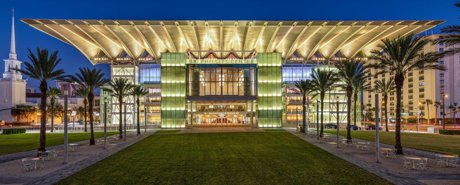
Dr. Phillips Center for the Performing Arts

The Dr. Phillips Center for the Performing Arts is located at 445 S. Magnolia Avenue in downtown Orlando, approximately 15 miles from Windermere, FL, with a typical drive time of 20-25 minutes via SR 408. The $613 million complex opened in November 2014 and houses three main venues: the 2,700-seat Walt Disney Theater, the 1,464-1,770-seat Steinmetz Hall with an N1 acoustic rating, and the 300-seat Alexis & Jim Pugh Theater. The center is named for Dr. Philip Phillips, the citrus magnate whose family estate funded the project through the Dr. P. Phillips Foundation. For Windermere residents, it is the closest major Broadway-caliber performing arts venue and a roughly 20-minute drive east.

Here's the thing about living in Windermere: the lakefront lifestyle is extraordinary, but the cultural calendar isn't built into your backyard. Fortunately, you don't have to go far. The Dr. Phillips Center for the Performing Arts sits 15 miles east in downtown Orlando — close enough for a weeknight show, far enough to feel like a real night out.

Here's the wrinkle most Windermere newcomers miss: the center shares its name with the neighboring Dr. Phillips community because both trace to Dr. Philip Phillips, the citrus magnate who once owned 5,000+ acres of orange groves across Southwest Orange County. His foundation helped fund the center that now bears his name.

The Drive: About as Easy as Central Florida Commutes Get

From most Windermere neighborhoods, the fastest route to the Dr. Phillips Center is SR 408 (the East-West Expressway) eastbound. Expect roughly 20-25 minutes door-to-door during evening off-peak hours, with occasional show-night slowdowns pushing that to 30-35 minutes. The 408 is a toll road, so SunPass or E-PASS is your friend. For residents of Isleworth, Keene's Pointe, or Reserve at Lake Butler Sound, you'll typically hop on the 408 via Apopka-Vineland Road or Conroy Road.

The center's address is 445 S. Magnolia Avenue, right in the heart of downtown. Parking is available in multiple nearby garages, and valet is offered on performance nights. Our advice: buy parking when you buy your tickets — it saves you from circling blocks when you're already cutting it close to curtain.

A Quick History: From Citrus Groves to Broadway Lights

Groundbreaking took place in 2011, and after a phased build, the facility opened on November 6, 2014. The total price tag came in around $613 million, with roughly two-thirds from Orange County's tourist development tax and one-third from private donations — including a major gift from the Dr. P. Phillips Foundation.

Phase II added the crown jewel: Steinmetz Hall, which opened in January 2022. If you moved to Windermere between 2015 and 2022, you watched this get finished in real time from the 408 skyline.

What's Actually Inside: The Three Main Venues

Walt Disney Theater — 2,700 Seats

This is the big one. The Walt Disney Theater hosts Broadway touring productions, major concerts, and comedy tours. If you're catching Hamilton, Wicked, or The Lion King on its Orlando stop, you're sitting here. At 2,700 seats, it's large enough to feel like an event but small enough that the back row isn't in another zip code.

Steinmetz Hall — 1,464 to 1,770 Seats

This is the acoustic showpiece. Steinmetz Hall is one of the only multiform theaters in the world — it physically reconfigures between a symphony concert hall, a proscenium theater, and a banquet-flat floor. The venue achieved an N1 acoustic rating, one of the quietest performance halls anywhere. It's the permanent home of the Orlando Philharmonic Orchestra, Opera Orlando, and Orlando Ballet.

Alexis & Jim Pugh Theater — 300 Seats

The intimate one. This ground-floor space is where you go for chamber music, cabaret, smaller comedy acts, and spoken-word performances. If you want to feel the performer breathe, this is your room.

What You Can Actually See There

The programming range is wider than you'd expect. In a typical season, Windermere residents can choose from:

  • Broadway touring productions — major Tony-winning musicals and plays
  • Orlando Philharmonic Orchestra classical and pops concerts
  • Orlando Ballet productions including seasonal Nutcracker runs
  • Opera Orlando main-stage productions
  • Comedy headliners, speakers, and author events
  • Family-friendly programming and holiday specials
  • The Residency Festival, which has brought in names like the Royal Philharmonic Orchestra alongside popular artists

This breadth is a big part of why the center now draws over one million visitors annually across its venues.

Honest Pros and Cons for Windermere Residents

The Pros

  • Genuine world-class facility — not a regional also-ran
  • 15-mile drive, almost entirely highway
  • Three distinct venues means variety in any given season
  • Strong local arts anchors: Philharmonic, Ballet, Opera Orlando all call it home
  • Downtown location pairs well with dinner at any number of restaurants within walking distance

The Cons

  • Ticket pricing for premier Broadway tours can be steep — plan ahead
  • Weeknight shows still mean a post-show drive home; not everyone loves that
  • Event parking downtown adds up if you don't pre-purchase
  • On big event nights, SR 408 westbound back toward Windermere can be slow for 20-30 minutes after curtain

Our honest take: if you're the kind of Windermere resident who plans two or three culture nights a year, this place is practically in your backyard. If you want to go every other week, a season subscription pays for itself fast.

How It Fits Into the Windermere Cultural Landscape

The Dr. Phillips Center is the anchor, but not the only option worth knowing. Closer to home, the Dr. Phillips Arts & Culture scene along Restaurant Row offers live music a short drive south. The Dr. Phillips High School performing arts program — which produced Wayne Brady, Joey Fatone, and DJ Khaled — regularly stages strong student productions. And the Orlando Museum of Art at Loch Haven Cultural Park rounds out the regional arts circuit.

For the deeper backstory of the Phillips name, our citrus heritage trail guide traces the orange-grove-to-philanthropy arc. For a broader venue profile beyond the Windermere angle, see our general Dr. Phillips Center guide.

Tips From Regulars

  • Pair the show with dinner. Downtown Orlando's restaurant scene is strongest within a six-block radius of the center — our date night guide pairs well with this approach.
  • Buy parking with your tickets. The savings on stress alone is worth it.
  • Check Steinmetz Hall first for classical and opera. The acoustics are the reason the hall exists.
  • Family shows sell out. Nutcracker and kid-friendly Broadway tours typically need to be booked weeks out.
  • Watch for discount nights. The center periodically offers community nights and rush tickets.

What the Locals Know

Windermere residents who actually use the Dr. Phillips Center treat it less like a special-occasion destination and more like the civic amenity it is. The drive is shorter than most Windermere commutes to Lake Nona or the airport. The programming rotates often enough that there's almost always something new worth the trip. And the Windermere-to-Dr.-Phillips-to-downtown corridor is one of the smoothest cultural axes in Central Florida — three distinct communities, connected by one highway, all sharing the legacy of the same citrus family.

If you're house-hunting in Windermere and cultural life matters to you, put this on your short list of quality-of-life arguments. It's the kind of amenity that isn't visible from your lakefront dock but shows up in your calendar six or eight times a year.

For current shows, tickets, accessibility information, and parking, visit the official Dr. Phillips Center for the Performing Arts website.


Thinking about making Windermere home? Explore our Windermere homes for sale or the adjacent Dr. Phillips and Horizon West communities. Questions about Central Florida's cultural amenities and how they factor into a relocation decision? Contact us for personalized guidance. 🎭

April 22, 2026

How Dr. Stanley Scott Named Windermere After England's Lake District

How Dr. Stanley Scott Named Windermere After England's Lake District

The English settler, the Cumbrian lake, and the Central Florida town that borrowed its name

Windermere Florida History

Windermere, Florida was named by Dr. Stanley Scott, an English settler whose father Joseph Hill Scott purchased 160 acres on Lake Butler around 1885. The town is widely believed to be named after Lake Windermere in England's Lake District, located in Cumbria County. Lake Windermere in England is approximately 10.5 miles long and is the largest natural lake in England. Windermere, FL was incorporated in 1925 and sits on an isthmus between Lake Down and Lake Butler in Orange County, about 14 miles west of downtown Orlando. The town had a 2020 census population of 3,030 and is part of the Butler Chain of Lakes system.

Here's a fun quirk of Central Florida geography: one of the most expensive ZIP codes in Orange County borrowed its name from a lake you'd need a passport to visit. The Town of Windermere, tucked among the sand-bottom lakes west of Orlando, traces its name roughly 4,200 miles back to the largest natural lake in England.

Credit for that transatlantic name-swap almost always lands on the same person — Dr. Stanley Scott, an Englishman who homesteaded on Lake Butler in the 1880s. But the full story is more complicated (and more interesting) than the one-liner on most plaques.

Who Was Dr. Stanley Scott?

Dr. Stanley Scott was the son of Joseph Hill Scott, another Englishman who made the bold call to leave behind the mother country for a chunk of piney, citrus-ready acreage in West Orange County. Per the Town of Windermere's own history, Joseph Hill Scott purchased roughly 150 to 160 acres on the west shore of Lake Butler around 1885, intending the land for his sons Stanley and Douglas.

So technically, Stanley didn't buy Windermere — his dad did. But it was Stanley who built the homestead, lived on the land, and (according to the long-held local belief) coined the name that stuck. That's the version carried by the Orange County board, the West Orange Chamber of Commerce, and the town itself.

The Lake District Connection

If Dr. Scott was sitting on the shore of Lake Butler looking for a name, the Lake District was a pretty natural place to pull inspiration from. The real Lake Windermere sits in Cumbria, in northwest England, inside what's now the Lake District National Park. It's around 10.5 miles long, making it the largest natural lake in England, and by the late Victorian era it had already become a fashionable resort destination — the kind of place Scott would have absolutely known by name.

Look at Lake Butler and its neighbors in the Butler Chain of Lakes, and the inspiration isn't a stretch. You've got clear water, forested shorelines, a chain of connected lakes rather than a single pond, and a landscape that feels like something out of a Wordsworth poem — if you squint and ignore the alligators. For an Englishman looking to christen his new homestead, "Windermere" was about as on-the-nose as you could get.

The Honest Historical Caveat

Here's where we have to be a little careful. Almost every official source — the Town of Windermere, Orange County, the West Orange Chamber — uses the same hedging language: "it is believed by many that he named this town after England's famous Lake Windermere." Not "he named," but "it is believed."

No primary document has surfaced in which Dr. Scott explicitly states why he chose the name. The connection is circumstantial but strong: Scott was English, the land sat among a chain of lakes, more English settlers followed and planted citrus groves, and the name stuck. A 2025 Florida Senate resolution declaring "Town of Windermere Day" treats the Cumbria-origin story as accepted fact — so if you're keeping score, the state has officially bought in.

What Came After the Naming

The Scotts planted citrus, as most West Orange homesteaders did. Then came the Great Freezes of 1894 and 1895, which wrecked Central Florida's citrus industry and sent a lot of settlers packing. The Windermere area sat mostly quiet for about fifteen years after that.

Then in 1910, two Ohio natives — Dr. J.H. Johnson and J.C. "Cal" Palmer — rediscovered the area, bought up most of the old townsite plus extra acreage, and formed the Windermere Improvement Company. They're the founders who actually built modern Windermere: laying out streets, recruiting residents, and formally incorporating the town in 1925. Scott named it. Palmer and Johnson made it a town.

Why the Name Still Fits

A hundred and forty years later, you can argue Scott chose better than he realized. The character of Windermere today — unpaved streets, a tight historic downtown, an aggressive tree-preservation policy, roughly 3,030 residents as of the 2020 census — reads more like an English village than a typical Orlando suburb. The town has held onto its "Tree City USA" designation for years and has kept its growth intentionally small, even with Walt Disney World and the explosive development of Horizon West practically next door.

That Lake District vibe — small, quiet, lake-focused, fiercely protective of its character — may not have been what Scott was consciously going for. But it's what the town has become.

Windermere's Place in the Orlando Map

For anyone trying to orient themselves: Windermere sits in West Orange County, about 14 miles west of downtown Orlando, roughly 10 miles from Walt Disney World's main gates, and inside the Butler Chain of Lakes. Its immediate neighbors on the FloridaNeighborhoodRealty map are Gotha to the north, Dr. Phillips to the east, Horizon West to the west and south, and Ocoee to the northwest. Celebration sits farther south in Osceola County, all part of the broader Orange County real estate market.

If you're researching Central Florida for a move, Windermere is one of those places where the naming story is actually useful context. It helps explain why the town insists on gravel roads, protects its tree canopy, and treats the Butler Chain of Lakes like a regional treasure rather than a development opportunity. That same lakes-and-trees ethos extends into neighboring communities — explore more in our Gotha parks and recreation guide or the dining scene just east in our Dr. Phillips restaurants guide. That's Lake District thinking, deliberately preserved.

What the Locals Know

The Windermere naming story is one of those bits of Central Florida trivia that locals love to drop at cocktail parties. Most visitors assume the name is some real estate developer's invention — something cooked up to sound upscale, like "Bay Hill" or "Isleworth." It isn't. It's the genuine inheritance of an English settler who looked at a chain of sand-bottom lakes in 1885 and saw a bit of Cumbria.

The nuance locals know is that Scott gave the town its name but didn't build the town. That credit belongs to Palmer and Johnson, twenty-five years later. And the reason Windermere still has unpaved streets, a tiny downtown, and none of the sprawling master-planned energy of its neighbors is because the founders who did build it took the name seriously — and because every generation since has fought hard to protect it. The Lake District comparison isn't just a cute origin story. It's a design philosophy the town keeps renewing.

So next time you drive down one of those gravel lanes off Main Street, past moss-draped oaks and glimpses of Lake Butler, you'll know exactly which lake in which English county to thank.

For official town history, event information, and municipal services, visit the Town of Windermere website.


Thinking about Windermere or one of its neighboring West Orange communities? Browse our Windermere homes for sale or contact David Myers for straight-shooting advice on Central Florida relocation.

April 22, 2026

The Isleworth Sculpture Collection: Public Art by Henry Moore, Dali, and Philip Jackson

Inside the Isleworth Sculpture Collection: Moore, Dali, and Jackson in Windermere

Henry Moore, Salvador Dali, and Philip Jackson works line the streets of one of Orlando's most exclusive private communities — here's what residents actually live with.

Isleworth Sculptures in Windermere Florida

The Isleworth sculpture collection is a private display of monumental works by Henry Moore, Salvador Dali, Philip Jackson, and Arturo Di Modica, located inside Isleworth Golf & Country Club, a 600-acre gated community at 6100 Payne Stewart Drive in Windermere, FL. The pieces are part of The Lewis Collection, assembled by Isleworth owner and British financier Joe Lewis, who acquired the community in 1993. The sculptures line the streets and fairways of the community and are only viewable by members, residents, and their guests. A publicly accessible rotation of works from the same Lewis Collection is displayed at the Lake Nona Sculpture Garden in southeast Orlando, roughly 30 minutes from Isleworth.

Here's something most people moving to Orlando don't realize: one of the most significant private sculpture collections in the Southeast isn't in a museum. It's scattered along the streets and fairways of a gated community in Windermere, where Henry Moore bronzes sit a short walk from a cast of Wall Street's Charging Bull and masked Philip Jackson figures keep watch over manicured landscapes.

This is the Isleworth sculpture collection. Let's be real about what it is, what it isn't, and why it matters for anyone thinking about life in Orlando's most rarefied zip code.

A Private Gallery, Not a Public One

First, the honest bit. The Isleworth sculpture collection is not public art. Isleworth is a private, gated country club community on the Butler Chain of Lakes, and the sculptures live inside the gates — along the entry drives, between holes on the championship golf course, and anchoring landscape moments throughout the 600-acre property. If you are not a member, a resident, or a guest of one, you cannot walk up and see them.

That's an important distinction, because "sculpture by Henry Moore" usually conjures up the experience of wandering a park or sculpture garden. Isleworth's collection is different. It's a perk of ownership — arguably one of the more unusual lifestyle amenities in American residential real estate. Living here means your morning jog, your commute to the Dr. Phillips dinner reservation, or your drive to the clubhouse all happen past works that would be featured in any major museum's permanent collection.

The Lewis Collection: How the Art Got Here

The sculptures are part of The Lewis Collection, named for British financier Joe Lewis, who acquired Isleworth in 1993. Lewis — founder of the Tavistock Group and a serious art collector — used his ownership of Isleworth as the stage for an outdoor collection of monumental works. Pieces rotate between Isleworth, Albany in The Bahamas, and the Lake Nona Sculpture Garden, all Tavistock-connected properties. This is why the artist list reads like a greatest-hits of 20th and 21st century sculpture.

The Artists You'll See

Henry Moore (1898–1986)

The British sculptor whose abstract, semi-figurative bronzes defined mid-century modern sculpture. Moore's work is in the permanent collections of the Tate, MoMA, and the National Gallery of Art. Isleworth is one of a handful of private U.S. sites where multiple Moore bronzes sit together outdoors.

Arturo Di Modica's Charging Bull

Yes, that Charging Bull. Di Modica created the original bronze that now stands on Wall Street in 1989, and Isleworth holds one of the few authorized casts — positioned between the first and tenth tees of the golf course. Other casts live at Albany in The Bahamas and at the Lake Nona Sculpture Garden. Moore himself nicknamed Di Modica the "young Michelangelo."

Salvador Dali (1904–1989)

The Spanish surrealist's sculptural output is less famous than his paintings but unmistakably his — melting forms, elongated figures, the same dreamlike vocabulary that made The Persistence of Memory iconic. Central Florida has a strong Dali connection through the Salvador Dali Museum in St. Petersburg; Isleworth brings Dali closer to home.

Philip Jackson (b. 1944)

The Scottish sculptor is Royal Sculptor to Queen Elizabeth II and the artist behind the Bomber Command Memorial in London's Green Park, the Bobby Moore statue at Wembley, and the Queen Elizabeth equestrian statue in Windsor Great Park. Jackson's signature — hooded, masked figures with textured lower bodies and precisely modeled hands and faces — appears across Isleworth's landscape. Fun trivia: early in his career, Jackson worked for Henry Moore. The Isleworth collection is, in a small way, a family reunion.

The Lake Nona Connection

If Isleworth's collection is behind a gate you can't pass, the Lake Nona Sculpture Garden is publicly accessible and displays rotating works from the same Lewis Collection. Past exhibits have included Moore's Mother and Child and Upright Motive No. 9, Fernando Botero's Leda and the Swan, Eric Goulder's Post Modern Man, and another Di Modica Charging Bull. Both properties are Tavistock developments, so pieces move between them. From Isleworth to Lake Nona is roughly 30 minutes via the 528.

Why This Matters for Orlando Real Estate Buyers

For buyers, the collection is a small but telling detail about what Isleworth is trying to be. This is not a gated subdivision with an entry monument and call it a day. The Lewis Collection signals cultural ambition as part of the community fabric — alongside the golf, Butler Chain access, security, and neighbor profile (past and present residents have included Tiger Woods, Shaquille O'Neal, and a roster of PGA Tour pros).

The Pros

  • Genuinely significant outdoor art as part of daily life, not a museum field trip
  • A curated residential environment managed to a consistent high standard
  • Proximity to the Dr. Phillips restaurant scene, the Butler Chain, and Disney (15 minutes) without being inside any of them
  • High-end neighbors and strong long-term value performance in the Windermere submarket

The Cons

  • Entry price is steep — Isleworth homes routinely transact at $3M to $20M+, with initiation fees and carrying costs to match
  • The privacy that protects the collection also protects you from casual guests — this is not a drop-in community
  • You'll never bring a group of friends to "tour the sculptures" — this isn't a cultural asset you can share publicly

Where Isleworth Sits in the Windermere Landscape

Isleworth occupies a prime stretch of the Butler Chain of Lakes, the 11-lake system that defines Windermere geography. The community is minutes from Dr. Phillips to the east, Gotha to the north, and Horizon West to the southwest. Downtown Orlando is about 15 miles northeast; Walt Disney World is about 15 minutes south via Winter Garden Vineland Road and the 429.

For buyers who want the Windermere lifestyle without Isleworth's price tag or privacy trade-offs, the surrounding communities offer Butler Chain access, top-rated schools, and the same general geography. But none of them have the collection.

What the Locals Know

The Isleworth sculpture collection is one of those Orlando details that insiders mention casually and visitors learn about by accident. It lives behind the gate, as part of the daily texture of life for a few hundred very fortunate households.

If you're shopping Isleworth, the art is a genuine differentiator — not the reason to buy, but a meaningful expression of what the community is. If you're not shopping Isleworth but you love the work, head to Lake Nona. Same collection, different door.

For more information about the community, membership, and homes, visit Isleworth Golf & Country Club.


Curious about Windermere-area luxury homes or the communities that border Isleworth? Explore Dr. Phillips, Gotha, and Horizon West, or contact us for personalized advice on Central Florida's most exclusive neighborhoods.

April 22, 2026

The Windermere Fine Art Show: What to Expect at Town Square's Annual Festival

Windermere Fine Art Show: What to Expect at Town Square's Annual Festival

Your insider's guide to Central Florida's most charming boutique art weekend

Windermere Fine Arts Show

The Windermere Fine Art Show is a free, two-day juried art festival held annually at Windermere Town Hall, 520 Main Street, Windermere, FL 34786, typically the last weekend of February. The 11th annual show took place February 28 and March 1, 2026, and featured more than 85 artists from around the country. The event is hosted by Windermere Arts and wraps around Town Square and the Main Street sidewalks in historic downtown Windermere. Admission is free, the event is pet-friendly, and it includes live music, performing arts, interactive experiences, local food vendors, and a student sidewalk chalk competition.

One of the best small-town art festivals in Central Florida happens in a town you can walk across in about ten minutes. The Windermere Fine Art Show isn't flashy or corporate — just 85-plus working artists, a couple of blocks of Main Street, live music drifting out of Town Square, and the kind of easy weekend vibe that makes you remember why you moved to Florida.

If you're scouting neighborhoods in Gotha, Horizon West, or Dr. Phillips, the show is on your doorstep. Here's what to expect.

The Basics: When, Where, and How Much

The Windermere Fine Art Show is a two-day outdoor festival held on the last weekend of February — though exact dates shift, so check the official site before you plan. The 11th annual show ran Saturday, February 28, 2026, from 11 a.m. to 5 p.m., and Sunday, March 1, from 10 a.m. to 5 p.m. The next edition is expected the final weekend of February 2027.

Everything happens at and around Windermere Town Hall, 520 Main Street, Windermere, FL 34786. Juried artist booths line Main Street and wrap around Town Square, with indoor exhibits and student artwork inside Town Hall itself. Admission is free, parking around downtown is free (though limited — more on that in a minute), and leashed pets are welcome.

A Quick History: From "Art Affair" to Fine Art Show

The show debuted in 2016 as the Windermere Art Affair, a one-day event put on by Windermere Arts, a local nonprofit led by organizer Anne Scharer. By 2017 it stretched to two days; by 2018 it spilled onto the Main Street sidewalks and added a high school sidewalk chalk competition. The name eventually changed to the Windermere Fine Art Show — a nod to the juried, curated nature of the exhibits.

A decade in, proceeds have supported the Town of Windermere along with Windermere Elementary's art department, Olympia High School's art department, Gotha Middle School, the CityArts Factory, The Russell Home, and other local groups.

What You'll Actually See on the Ground

This isn't a craft fair, and it isn't a flea market. The Windermere Fine Art Show is juried, meaning artists apply through ZAPPlication and get accepted by a selection committee. That keeps the quality up and the vibe curated. A typical year brings 85 to 95 artists working across:

  • Painting — oils, acrylics, watercolors, mixed media
  • Ceramics and pottery — functional and sculptural
  • Jewelry — handmade from silversmiths, glass artists, and metalworkers
  • Photography — fine-art prints, often Florida-inspired
  • Woodworking and sculpture — including some genuinely wild pieces (the 2025 show famously featured chairs made out of water skis)
  • Student artwork — displayed inside Town Hall, with pieces from local schools

Awards are given out each year for Best in Show and first, second, and third place, with separate recognition for young-adult artists and performing artists. There's also a Community Service Award that comes with a $500 check — in 2026, it went to The First Academy.

Live Music, Food, and the Sidewalk Chalk Thing

Art is the anchor, but not the only draw. Live music plays throughout the weekend — acoustic sets from local musicians rather than a stage-and-speakers operation. Performing arts demonstrations happen on and off around Town Square, including Irish dance from the Finnegan Academy in past years.

Food vendors line Main Street, so you can grab lunch without losing your spot. And the sidewalk chalk competition — a fan favorite — draws high schoolers from around Orange County to create temporary, astonishing pieces right on the concrete.

Why Central Florida Locals Keep Coming Back

The real draw is scale. The Winter Park Sidewalk Art Festival is a regional institution — but it's also enormous and a minor logistical operation. Windermere is the opposite. You park, you walk, you talk to the artists, and you're home in a couple of hours if you want to be.

It's also a quietly good place to buy art. Because it's a smaller show, artists often bring work that hasn't sold at bigger festivals, and prices tend to be friendlier. If you're furnishing a new home — something we see a lot with folks relocating to our Horizon West arts and culture guide communities — this is a sneaky-good place to pick up a signature piece.

Parking and Logistics: The Real Talk

Downtown Windermere is small. That's part of its charm, and it's also the main logistical challenge. Here's what locals know:

  • Arrive early on Saturday. Saturday crowds build through midday; Sunday mornings are easier.
  • Park a few blocks out and walk. Residential street parking is allowed on most side streets off Main — watch for driveways and no-parking signs.
  • Skip the car if you're local. From Gotha or along Conroy-Windermere Road, it's bikeable.
  • Bring cash and a card. Most artists take cards now, but a handful of older vendors and food trucks still run cash-only.
  • Wear walking shoes. Main Street sidewalks are brick and uneven in places.

How It Fits Into a Bigger Arts Weekend

If you're coming in from elsewhere in the metro, the Windermere show is easy to pair with other Central Florida arts stops. A few ideas:

And if you're exploring the area as part of a move, our Gotha arts and culture guide covers other local arts venues and programs in the communities right around Windermere.

The Pros and Cons, Honestly

The Pros:

  • Free admission, free parking, pet-friendly
  • Juried art means real quality, not craft-fair filler
  • Small enough to see everything in a couple of hours
  • Great way to meet working artists face-to-face
  • Proceeds support local schools and community organizations

The Cons:

  • Parking is tight — arrive early or be ready to walk
  • Weather dependent; late February in Florida is usually beautiful, but not always
  • Smaller scale means fewer artists than big regional festivals
  • Food vendor options are limited compared to larger events

What the Locals Know

The Windermere Fine Art Show isn't trying to be the biggest festival in Central Florida, and that's exactly why it's worth putting on your calendar. It's a well-run, genuinely curated weekend in a town that still feels like a town — put on by neighbors for neighbors.

Go once. Wander Town Square, buy a piece you love, grab lunch, and see how quickly you start running into the same faces year after year. That's the whole pitch. 🎨

For dates, artist lists, volunteer opportunities, and booth applications, visit the official Windermere Arts website.


Looking at homes in the communities around Windermere? Our Gotha homes for sale guide and Horizon West homes for sale guide cover the neighborhoods right next door — or contact us for personalized relocation advice.

April 22, 2026

Inside Windermere Town Hall: 100 Years of a Community Landmark

Inside Windermere Town Hall: 100 Years of a Community Landmark

How a lakeside woman's clubhouse became the heart of a historic Central Florida town

The Old Windermere Town Hall

Windermere Town Hall is a historic building located at 520 Main Street in Windermere, FL 34786, in southwest Orange County about 15 miles from Downtown Orlando. The two-story wood frame Colonial Revival structure was originally erected in 1922 on the shore of Lake Butler as the Windermere Woman's Club, moved to its current site in 1938, and formally became the seat of local government in 1945. It was added to the U.S. National Register of Historic Places on June 3, 1994, under reference number 94000539. The building is open to the public Monday through Friday, 8:00 AM to 5:00 PM, and anchors a town square that includes the Cal Palmer Memorial Building (1911), a veterans memorial, and basketball courts.

Most people driving through Windermere first notice the lakes, the oak canopy, and the brick streets — not the modest white building on Main Street. But if you want to understand how this pocket of southwest Orange County became one of Central Florida's most sought-after small towns, Town Hall is the place to start.

Here's the thing that surprises newcomers: the building wasn't built to be Town Hall. It wasn't even built on this spot. The story of how a lakeside clubhouse ended up as the seat of local government tells you everything about how Windermere has always done things its own way.

From Woman's Club to Town Hall: A Building with Three Lives

The settlement of Windermere dates back to the mid-1880s, when English settler Stanley Scott named the area after the Lake Windermere region of his home country. A town site was platted in 1889, but formal incorporation didn't happen until 1925 — meaning the town just wrapped up its 100th birthday celebration in 2025.

The building we now call Town Hall started life in 1922 as the Windermere Woman's Club, erected on the shore of nearby Lake Butler. For its first 16 years, the clubhouse served as the community's unofficial gathering spot — and since the town council didn't have a permanent meeting place back then, officials often met there too.

In 1938, the two-story wood frame clubhouse was physically moved to its present location at 520 Main Street and repurposed as a community center. Seven years later, in 1945, it formally became Town Hall. So while people sometimes call it "100 years of Town Hall," the more accurate story is that the building has been a community landmark for over 100 years, but the official seat of government for 81. Either way, it's adaptive reuse that predates the term.

A piece of history worth mentioning: during World War I, the women of Windermere used the clubhouse to sew bandages for soldiers. That hands-on civic spirit is baked into the building's DNA.

What Makes the Building Itself Special

On June 3, 1994, Windermere Town Hall was added to the U.S. National Register of Historic Places under reference number 94000539. It's constructed in the Colonial Revival architectural style — the white façade, grand columns, and symmetrical layout that define small-town Southern civic buildings. It's also listed as a Florida Heritage Site, with a marker erected in 1996 by the Town and the Florida Department of State.

Adjacent to Town Hall is the Cal Palmer Memorial Building, a small wood frame structure built in 1911 by one of Windermere's most prominent early residents. Both buildings are on the National Register, making this small square one of the densest concentrations of protected historic architecture in Orange County.

What the Town Square Actually Has

Town Hall anchors a full town square that's the center of civic and recreational life in Windermere. On a single visit you can see:

  • The Town Hall itself — the historic 1922 building, with rental space inside and a stage area
  • The Cal Palmer Memorial Building — Windermere's 1911 historic wood frame structure, still standing
  • The Chase Memorial Library — part of the surrounding square
  • A veterans memorial — honoring Windermere residents who served
  • Outdoor basketball courts — still used for pickup games
  • A municipal office building — for day-to-day town operations

The Main Street area is also where you'll find the town's weekly Farmers Market, local shops, and restaurants. For more on the town's lakes, trails, and green spaces, the Windermere Parks hub is a good next stop.

Visiting Town Hall: What to Know Before You Go

Unlike some historic buildings that are locked up or museum-only, Windermere Town Hall is a working municipal facility that anyone can visit. The practical details:

  • Address: 520 Main Street, Windermere, FL 34786
  • Phone: (407) 876-2563
  • Public Hours: Monday through Friday, 8:00 AM to 5:00 PM
  • Capacity: Approximately 60 people, with a stage area
  • Drive Time: About 15 minutes from Downtown Orlando, 10 minutes from Dr. Phillips, and 10 minutes from Gotha

The building is also available as a rental hall for community events and private gatherings — a popular choice for smaller receptions and civic meetings specifically because of the historic character. Parking is on-street along Main Street, which fills up during events and the Farmers Market.

The Current Renovation Story

Town Hall is in the middle of a multi-phase rehabilitation. The council approved a three-phase project estimated at roughly $1.6 million, designed to protect the building's historic designation while addressing structural and safety issues. Phase one covers new restrooms, phase two covers exterior work (repainting, roof replacement, porch and siding remediation), and phase three tackles interior renovations and a north porch addition.

The project has moved slowly by design. The council paused restroom work in May 2025 to review alternate locations, and every design choice has run through the State Historic Preservation Office and multiple public workshops. That's genuinely unusual — most towns would have bulldozed and rebuilt decades ago. For prospective residents, this matters: it's a clear signal that Windermere approaches change slowly, with a heavy thumb on the "preserve what we have" side of the scale.

Why This Matters If You're Considering Windermere

Town Hall is a character reference for Windermere as a place to live. A few things it tells you:

The town prioritizes preservation. Dirt roads still exist on purpose. Historic buildings get rehabilitated instead of replaced. If you want shiny and new, Horizon West is a better fit.

Civic life is real here. Council meetings, public workshops, and Historic Preservation Board sessions all happen in this building, and residents actually show up. The population is small enough (around 2,500) that public input moves decisions.

Small town, major metro. You're 15 minutes from downtown Orlando and about 10 minutes from Walt Disney World via SR 429, but Town Hall feels like a different century. That contrast is the entire Windermere pitch.

What the Locals Know

The best time to see Town Hall isn't during a council meeting — it's on a Farmers Market morning, when the square fills with residents, dogs, and kids on bikes, and the building sits there doing what it's done for a hundred years: being the middle of town. Walk the square, read the marker, peek inside on a weekday. You'll understand Windermere better in 20 minutes there than an hour scrolling Zillow.

If you're seriously considering a move, pair this visit with a drive along the Butler Chain of Lakes and a walk on the West Orange Trail — those three stops together give you the full picture of what makes this corner of Orange County different from everywhere else in Central Florida.

For current hours, upcoming events, rental information, and details on the ongoing Town Hall rehabilitation project, visit the official Town of Windermere website.


Interested in finding a home in Windermere or exploring other historic small towns in Central Florida? Browse our Windermere homes for sale or contact us for personalized advice on this one-of-a-kind community.

April 22, 2026

The 1890 Windermere Schoolhouse: A Tour of Orange County's First One-Room School

The 1890 Windermere Schoolhouse: Touring Orange County's Last One-Room School

A 16-by-22-foot pine cabin on West 7th Avenue is the oldest surviving schoolhouse in Orange County — and yes, you can tour it

Windermere Florida Schoolhouse

The 1890 Windermere Schoolhouse, also known as the Armstrong-Parramore House, is the only surviving one-room schoolhouse in Orange County, FL and the earliest remaining structure in the Town of Windermere. Located at 113 W. 7th Avenue, the 16-by-22-foot frame vernacular building was constructed from locally milled Florida long leaf pine and served as a school from 1887 until 1916. The Town of Windermere brands the building as the "1887 Schoolhouse" based on Orange County teacher records, while the National Register of Historic Places lists it as the "1890 Windermere School" after adding it to the registry on June 5, 2003. Tours are arranged by the Windermere Historic Preservation Board for schools and community groups.

Drive through Windermere checking out the lakefronts and you'll pass a small wooden building on West 7th Avenue that looks like it belongs in a Florida history textbook. That's because it basically does. The 1890 Windermere Schoolhouse — a 16-by-22-foot pine building still sitting on its original plot beside a citrus grove, within eyeshot of Lake Butler — is the oldest surviving schoolhouse in Orange County. And it's still standing because the town literally voted to keep it where it is.

We tend to associate Central Florida "local history" with Walt Disney planting a flag in the swamp in the 1960s. But Windermere, Gotha, and the surrounding citrus country were quietly running schools and packing houses nearly a century before Mickey showed up. This schoolhouse is the most tangible piece of that era you can actually walk into.

Wait — Is It the 1887 or 1890 Schoolhouse?

You'll see both dates on signs, articles, and the National Register. Same building, both dates defensible.

The Town of Windermere officially calls it the 1887 Schoolhouse, based on Orange County Record of Teachers documents showing Miss L.E. Davis teaching at "#75 School House Lake" during the 1887–88 school year. The National Register of Historic Places lists it as the 1890 Windermere School (NRIS #03000509), reflecting the date on its federal registry filing from June 5, 2003. You may also hear it called the Armstrong-Parramore House — the name the National Register uses because the Armstrong family lived there from 1918 onward after it stopped serving as a school.

What You're Actually Looking At

The building is almost aggressively simple, and that's the point. It's a 16-by-22-foot, front-gable, frame vernacular, one-story structure with a metal roof, built communally from heart-of-pine timber cut and milled by L.J. Griffin at the local sawmill.

A few details worth noticing when you tour it: the original hand-dug well near the front door, the adjacent citrus grove (original heritage stock, not a replanting), a 1930s WPA outhouse in the back — a New Deal-era Works Progress Administration artifact in its own right — and the restored interior with its rough plank seats and black-painted wallboard chalkboard.

In the classroom's heyday, teacher Maude Adams earned $22 per month to educate 22 pupils across grades K–12 — children of local citrus grove owners and workers. The math works out to about a dollar per student per month.

A Building That Wore Many Hats

This place was the civic center of Windermere before Windermere officially existed as a town. The Windermere Improvement Co. didn't start formally developing the town until the 1910s, but the building was already here doing the work of a community.

Between 1887 and the early 20th century, the same four walls served as schoolhouse (through 1916, when a larger school opened at Main and 6th), headquarters for the local Board of Trade, a Women's Club meeting hall, Union Church, polling place, and general social hall. After the community-center era wound down around 1923, Lloyd and Minnie Armstrong moved in and raised nine children there. Lloyd worked the Chase citrus groves and packed fruit at the Chase packing house. In 1995, their daughter Eunice Armstrong-Parramore and her husband Manuel "Perry" Parramore deeded the building back to the Town of Windermere, and the Armstrong additions were removed to restore the original schoolhouse form.

How It Almost Got Moved (And Why It's Still Here)

In 2011, Windermere's town government floated a plan to move the schoolhouse. For a historic building, getting moved is a big deal — once a structure leaves its original site, it loses a significant chunk of its historic integrity and can be removed from registry listings. Residents organized fast. On January 31, 2012, a town charter amendment passed overwhelmingly, legally protecting the schoolhouse in its original location. The Florida historical marker (F-867) was erected in 2015 to formally commemorate it as a Florida Heritage Site.

Visiting: What to Know Before You Go

Address: 113 W. 7th Avenue, Windermere, FL 34786 (corner of W. 7th and Main Street, just off Parramore Park).

Exterior access: The building sits on three undeveloped, wooded lots in the heart of downtown Windermere. You can walk the grounds, read the historical marker, and see the hand-dug well and citrus grove anytime during daylight. The building itself stays locked when tours aren't happening.

Interior tours: The Windermere Historic Preservation Board coordinates tours, typically for school groups, civic organizations, and scheduled events rather than a regular drop-in schedule. To arrange one, reach out through the Town of Windermere's website. Tours run about 30 minutes and include the restored classroom interior.

Getting there: From Gotha, about 5 minutes north on Hempel Avenue. From Dr. Phillips, 10–12 minutes via Apopka-Vineland Road. From Horizon West, 12–15 minutes via Winter Garden-Vineland Road. From Downtown Orlando, roughly 25 minutes via the 408 and Conroy Road. Street parking along Main and W. 7th.

For nearby cultural stops to pair with a schoolhouse visit, our Gotha Arts & Culture hub and Dr. Phillips Arts & Culture hub are good starting points.

Why Relocators Should Care

If you're weighing a move to Windermere, Gotha, or Ocoee, this building is a useful data point about how these towns think about themselves. Windermere passed a charter amendment to protect a 140-year-old schoolhouse in place — and you'll see that same instinct in how the town regulates tree canopy, lakefront setbacks, and new construction.

If you value walkable historic downtowns within reach of major employment centers, the Windermere-Gotha corridor is a short list. You can live near a preserved citrus grove and still be 15 minutes from Disney or 25 minutes from downtown. For more on the area's historic character and connected landscape, check our features on The West Orange Trail and the Maitland Art & History Museum.

What the Locals Know

  • The schoolhouse is walkable to downtown Windermere's lakefront restaurants and shops — pair it with Parramore Park and lunch for a full half-day outing.
  • Fall and spring are best. The building has no air conditioning (it wouldn't be period-accurate), and Central Florida summers inside a closed pine structure are exactly what you'd imagine.
  • If you have school-age kids, the Preservation Board has actively worked with Orange County Public Schools on educational group tours.
  • The citrus grove on the property is genuinely original heritage stock — one of the last actual pieces of turn-of-the-century Windermere orange grove still in its original ground.

For current tour availability, preservation updates, and contact information for the Windermere Historic Preservation Board, visit the 1887 Schoolhouse page on the Town of Windermere's official website.


Curious about living in Windermere, Gotha, or the historic citrus communities of southwest Orange County? Browse our Windermere homes for sale or contact us for personalized relocation advice on the area's most preservation-minded neighborhoods!

April 20, 2026

Clarke Road and Silver Star Road (SR 438): Ocoee's Key North-South and East-West Connectors

Clarke Road & Silver Star Road: Ocoee's Internal Grid Explained

The two non-toll roads Ocoee residents actually drive every day

Clarke Road in Ocoee

Clarke Road is Ocoee's primary north-south internal connector, running roughly 3 miles from SR 50 (West Colonial Drive) north to Clarcona-Ocoee Road, with a direct ramp to SR 408 near West Oaks Mall. Silver Star Road carries State Road 438 east-west for approximately 10 miles, beginning at a parclo interchange with SR 429 (Exit 24) in Ocoee and extending through Pine Hills to U.S. 441 in Orlando. The two roads intersect just north of West Oaks Mall, forming the crosshairs of Ocoee's internal grid. Both are free, non-toll arterials and serve as the daily-use roads for residents of Ocoee, FL.

Here's the thing about living in Ocoee: you can hop on SR 429 or SR 408 every time you leave the house, but most days you won't. Those are regional expressways — great for reaching Downtown Orlando, Disney, or the airport, but they charge a toll per mile and they don't take you to the grocery store or school pickup.

That's where Clarke Road and Silver Star Road come in. They form the internal grid of the city — Clarke running north-south, Silver Star running east-west — and if you're moving to Ocoee, you'll learn their rhythms faster than any expressway.

Clarke Road: Ocoee's North-South Backbone

Clarke Road runs roughly 3 miles from SR 50 (West Colonial Drive) up to Clarcona-Ocoee Road at the city's northern edge. It's short, but it carries an outsized share of Ocoee's internal traffic because it threads through the center of the city's most built-up residential and retail zone.

The southern anchor is West Oaks Mall and the Ocoee shopping guide corridor along SR 50. From there, Clarke heads north past Coventry, Remington Oaks, Wellington, and the Forest Lake Estates area before ending near Ocoee's northern residential edge.

Clarke Road's single most useful feature is its direct ramp to SR 408. The East-West Expressway ends right at a spur that lands you onto Clarke near West Oaks Mall, putting you on the Arnold Palmer Expressway from a non-toll city road in about 90 seconds.

What's Changed Along Clarke Road Recently

In October 2019, the Ocoee Community Redevelopment Agency completed a full median refresh between SR 50 and Matthew Paris Boulevard, softening a utilitarian arterial into a proper city street. A new Wawa opened along the corridor, and the 88-townhome Ciara Place project is in the pipeline — expect Clarke Road to keep densifying.

Silver Star Road (SR 438): The East-West Cross-Grid

Silver Star Road carries State Road 438, a state-maintained route that runs approximately 10 miles from a parclo interchange with SR 429 at Exit 24 on Ocoee's western edge, east through the city's historic core, past Starke Lake, across Clarke Road, and out through Pine Hills to U.S. 441 near College Park in Orlando.

West of Clarke, Silver Star narrows to two lanes along the north shore of Starke Lake and the edges of Ocoee's historic downtown — near the Withers-Maguire House and the Ocoee arts and culture guide district. East of Clarke, it widens to four lanes with a grassy median.

Silver Star's most important role for residents is that it's the second way into the expressway system. When SR 50 is backed up (and after a Disney event or Lake Apopka thunderstorm, it will be), Silver Star gives you a clean shot west to SR 429 without the SR 50/Clarke Road light at West Oaks Mall.

The 2014 Widening — Why Silver Star Feels Different Now

SR 438 got a significant upgrade in 2014 when the Florida Department of Transportation widened sections of Silver Star with dedicated bike lanes, sidewalks, turn lanes near Ocoee Hills Road, and added signalization. If you drove it in the 1990s and then drove it today, you'd barely recognize the same road.

The bike-lane addition also made Silver Star a legitimate connector for residents tapping into the broader Ocoee parks and recreation guide — including the West Orange Trail and Bill Breeze Park on Starke Lake.

Where the Two Roads Meet: The Clarke / Silver Star Intersection

The Clarke Road and Silver Star Road intersection, just north of West Oaks Mall, is effectively the crosshairs of Ocoee. From that single light you can reach:

  • SR 408 (east): about 0.5 miles south via Clarke, direct ramp to the East-West Expressway
  • SR 50 (south): about 1 mile down Clarke to West Colonial Drive and the West Colonial Drive (SR 50) corridor guide
  • SR 429 (west): roughly 3.5 miles west on Silver Star to the Western Beltway at Exit 24 — covered in detail in our SR 429 and Ocoee connection guide
  • Downtown Ocoee and Starke Lake: about 1.5 miles west on Silver Star
  • Pine Hills and U.S. 441: straight east on Silver Star, about 7 miles

If you want the fastest mental map of Ocoee as a driver, it's this: Clarke Road is the vertical axis, Silver Star is the horizontal axis, and SR 50 is the southern bracket. Everything else orients off those three roads.

Which Neighborhoods Sit on Which Road

Along Clarke Road

  • Coventry — classic Clarke Road subdivision with straight expressway access
  • Remington Oaks — convenient SR 429 and mall access via Clarke
  • Wellington — near West Oaks Mall and the SR 429/Clarke corridor

Along Silver Star Road (SR 438)

  • Silver Bend — directly on the Silver Star corridor
  • Silver Glen — Silver Star frontage, east side of Clarke

For the full list of Ocoee neighborhoods organized by corridor, amenity, and school zone, browse our complete Ocoee homes for sale directory.

Pros and Cons of Living on Ocoee's Internal Grid

The Pros:

  • No tolls for daily driving — keep SunPass for the big regional trips
  • Direct SR 408 and SR 429 access within minutes of most neighborhoods
  • Recent CRA investment and FDOT widening have both modernized the corridors
  • Close proximity to Health Central Hospital, West Oaks Mall, and the Ocoee restaurants and dining guide

The Cons:

  • Clarke Road traffic backs up around the SR 50 and SR 408 ramps during rush hour
  • Silver Star narrows to two lanes near downtown — scenic, but not a speed route
  • Ongoing construction along the Fifty West corridor can add surprise delays

Our Take:

If you're weighing a home in Ocoee, proximity to Clarke or Silver Star is the practical tiebreaker most buyers don't think about until after they move in. A house half a mile from Clarke's SR 408 ramp will meaningfully reduce your daily commute compared to the same-priced house three miles deeper into the grid.

What the Locals Know

The expressways get all the attention — SR 429, SR 408, the Turnpike — but Ocoee's daily life runs on Clarke Road and Silver Star Road. Commuters here learn early on to treat the toll roads as the "long-trip" infrastructure and the internal grid as the "everyday" infrastructure.

Fun fact for your next trivia night: SR 438 once ran 22 miles from Montverde to US 17/92 in Orlando, but FDOT truncated it to about 10 miles when SR 429 opened.

For the broader picture of how Ocoee connects to the rest of Central Florida, see our commuting from Ocoee guide, and for the region's most hated workhorse road, our Interstate 4 guide covers what happens when you leave the Ocoee grid behind.

For official route details, mileposts, and state roadway designations, visit the Florida Department of Transportation's listing for Silver Star Road (SR 438) or the City of Ocoee's Clarke Road project page.


Ready to find a home in the right spot on Ocoee's internal grid? Browse current listings in our Ocoee homes for sale directory, or contact us for personalized relocation advice. 🚗

April 20, 2026

Florida's Turnpike in Ocoee: Using the Turnpike for Regional Travel Across Central Florida

Florida's Turnpike in Ocoee: Regional Travel Across Central Florida

The toll road that takes Ocoee residents out of Central Florida entirely

The Florida Turnpike

Florida's Turnpike (SR 91) runs 309 miles from Miami Gardens to Wildwood, passing directly through Ocoee, FL in Orange County. Ocoee residents access the Turnpike at Exit 267B (SR 50 / West Colonial Drive) via a trumpet interchange, plus systems interchanges at Exit 267A (SR 429 / Western Beltway) and Exit 265 (SR 408 / Arnold Palmer Expressway). Florida's Turnpike Enterprise is headquartered near Milepost 263 in Ocoee. SunPass toll rates average 6.7 cents per mile for 2-axle vehicles versus roughly 8.7 to 9 cents per mile for Toll-By-Plate billing — a 25 percent savings.

SR 429 gets you to the theme parks. SR 408 gets you to downtown. But if you need to leave Central Florida entirely — a Thursday meeting in Miami, a weekend in Tampa, an I-75 run toward Atlanta — Florida's Turnpike is the road you want. And from Ocoee, you're not just near it. You're basically on top of it.

Here's a piece of civic trivia most Ocoee residents don't know: Florida's Turnpike Enterprise — the agency that runs the entire 309-mile toll road — is headquartered right here in Ocoee, at P.O. Box 613069, near Milepost 263. The Turnpike doesn't just pass through town. Its nerve center is in town.

Three Exits, One City: How Ocoee Plugs Into the Turnpike

The Turnpike carries the designation SR 91, and it's the longest toll facility in Florida's system. Ocoee's unique position is that it sits at the convergence of three exits within a two-mile stretch:

  • Exit 267B — SR 50 / West Colonial Drive: The original Ocoee interchange. A trumpet-style connection that drops you onto West Colonial Drive between SR 429 and Maguire Road, right at the doorstep of West Oaks Mall, Health Central Hospital, and the city's main commercial spine.
  • Exit 267A — SR 429 (Western Beltway): The Veterans Memorial Interchange. A full four-level systems interchange where the Turnpike and SR 429 trade traffic in every direction. This is where regional travel meets local theme-park and Horizon West traffic.
  • Exit 265 — SR 408 (Arnold Palmer Expressway): The western terminus of SR 408. About 1.8 miles south of Exit 267B, this is where Ocoee commuters jumping off the Turnpike can flip east into downtown Orlando in 15–20 minutes.

Few Central Florida cities can claim three expressway touchpoints that tightly clustered. Windermere can't. Gotha can't. Apopka can't. That proximity is part of what makes Ocoee's commuter geometry unusual.

Where the Turnpike Actually Takes You

This is where the Turnpike separates itself from Ocoee's other two expressways. The SR 429 Western Beltway is a Central Florida loop. The SR 408 Arnold Palmer Expressway is a downtown Orlando commuter. The Turnpike is statewide.

Heading south from Ocoee, you can reach Kissimmee and St. Cloud in 20–30 minutes, Fort Pierce in about 2 hours, West Palm Beach in 2.5–3 hours, and Fort Lauderdale or Miami in roughly 3.5–4.5 hours depending on the Golden Glades Interchange mood.

Heading north, Clermont is 15–25 minutes, Leesburg is about 45 minutes (useful for Villages-area family visits), and Wildwood — where the Turnpike meets I-75 — is about an hour. From there you can continue to Ocala, Gainesville, or catch the Suncoast corridor toward Tampa.

For Ocoee residents with family in South Florida, business in Miami, or a beach weekend in mind, the Turnpike is the single road that gets you there without a stoplight.

SunPass, E-PASS, and What You'll Actually Pay

The Turnpike is fully electronic — no coin baskets, no stopping. According to published 2026 rate data, tolls average roughly 6.7 cents per mile for 2-axle SunPass users versus approximately 8.7 to 9 cents per mile for Toll-By-Plate — a 25% savings for transponder users. On a 240-mile Miami run, that gap adds up fast.

Ocoee residents have flexibility on the transponder: the Turnpike accepts SunPass (state-issued) and E-PASS (the Central Florida Expressway Authority transponder for SR 408, SR 429, SR 414, and SR 417). Either works seamlessly across all Florida toll facilities. Through SunPass PRO, your device also works on E-ZPass corridors up the East Coast, Georgia's Peach Pass, and NC Quick Pass — handy for road trips.

A Brief History: Why the Turnpike Runs Through Ocoee at All

The Turnpike opened in phases between 1957 and 1964 as a bypass for congested US 441 and US 27. Ocoee sits along the original mainline — not a later extension — meaning this road has shaped West Orange County's development for more than 60 years. Exit 267B (SR 50) is the original Ocoee interchange; Exit 267A (SR 429) and Exit 265 (SR 408) are later additions, built as the Central Florida expressway network filled in around an already-established Turnpike spine. The headquarters in Ocoee reinforces how deeply embedded the city is in the Turnpike's identity — even the naming of Ocoee's Toll Road Brewing Company nods to it.

Who Uses the Turnpike From Ocoee (And Who Shouldn't)

Use the Turnpike if…

  • You travel to South Florida regularly. For Miami, Fort Lauderdale, or West Palm Beach, it's faster and less stressful than I-95.
  • You're headed to The Villages or north Florida. The Wildwood connection to I-75 is the cleanest route toward Gainesville, Ocala, or Atlanta.
  • You're getting to MCO on a tight timeline. Orlando International Airport is reachable via the Turnpike in roughly 30–35 minutes from Ocoee — often smoother at rush hour than the 408 route.

Skip the Turnpike if…

  • You're going to downtown Orlando. SR 408 is faster, cheaper, and more direct.
  • You're heading to the theme parks. SR 429 south to Western Way is the purpose-built Disney route and skips the Turnpike entirely.
  • You're in a truck or RV with more than 2 axles. Tolls scale quickly with axle count, and a free surface-street alternative can save real money.

Local Tips: What Ocoee Drivers Learn the Hard Way

A few things the toll-road veterans figure out after a year or two in Ocoee:

  • Get a transponder before you need it. The 25% SunPass/E-PASS discount pays for itself inside a month if you commute. Toll-By-Plate invoices arrive weeks later and are easy to miss.
  • Veterans Memorial Interchange (Exit 267A) is a four-level flyover. Pay attention to overhead signage — it's easy to read but unforgiving if you miss a ramp.
  • Friday afternoons and Sunday evenings are the heaviest Turnpike times near Ocoee — weekend South Florida traffic returning through Orange County is the predictable culprit.
  • The section between SR 429 and SR 408 has been widened to 12 lanes, which is why the Ocoee stretch rarely suffers the gridlock you'll see further south.

What the Locals Know

Florida's Turnpike isn't the road Ocoee residents use for the grocery run or the school pickup. Those trips belong to SR 50, Clarke Road, and the internal city grid. What the Turnpike offers Ocoee is something different: the ability to leave Central Florida — not just Orlando — without getting on I-4 and without fighting surface streets. Three nearby exits, 24/7 patrol, statewide reach, and a headquarters building inside city limits. That's the Turnpike's role in Ocoee life. Knowing how and when to use it is one of the quiet advantages of living here.

For real-time rates, toll calculators, roadway maps, and system updates, visit the official Florida's Turnpike Enterprise website, or check the Central Florida Expressway Authority for E-PASS information.


Thinking about Ocoee for its commuter geometry, lakefront neighborhoods, or the SR 429 / SR 408 / Turnpike convergence? Browse Ocoee homes for sale, explore the Where is Ocoee guide, or contact David Myers for personalized relocation advice across West Orange County.

April 20, 2026

SR 408 (East-West Expressway) from Ocoee: The Arnold Palmer Expressway and Your Route to Downtown

SR 408 from Ocoee: The Arnold Palmer Expressway to Downtown Orlando

Ocoee's fastest route into the city, with tolls, tips, and the full story behind the name

The 408 Expressway in Ocoee

SR 408 is a 22-mile east-west toll road officially named the Spessard L. Holland East-West Expressway, running from Florida's Turnpike just east of Ocoee to SR 50 near the University of Central Florida. The western section between Kirkman Road and Clarke Road was officially renamed the Arnold Palmer Expressway on July 1, 2017, which means Ocoee commuters drive the Arnold Palmer segment every time they head toward downtown Orlando. A typical Ocoee-to-downtown commute takes 15 to 20 minutes and costs roughly $2 to $4 per day with an E-PASS or SunPass transponder. SR 408 carries more than 164,000 vehicles per day at its peak and is operated by the Central Florida Expressway Authority (CFX), except for the westernmost mile managed by Florida's Turnpike Enterprise.

If you live in Ocoee and you've ever had to explain to an out-of-towner why you love the 408, you already know the drill. It's the fastest way downtown, it skips the stoplight chaos of SR 50, and it's technically named after one of the greatest golfers who ever lived.

Here's the thing most new Ocoee residents don't realize: you're not just driving "the 408." You're driving the Arnold Palmer Expressway, at least for the stretch that matters most to your morning commute. The way this road connects Ocoee to the rest of Central Florida is a big reason this city grew from a sleepy citrus town into one of West Orange County's fastest-expanding communities.

What SR 408 Actually Is (and What It Isn't)

Let's clear up the name situation first, because it trips people up constantly. SR 408's full official name is the Spessard L. Holland East-West Expressway, honoring a former Florida governor and U.S. senator. It's a 22-mile toll road that runs from Florida's Turnpike at the western edge near Ocoee all the way east to SR 50 near UCF. At its peak, more than 164,000 vehicles a day travel it.

But here's where it gets interesting. On July 1, 2017, the State of Florida officially renamed the western section — from Kirkman Road all the way west to Clarke Road in Ocoee — the Arnold Palmer Expressway. CFX led the effort to honor Palmer, who called Orlando his winter home for more than 40 years and built his legendary presence at Bay Hill in nearby Dr. Phillips.

So when you hop on at Clarke Road and head east, you're driving on Arnold Palmer's namesake road for the entire Ocoee-to-Kirkman stretch. Locals still call the whole thing the 408 in casual conversation — old habits die hard.

A Quick History: From 1973 to the Arnold Palmer Era

SR 408 first opened in 1973 at a construction cost of $89 million, built to relieve traffic on SR 50 — then Orlando's only east-west corridor. For Ocoee, it changed everything. Before the 408, getting downtown meant crawling through every traffic light on SR 50. After it, downtown became a 15-minute drive, which is a major reason Ocoee's residential growth accelerated through the 1980s and 90s.

The Ocoee Commute: How SR 408 Actually Works for Daily Life

Here's where the rubber meets the road. A typical Ocoee-to-downtown commute: get onto SR 408 at Clarke Road or Good Homes Road, pass through the Hiawassee toll barrier, pick up speed through Orlo Vista and Pine Hills, and exit somewhere between Orange Blossom Trail and I-4. Total time: 15 to 20 minutes.

Compare that to SR 50, which carries up to 45,000 vehicles daily in some stretches with constant stop-and-go lights. The 408 wins at every hour of the day, which is why Ocoee commuters have made it the default for decades. Our Ocoee homes for sale page covers the neighborhoods that benefit most — pretty much all of them, but especially those east of Maguire Road.

Key Ocoee-Area Exits on SR 408

  • Florida's Turnpike interchange — the western terminus, giving Ocoee direct access to statewide travel
  • Good Homes Road (Exit 3) — the primary western-Ocoee entry point
  • Hiawassee mainline toll plaza — the first of four barrier tolls heading east
  • Kirkman Road (SR 435) — the eastern boundary of the Arnold Palmer designation, and your gateway to Universal Orlando

What the Tolls Actually Cost You

Let's talk money. SR 408 uses a barrier-and-ramp toll system with four mainline plazas between Ocoee and downtown, and a typical daily commute passes through 2 to 3 plazas each way.

With an E-PASS or SunPass transponder, expect $2 to $4 per day in total tolls. Without one — using Toll-By-Plate billing — that jumps to $4 to $8 because of pay-by-plate surcharges. Over a year, that difference is hundreds of dollars, so getting a transponder is the first piece of advice anyone gives new Ocoee residents.

CFX also runs an E-PASS Volume Toll Savings Program: 40 to 79 transactions per month earns a 20 percent discount, and 80+ gets you 25 percent off. Daily commuters hit those thresholds easily. E-PASS and SunPass are fully interoperable, so either works on SR 408, the 429 Expressway, Florida's Turnpike, and every other toll road in the state.

Ocoee's Tri-Expressway Advantage

Ocoee is one of very few Central Florida cities that sits at the intersection of three major expressways: SR 408 for downtown, SR 429 for Apopka and the theme park corridor, and Florida's Turnpike for statewide travel. Most West Orange County communities get one or two — Ocoee gets all three.

From Horizon West or Gotha, downtown is 25 to 30 minutes. From Windermere, 20 to 25. Ocoee's 15-to-20-minute window is the fastest downtown access from anywhere in West Orange County.

Pros and Cons of the SR 408 Commute

The Pros:

  • 15-to-20-minute access to downtown Orlando, the fastest in West Orange County
  • Direct interchange with Florida's Turnpike for statewide travel
  • Consistent speeds even during rush hour compared to SR 50
  • Well-maintained by CFX with regular widening and improvements
  • Interoperable with E-PASS, SunPass, and every Florida toll system

The Cons:

  • Tolls add up — budget $40 to $80 per month for daily commuting
  • The I-4 interchange near downtown can bottleneck during peak hours
  • Pay-By-Plate drivers pay a significant premium without a transponder
  • Heavy truck traffic near Orange Blossom Trail and the Pine Hills plaza

Getting Around the Rest of Central Florida from SR 408

SR 408 isn't just a downtown road — it's a connector. From Ocoee, you can reach Downtown Orlando in 15 to 20 minutes, Orlando International Airport in 30 to 35 via the 408-to-417 route, and Universal Orlando in under 15 via the Kirkman exit. For theme parks, most Ocoee residents still prefer SR 429 south. For a full view of how this fits with the region's north-south flow, see our guide to Interstate 4.

What the Locals Know

The 408 is the unsung hero of Ocoee's real estate appeal. People talk about SR 429 and the Turnpike, but it's the 408 that makes this city a practical choice for anyone working downtown. It's also a road with real history — built in 1973, carrying over 164,000 vehicles a day at its peak, and now bearing the name of a man who did more for Orlando's global profile than almost anyone else.

Our take: if you're considering Ocoee and you work in or near downtown, drive the 408 at your actual commute time before you buy. That 15-to-20-minute window is real, consistent, and one of the strongest reasons Ocoee remains such a smart residential play. 🏁

For current toll rates, volume discount enrollment, and real-time traffic, visit the Central Florida Expressway Authority website.


Thinking about Ocoee? Browse our Ocoee homes for sale or explore Ocoee new construction options. Questions about which Ocoee neighborhood puts you closest to SR 408? Contact David Myers for personalized West Orange County advice.