Why Orlando Has So Many Lakes (Thank the Limestone)
From Lake Eola's swans to the Butler Chain's bass, Central Florida's lakes all trace back to the same underground story
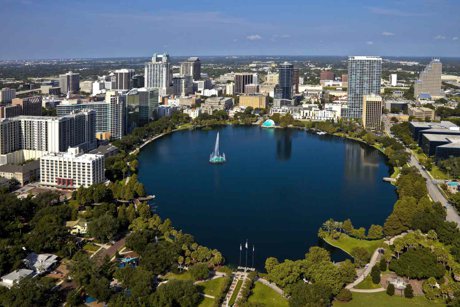
The City of Orlando has more than 100 lakes within its city limits, and surrounding Orange County is dotted with hundreds more. Orlando's lakes exist because Central Florida sits on porous limestone bedrock that rainwater slowly dissolves, creating a landscape called karst that is prone to sinkholes. Many of those water-filled sinkholes became permanent lakes, including the iconic Lake Eola, which began as a sinkhole in the late 1800s. Florida's highest sinkhole risk lies in west-central Florida near Tampa, not in metro Orlando, so most local lakes are long-stable features rather than active hazards.
Here's something most people moving to Central Florida don't realize until they pull up a map: Orlando is absolutely riddled with lakes. Not a few scenic ponds, but hundreds of them, scattered across the metro like someone spilled a glass of water on a road map. The City of Orlando alone counts more than 100 lakes inside its city limits.
So what gives? Why does one inland city, nowhere near the coast, have this many lakes? The short answer is that Orlando is basically built on a giant block of Swiss cheese — and that fact shapes everything from where you can buy a lakefront home to a question every Florida transplant eventually asks: "Wait, should I be worried about sinkholes?"
The Short Answer: Orlando Is Built on Limestone
Underneath all that famously flat, sandy Florida ground is a thick layer of limestone — a soft, porous rock formed over millions of years from the compressed remains of ancient sea creatures. This limestone makes up the Floridan aquifer, the underground reservoir that supplies more than 90% of the state's drinking water.
Here's the catch: rainwater turns slightly acidic as it filters through the soil, and that mildly acidic water slowly dissolves limestone. Over thousands of years it carves out cracks, channels, and hollow cavities below the surface. Geologists call this holey, cave-riddled landscape karst. When the roof of one of those cavities can no longer support the sand and clay above it, the ground collapses — and you get a sinkhole.
From Sinkhole to Scenic: How a Lake Is Born
Now connect the dots. A sinkhole opens up, the bottom dips below the water table, groundwater and rainwater seep in, and over time that depression fills and stabilizes. Many of Central Florida's lakes were born exactly this way.
Want a fun party trick? University of Central Florida engineers note that a noticeably round lake most likely started as a sinkhole, because a collapsing cavity tends to fail in a neat funnel shape. Next time you fly into MCO, look down — you'll never see Orlando the same way again.
The poster child is Lake Eola Park in Downtown Orlando. Those famous swan boats glide across what was once a sinkhole that formed in the late 1800s on land owned by cattle baron Jacob Summerlin. His family donated the surrounding land to the city in 1883, and a public park was born. The fountain is man-made, but the lake itself is pure Florida geology.
Not every sinkhole is so charming, though. In 1981, the infamous Winter Park sinkhole opened up in a single afternoon, swallowing a house, part of a Porsche dealership, several businesses, and a community pool — roughly $4 million in damage. It eventually stabilized into what's now called Lake Rose, which is why Winter Park has lakefront property it arguably earned the hard way.
Just How Many Lakes Are We Talking About?
A lot. Here's the lay of the land:
- The City of Orlando: more than 100 lakes inside the city limits, from iconic Lake Eola to tiny Lake Dot at just 5.42 acres.
- Orange County: hundreds of named lakes, the largest being Lake Apopka, which sprawls across the western edge of the county near Ocoee and Winter Garden.
- Connected chains: some lakes link together into navigable systems, like the 13-lake Butler Chain of Lakes around Windermere and the Conway Chain of Lakes south of downtown.
That density is why "lakefront" isn't a luxury reserved for the ultra-wealthy here (though the Butler Chain certainly leans that way). In many Orlando neighborhoods, a lake view is simply part of the deal.
Why Should Orlando Residents Care?
Lakes Shape Daily Life Here
All this water isn't just pretty — it's functional. Orlando's lakes act as natural stormwater catchments that help control flooding during our legendary summer downpours, and they recharge the aquifer the whole region drinks from. They're also wildlife magnets: nearly 30 species of wading and migratory birds, including roseate spoonbills, ospreys, bald eagles, and wood storks, live in and around them.
For residents, lakes mean lifestyle. Bass fishing here is genuinely world-class, weekend paddleboarding is a thing, and lakeside parks anchor entire communities. To sample the variety in one outing, the Lakeside Orlando trio of Lake Eola, Leu Gardens, and Lake Apopka is a great start, and the Lake Apopka Wildlife Drive is one of the best birding spots in the state.
The Same Geology Makes the Springs, Too
Here's a bonus: the same karst process that drills holes downward also pushes water upward. Where the aquifer breaks the surface, you get crystal-clear, 72-degree springs — which is why a short drive from the city reaches some of Florida's most beautiful swimming holes. Explore them in our guide to Florida springs near Orlando.
The Sinkhole Question: What Homebuyers Actually Need to Know
Let's be real — if Orlando's lakes are old sinkholes, the obvious follow-up is: "Is my future house going to fall into one?" It's a fair question, and here's the honest breakdown.
The Reassuring Part:
- Most existing lakes are stable sinkholes that filled in centuries or millennia ago. A lake that's been sitting there since the 1800s isn't suddenly going to swallow your dock.
- Florida's highest-risk zone — the band of frequent collapses nicknamed "Sinkhole Alley" — runs through west-central Florida (Pasco, Hernando, and Hillsborough counties near Tampa), not metro Orlando.
- New sinkholes are most often triggered by drought or heavy groundwater pumping, not by simply living near a lake.
The Honest Caveats:
- No part of Florida is fully immune. The sinkhole-prone band does clip the northern Orlando area through Maitland and Winter Park.
- Sinkhole and "catastrophic ground cover collapse" coverage is handled differently from standard homeowners insurance in Florida — read your policy carefully.
- Before you buy, you can check a property's relative vulnerability using the Florida Geological Survey's sinkhole map and ask whether the area has any prior subsidence history.
Our take: for the vast majority of Orlando-area buyers, the lakes are a feature, not a hazard. Do your due diligence, line up the right insurance, and then go enjoy the swan boats.
What the Neighbors Know
Orlando's lakes aren't a landscaping decision or a developer's marketing gimmick — they're the visible result of millions of years of limestone slowly dissolving beneath our feet. The same porous bedrock that gives us drinking water, world-class springs, and the occasional dramatic sinkhole is exactly why The City Beautiful wears more than 100 lakes like jewelry.
For anyone considering a move to Central Florida, that geology is worth understanding. It explains why lake views are so common, why the birding and bass fishing are so good, and why a little homework on sinkhole risk and insurance is a smart step before you sign. Knowing the story behind the water makes you a sharper buyer. 🦢
To explore any specific lake's size, depth, and water-quality data, visit the Orange County Water Atlas. For the science behind it all, the Florida State Parks geology guide is a great primer on karst, springs, and sinkholes.
Dreaming of a lakefront address in Central Florida? Whether you're drawn to the Butler Chain near Windermere, the Conway Chain south of downtown, or a quiet neighborhood pond, check out our community guides or Contact Us for personalized relocation advice.