The Neighborhood Blog

The Neighborhood Blog features a variety of community, attraction and development update information for communities throughout the Orlando Metro and Central Florida Region.

May 30, 2026

Downtown Mount Dora: A Charming Lakeside Escape Near Orlando

Downtown Mount Dora: A Charming Lakeside Escape Near Orlando

Antique shops, a lakeside lighthouse, and 30+ festivals a year — here's what you'll discover in Florida's "New England of the South," about 40 minutes northwest of Orlando.

Shops in Downtown Mount Dora Florida

Downtown Mount Dora is a historic lakefront district in Mount Dora, Florida, located about 30 miles (roughly a 40-minute drive) northwest of downtown Orlando in Lake County via U.S. Highway 441. The walkable downtown overlooks 4,000-acre Lake Dora and is known for antique shops, art galleries, and locally owned restaurants. Mount Dora is nicknamed "Festival City" and hosts more than 30 events a year, including the Mount Dora Arts Festival and the Mount Dora Craft Fair. Signature landmarks include the 35-foot Mount Dora Lighthouse at Grantham Point and the Lakeside Inn, built in 1883 and recognized as Florida's oldest continuously operating hotel.

So you've spent your Orlando weekends at the theme parks, the outlets, and Restaurant Row — but did you know that less than an hour from downtown, there's a hilltop lake town that looks more like coastal New England than Central Florida? Welcome to Mount Dora, and specifically its compact, ridiculously photogenic downtown.

Here's the thing: Mount Dora is one of those places Orlando locals quietly love. It's close enough for a spur-of-the-moment Saturday, far enough to feel like a real getaway, and packed with antiques, lake views, and small-town charm. Whether you're after a relaxed afternoon or weighing a move somewhere quieter than the metro core, this is our guide to what you'll find downtown.

What (and Where) Is Downtown Mount Dora?

Let's be clear about geography first, because it matters. Mount Dora sits in Lake County — not Orange — about 30 miles northwest of downtown Orlando. Figure on roughly a 40-minute drive up U.S. Highway 441, a little longer in traffic. So this isn't a suburb of Orlando; it's a neighboring small town that happens to be an easy commute or day trip away.

The downtown itself is a few walkable blocks perched on a ridge above Lake Dora, a 4,000-plus-acre lake that anchors the whole town's identity. Florida is famously flat, so the gentle hills here genuinely stand out — combine that with brick streets, lantern-style lamps, and Victorian-era buildings, and you start to understand the "New England of the South" nickname. Parking downtown is generally free, and the best way to get around is simply on foot.

A Quick History: From Citrus Town to Lakeside Retreat

Mount Dora's roots go back to the 1840s, when a Georgia homesteader named Dora Ann Drawdy settled near the lake that would eventually carry her name. The town grew up around citrus and farming in the late 1800s, and when the railroad arrived, it brought a wave of Northern visitors who fell hard for the cool ridge, the lake breezes, and the winter sunshine.

That history is still standing. The Lakeside Inn, built in 1882–1883, is recognized as Florida's oldest continuously operating hotel and once hosted President Calvin Coolidge. The historic train depot, which opened in 1915, now houses the Mount Dora Area Chamber of Commerce and Visitor Center — a smart first stop for a free downtown map.

The Antique Capital: Shopping Downtown

If you came for one thing, it's probably the shopping. Mount Dora has a national reputation as an antiquing destination, and downtown is lined with antique stores, consignment shops, art galleries, and independent boutiques — the kind of places where you lose an afternoon flipping through vintage postcards and retro furniture.

Want to go deeper? A short drive from downtown, Renninger's Twin Markets sprawls across 117 acres with an indoor antique center and a weekend flea market drawing hundreds of dealers — a separate stop from the walkable core, so plan accordingly. If historic main streets are your thing, you'll also enjoy nearby Downtown Clermont and Downtown Sanford.

Where to Eat

Downtown Mount Dora punches above its size on food. A few favorites: Pisces Rising serves Florida-forward cuisine in a 1920s bungalow with lake views; the Goblin Market has tucked diners into book-lined rooms since 1996; and 1921 Mount Dora pairs contemporary plates with the Modernism Museum next door. Most of it sits within a few walkable blocks.

For a full rundown of where to eat — including current hours and what to order — see our guide to Mount Dora restaurants. Local tip: weekend evenings fill up fast, so a reservation is your friend.

Landmarks and Things to Do

Beyond shopping and eating, the downtown waterfront is the heart of a visit:

  • Mount Dora Lighthouse — A 35-foot red-and-white lighthouse at Grantham Point, built in 1988 and one of the few inland freshwater lighthouses in Florida. It's about a 15-minute walk from downtown and a classic sunset spot.
  • Lake Dora boat tours — Hop on a guided lake cruise (several depart near the Lakeside Inn) or rent a boat at the marina to explore the lakes and canals.
  • Museums — The Modernism Museum, the Mount Dora History Museum, and the Museum of Speed give you indoor options when the Florida sun gets intense.
  • Parks — Palm Island Park's boardwalk winds through a cypress-and-palm nature preserve, while Donnelly Park and Gilbert Park sit right in or near downtown.

For the more adventurous, walking, trolley, and seaplane tours are available, plus bass fishing on Lake Dora — a lot of variety for a town this size.

Festival City: 30+ Events a Year

Mount Dora doesn't just have one signature event — it has dozens. The city hosts more than 30 festivals and events annually, which is why locals call it "Festival City." The headliners include the Mount Dora Arts Festival each winter and the nationally ranked Mount Dora Craft Fair, which draws hundreds of crafters and big crowds downtown.

The calendar also includes seasonal favorites like Light Up Mount Dora during the holidays, Snow in the Park for the kids, and Fourth of July fireworks over the lake. If you want to plan a visit around an event, our roundup of Central Florida festivals and traditions is a good place to start, and you can pair the trip with our Mount Dora and Cassadaga day-trip guide.

Day Trip or New Address? The Honest Pros and Cons

Plenty of Orlando residents treat Mount Dora purely as a getaway. Others fall for it and start browsing listings. Here's our honest read for both camps.

The Pros:

  • Walkable, genuinely charming downtown with free parking
  • Strong antiques, dining, and festival scene year-round
  • Lakefront setting and real (rare for Florida) elevation
  • Quieter, small-town pace within commuting distance of Orlando

The Cons:

  • It's a 40-ish-minute drive from Orlando job centers — a real commute, not a quick hop
  • Downtown gets crowded on big festival weekends
  • Fewer big-box stores and chain conveniences than the metro suburbs

Thinking about staying for good? Mount Dora offers neighborhoods for all ages, including the 55-plus Lakes of Mount Dora community. As of 2026, the median home sale price sits in the mid-$400,000s, though that swings a lot by neighborhood and whether you want a lakefront view. Families will want to review our Lake County schools guide, and anyone weighing Lake County against Orange or Seminole should read how Orlando's four counties compare.

What the Neighbors Know

Downtown Mount Dora isn't trying to compete with the theme parks, and that's exactly the point. It's a slower, prettier slice of Central Florida — a place to browse antiques, watch the sun set behind a lighthouse, and remember that Florida small towns can be every bit as appealing as the big attractions.

For Orlando-area residents, it's the perfect reminder that you don't have to leave the region to feel like you got away. Come for the day, and don't be surprised if you start wondering what it would be like to stay. 🏮

For current hours, event schedules, and a downtown map, visit the Mount Dora Area Chamber of Commerce, or browse the City of Mount Dora's official website for parks and festival details.


Curious whether a Lake County lifestyle fits your move to Central Florida? Explore Mount Dora homes for sale, or contact us for personalized relocation advice across the Orlando metro and beyond.
May 30, 2026

Oviedo on the Park: Seminole County's New Downtown

Oviedo on the Park: Seminole County's New Downtown

How Oviedo built a walkable town center from scratch — and why Central Florida homebuyers are noticing

Oviedo on the Park in Seminole County Florida

Oviedo on the Park is a 108-acre walkable town center in Oviedo, Florida, in southeastern Seminole County on the northeast side of the Orlando metro. The development includes roughly 800 homes, mixed-use retail, and Center Lake Park, a civic park the city built for about $9 million. Center Lake Park features an amphitheater, a cultural center, a splash pad, a dog park, a lakeside boardwalk, and swan paddle boats that rent for $5 to $10 on weekends. Oviedo on the Park sits about 10 to 15 minutes from the University of Central Florida and roughly 30 to 40 minutes from Downtown Orlando via SR 417.

Here's the thing about Oviedo: for decades it was the quiet, leafy suburb on the far northeast edge of the Orlando metro, known mostly for two things — highly rated schools and legendary free-roaming chickens. Then the city did something most Central Florida suburbs only talk about. It built itself a downtown.

That downtown is Oviedo on the Park, a 108-acre walkable town center wrapped around a man-made lake in Seminole County. If you're relocating to Central Florida and you've been told everything interesting is on the south and west sides near the theme parks, this is the article that tells you otherwise.

What Exactly Is Oviedo on the Park?

Oviedo on the Park came out of a public-private partnership that set out to give the city a real, walkable civic core. The master plan stitched civic, residential, retail, and commercial space into one connected framework — roughly 108 acres with nearly 800 homes on site and thousands more within walking distance. Its centerpiece is Center Lake Park, which the city reportedly invested around $9 million to build, giving a young development an instant sense of place.

What's Actually at Center Lake Park

This is where Oviedo on the Park earns its name. Center Lake Park packs a lot into a compact footprint:

  • An outdoor amphitheater with a large events lawn for concerts and festivals
  • The Oviedo Cultural Center — a 3,100-square-foot lakefront ballroom hosting events for up to 210 guests
  • Swan paddle boats at the boat house ($5-$10, Friday through Sunday)
  • A boardwalk and promenade circling Center Lake
  • A splash pad and wet deck, a large playground, and a dog park
  • A Veterans Memorial and an outdoor chess lounge with Adirondack chairs

The park is open daily from dawn to 10 p.m., and admission is free. You'll find more parks like it in our Oviedo parks and recreation guide.

A Quick History (Citrus, Chickens, and a Civic Reboot)

Fun fact: Oviedo's economy was originally built on citrus — local grower Butler Boston helped launch it by cultivating the temple orange, and his name still dots streets around town. Oviedo incorporated as a town in 1925 and a city in 1967.

And yes, the chickens are real. Oviedo's historic downtown — just south of Oviedo on the Park — is home to flocks of free-roaming chickens locals have semi-officially adopted as the town mascot. Even as Oviedo modernized, it kept its small-town personality; Oviedo on the Park is the deliberate pivot toward a denser, walkable future.

Why Should Central Florida Homebuyers Care?

If You Work at UCF or in Tech

This is Oviedo's killer app. The University of Central Florida — one of the nation's largest universities — sits about 10-15 minutes southwest, along with the Central Florida Research Park and its cluster of defense, simulation, and tech employers. If your job is in that orbit, living in Oviedo means a commute measured in minutes, not freeway miles. Seminole State College also has a campus nearby.

If Schools Are Your Top Priority

Oviedo's schools are a genuine draw, not marketing fluff. The city is served by Seminole County Public Schools, one of the region's highest-performing districts, and Oviedo's zoned schools routinely earn strong state grades. Dig into the details in our Seminole County Public Schools guide or our Oviedo schools and education guide.

If You Want Walkability Without Big-City Prices

The promise here is walking from your townhome to dinner, coffee, a concert, and a lap around the lake without touching your car. You'll find Starbucks, Panera, Chipotle, and a mix of local restaurants, salons, and shops in the town center — explore them in our Oviedo restaurants and dining guide.

Getting Around and Getting Outside

Oviedo's location has quietly improved thanks to SR 417 (the Central Florida GreeneWay), a toll road linking the northeast suburbs to the airport and the rest of the metro. You're roughly 30-40 minutes to Downtown Orlando, about 30 minutes to Orlando International Airport, and an easy run north to Orlando Sanford International Airport.

Outdoorsy types, take note: the Cross Seminole Trail runs right through Oviedo, a paved, traffic-free route for biking, walking, and running that ties into the wider Seminole County trail network. For everyday retail beyond the town center, the nearby Oviedo Mall and a growing roster of shopping centers round things out — see our Oviedo shopping guide.

Events: There's Almost Always Something Going On

Center Lake Park was built to host a calendar, and it delivers. The amphitheater runs concerts and movie nights, and the park anchors Oviedo's signature annual festival, the Taste of Oviedo, which draws tens of thousands for food and music. You'll also catch comedy nights, seasonal celebrations, and community markets — find the lineup in our Oviedo events guide.

Living Here: The Honest Pros and Cons

We don't do rose-colored glasses, so here's the real talk if you're weighing a home in or near Oviedo on the Park.

The Pros:

  • Walkable town center with dining, events, and a genuine sense of place
  • Top-rated Seminole County schools and a low-crime, family-friendly reputation
  • Minutes from UCF, Research Park, and the area's tech and defense employers
  • Cross Seminole Trail access and abundant green space and lakes nearby
  • Newer construction — townhomes, condos, and single-family — with modern layouts

The Cons:

  • A long haul to Disney and the western theme parks (closer to an hour)
  • SR 417 is a toll road, so budget for SunPass if you commute on it
  • The park is compact — some note the dog park and shade are limited
  • Cultural Center event rentals run on the pricier side

Our Take:

If your life revolves around UCF, east-side tech jobs, or top-tier schools, Oviedo on the Park is one of the strongest walkable options on this side of the metro, and the lifestyle-per-dollar is hard to beat. If you need quick theme-park access or downtown nightlife, weigh the cross-metro drive carefully. Not sure which Central Florida county fits your priorities? Our guide comparing Orlando's four counties is a great place to start.

What the Neighbors Know

Oviedo on the Park is proof that a suburb can will a downtown into existence — and that the result can feel authentic rather than manufactured. Locals know Center Lake Park as the spot for a swan-boat date, a Saturday playground run, or a free concert under the stars. They know the chickens still rule the historic downtown a few blocks south. And they know that being on the "quiet" side of the metro is a feature, not a bug, when your commute is fifteen minutes instead of fifty.

As Central Florida grows in every direction, places like Oviedo that offer walkability, strong schools, and real community amenities only get more attractive. If you've been overlooking the northeast metro, this is your sign to take a second look. 🌳

For current hours, event schedules, and facility details, visit the official City of Oviedo — Oviedo on the Park page, or browse the city's full parks and facilities directory.


Curious whether Oviedo or another Central Florida community is the right fit for your move? Browse Oviedo homes for sale or contact us for personalized relocation advice — we'll help you find the right neighborhood, on the right side of the metro, for the way you actually live!

May 30, 2026

Downtown Sanford: Central Florida's Historic Waterfront Gem

Downtown Sanford: Central Florida's Historic Waterfront Gem

Brick streets, craft beer, and Lake Monroe views just 25 minutes north of Orlando

Downtown Sanford Florida

Downtown Sanford is the historic district of Sanford, Florida, located on the south shore of Lake Monroe in Seminole County, about 20 miles and roughly 25 minutes north of downtown Orlando via Interstate 4. Centered on brick-lined First Street, the district is a designated Main Street America community known for craft breweries, the German restaurant Hollerbach's Willow Tree Cafe, art galleries, the Sanford RiverWalk, and a free public marina. Sanford was founded in 1877 by Henry Shelton Sanford and nicknamed the "Celery City" after celery replaced citrus as its main crop in the late 1890s. The Ace Cafe motor diner and music venue opened a new Sanford location in October 2025 at 115 North Laurel Avenue.

So you've zipped past Sanford a hundred times on Interstate 4 on your way to the beaches, the airport, or a Mount Dora day trip. But have you ever actually stopped? Here's something a lot of newer Central Florida residents don't realize: tucked between I-4 and the wide-open water of Lake Monroe sits one of the oldest, most charming downtowns in the region.

Welcome to Historic Downtown Sanford - a walkable grid of brick streets, century-old storefronts, craft breweries, and waterfront parks. It feels worlds away from theme-park Orlando while still being a quick drive up the interstate. Every "up-and-coming downtown" claims to have charm; Sanford actually has the receipts - more than a century of them.

A Quick History: From Celery City to Cool City

Sanford was founded in 1877 by Henry Shelton Sanford, a diplomat and businessman who bought land on the south shore of Lake Monroe and dreamed of building "the Gate City of South Florida." With the St. Johns River and steamboat traffic at its doorstep, Sanford became a major shipping hub for early Central Florida - long before Orlando was on anybody's radar.

A devastating fire in 1887 leveled the wooden buildings along First Street. The city rebuilt in brick, which is exactly why the downtown looks the way it does today. When the Great Freeze of 1894-95 wiped out the citrus groves, local farmers pivoted to celery, and by the early 1900s Sanford was one of the biggest vegetable shippers in the country - hence the enduring nickname, the "Celery City." In 1913 it became the seat of Seminole County, a title it still holds.

Here's the fun part: after decades as a quiet county seat, downtown has roared back. A waterfront RiverWalk project that began in 2003 reconnected the city to Lake Monroe, and a wave of independent restaurants, breweries, and shops turned First Street into one of the metro's most distinctive nightlife and dining districts.

What Makes Downtown Sanford Special

The short version? Authenticity. While much of Central Florida is master-planned and brand-new, Sanford's historic core is the real, old-Florida deal - and an officially recognized Main Street America community. The adjacent residential historic district joined the National Register of Historic Places in 1989 and holds hundreds of early-1900s homes shaded by towering oaks.

It's also genuinely walkable, which is rare around here. Park once and spend an entire evening wandering between galleries, taprooms, and the lakefront on foot.

The Food & Craft Beer Scene

This is where Sanford shines. The anchor is Hollerbach's Willow Tree Cafe, a beloved German restaurant and biergarten that's been packing in crowds (and accordion music) for years. For something different, the world-famous Ace Cafe - the London-born motorcycle-and-rock-'n'-roll diner - opened a new Sanford location in October 2025 at 115 North Laurel Avenue, with a full kitchen, indoor and outdoor bars, and a live-music stage.

Then there's the beer. Within a few walkable blocks you'll find craft spots like Wop's Hops Brewing (Sanford's first microbrewery), Deviant Wolfe Brewing, Sanford Brewing Company, and Celery City Craft. Quirky bonus: the Old Jailhouse Bar pours drinks inside a building that once served as the Seminole County jail. Hungry for the full rundown? Browse our Downtown Sanford restaurants guide.

The RiverWalk, the Marina & Lake Monroe

If the brick streets are downtown's heart, the waterfront is its soul. The Sanford RiverWalk runs for several scenic miles along Lake Monroe with paved paths, gazebos, swinging benches, and some of the best sunset views in the metro. Along the way you'll pass Veterans Memorial Park, Fort Mellon Park, and the small but worthwhile Sanford Museum.

Boaters, take note: the city marina offers free day slips, so you can pull up by water, grab dinner downtown, and head back out - a low-key perk locals love. Lake Monroe connects to the St. Johns River, making this a legit gateway for fishing, kayaking, and lazy afternoons on the water.

Events Worth Circling on the Calendar

Downtown Sanford doesn't sit still. A few of the standouts:

  • Alive After 5 - a monthly street party that turns First Street into an open-air block party with vendors and live music.
  • Saturday Farmers Market - a long-running weekly market for produce, baked goods, and local makers.
  • Sanford Porchfest - an annual festival where musicians perform on the porches of historic-district homes.
  • Palooza Beer Festival - a November craft-beer event featuring 200-plus brews and food vendors.
  • Love Your Shorts Film Festival - an annual short-film showcase at the historic Wayne Densch Performing Arts Center.

For more nearby outings, our Mount Dora and Cassadaga day trips guide pairs perfectly with a Sanford weekend.

Getting There & Getting Around

Location is one of Sanford's quiet advantages. The downtown sits just off Interstate 4, with the 417 Eastern Beltway wrapping the area for quick toll-road access to the rest of the metro. Rough drive times:

  • Downtown Orlando - about 25 minutes (roughly 20 miles via I-4)
  • Walt Disney World / theme-park area - 40-50 minutes
  • New Smyrna Beach / Atlantic coast - about 45-55 minutes

You don't even need a car for the Orlando trip: the SunRail commuter train has a Sanford station that runs straight down the spine of the region. And yes, the city has its own airport - Orlando Sanford International Airport (SFB) - a low-cost and charter alternative to MCO.

Living Near Downtown Sanford: The Real Deal

Thinking about more than a visit? Here's our honest take on calling this area home.

The Pros:

  • Genuine historic character - early-1900s homes, brick streets, and mature trees you can't fake in a new build
  • A walkable, lively downtown with dining, nightlife, and waterfront recreation
  • Generally more affordable than comparable homes closer to the theme-park corridor
  • Strong connectivity via I-4, the 417, SunRail, and the Sanford airport
  • Waterfront and lake-access living right in town - explore Sanford waterfront homes

The Cons:

  • Longer commute if you work near Disney, Universal, or West Orange employment centers
  • Older homes mean older systems - budget for maintenance, and check for no-HOA versus HOA tradeoffs
  • A few blocks near the district are still improving
  • Train horns and weekend nightlife can mean noise close to the core

For families, it's worth digging into the local schools - our Seminole County public schools guide is a solid starting point, and Seminole State College has a campus right in town. If you'd rather be near the shops, the Seminole Towne Center retail hub sits just west of downtown.

What the Neighbors Know

Downtown Sanford rewards the people who bother to slow down and explore. It's not the glossy, master-planned Orlando the tourists picture - it's older, weirder, and frankly more interesting. You get real history, real walkability, and a waterfront most of the metro can only wish for.

Is it for everyone? No. If your daily life revolves around the theme-park corridor, the commute may test your patience. But if you crave character, community, and a downtown where the bartender knows your name, Sanford delivers in a way few Florida cities can. 🍺

For current hours, events, and the full business directory, visit the official Sanford Main Street and Historic Downtown Sanford websites.


Curious whether life north of Orlando fits your plans? Browse Sanford homes for sale or reach out to our team for personalized, no-pressure relocation advice. We know this metro corner to corner - including the gems most people drive right past.

May 30, 2026

Downtown Celebration: The Town Center Disney Built Near Orlando

Downtown Celebration: The Town Center Disney Built Near Orlando

Brick streets, a lakeside Main Street, and world-famous architecture — minutes from the gates of Walt Disney World

Downtown Celebration Florida

Downtown Celebration is the walkable, pedestrian-first town center of Celebration, FL, a master-planned community in Osceola County. Its Market Street and Front Street shops, restaurants, and offices wrap around Lake Rianhard, about 25 miles southwest of downtown Orlando and roughly 5 miles (a 10-15 minute drive) from Walt Disney World via World Drive. Disney built Celebration and completed its downtown in 1996, then sold the 16-acre town center to private investor Lexin Capital in January 2004. The compact center holds roughly 20 shops and restaurants, including the Columbia Restaurant, which opened on Lake Rianhard in 1997. Downtown Celebration is known for civic buildings designed by world-famous architects and for the nightly Now Snowing holiday event each December.

So you've heard that Disney once built an actual town — not a theme park, but a real place where people buy homes, walk their dogs, and grab coffee. That place is Celebration, and its beating heart is Downtown Celebration: a compact, brick-paved Main Street wrapped around a lake, just down the road from the Magic Kingdom.

Here's the thing most newcomers don't realize, though: Disney doesn't run this place anymore. The Mouse cashed out of the town center two decades ago. What's left is something more interesting — a genuinely walkable downtown that has spent 30 years figuring out how to be a real neighborhood and not a movie set.

Whether you're scoping out a condo, planning a date night, or just curious about the place, here's our local take on what Downtown Celebration actually is.

What Exactly Is Downtown Celebration?

Downtown Celebration is the town center of the larger Celebration community, anchored by two short streets — Market Street and Front Street — that curve around Lake Rianhard. The whole thing is genuinely small: a roughly 16-acre core with around 20 shops and restaurants. You can walk the entire downtown in 15 minutes, which is either charming or limiting depending on your expectations.

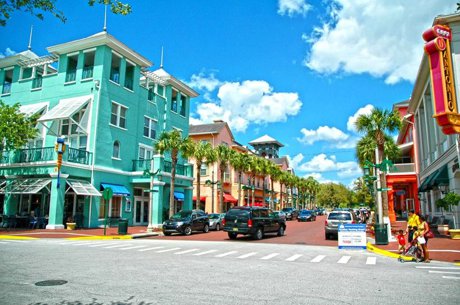
What sets it apart is that it was designed to be walked, not parked at. The streets are brick, lined with palm trees and colorful low-rise buildings with shops at street level and condos above — the kind of pedestrian-first layout that's surprisingly rare in car-dependent Central Florida. For residents of Kissimmee and surrounding Osceola County, it functions as a small-town square that doesn't really exist anywhere else nearby.

A Quick History: The Downtown Disney Designed (Then Sold)

The Walt Disney Company announced Celebration in the early 1990s as a real-world experiment in "New Urbanism" — walkable streets, front porches, garages tucked into rear alleys, and a true town center. Construction began in 1994, the first family moved in on June 18, 1996, and the community marks November 12, 1996 as "Founders Day," the date downtown was completed.

Now for the part the brochures skip: in January 2004, Disney sold the 16-acre town center to Lexin Capital, a private investment firm, and stepped back from running the community. Today every home, condo, and storefront is privately owned and managed — not by Disney. (A few Disney divisions still keep offices in the nearby Celebration Place complex, which fuels the confusion.) Want the full backstory? Read our deep dive on the history of Celebration.

The Architecture Is Genuinely the Attraction

This is the part that makes Downtown Celebration unusual: the buildings themselves are the draw. Disney hired a roster of internationally famous architects to design the civic structures. The columned Town Hall is the work of Philip Johnson, the playful Post Office was designed by Michael Graves, the cinema came from Cesar Pelli, the bank from Robert Venturi, and the master plan from Robert A.M. Stern and Jaquelin Robertson.

For architecture buffs, that's a remarkable lineup packed into a few walkable blocks — and yes, design students really do make the pilgrimage. To do it justice, our self-guided architectural walking tour of Celebration maps the highlights, with more in our Celebration arts and culture guide.

Eating, Shopping, and Strolling on Market Street

The downtown's anchor is the Columbia Restaurant, which opened on Lake Rianhard in 1997. It's a satellite of Florida's oldest restaurant chain — the original was founded in Tampa's Ybor City in 1905 — serving Spanish-Cuban classics with a lakeside view that's hard to beat in Osceola County. Order the 1905 Salad; it's made tableside.

Beyond Columbia, Market Street runs on small, owner-operated charm: sweets from Kilwins and Le Macaron, a handful of boutiques and gift shops, and the kind of storefronts you browse rather than rush through. On Sundays, the year-round Celebration Sunday Farmers Market takes over with produce, honey, crafts, and prepared food. For the full lineup, see our Celebration restaurants and dining guide and Celebration shopping guide. Want it as an itinerary? We mapped out a perfect day in Celebration Town Center.

The Events That Take Over Downtown

Downtown Celebration's calendar is its secret weapon. The headliner is Now Snowing, a holiday tradition that's run for nearly three decades. From late November through December 31, synthetic "snow" falls on Market Street nightly at 6, 7, 8, and 9 PM, paired with ice skating, horse-drawn carriage rides, train rides, and Santa. Admission and parking are free — which is why it draws crowds from across Central Florida.

The other signature is the annual Exotic Car Festival, when hundreds of rare cars line the streets. Add seasonal markets and community gatherings, and the downtown earns its name as one of Osceola County's most event-driven spots. Find the full schedule in our Celebration entertainment guide.

The Real Deal: Pros and Cons of Downtown Celebration

Let's be real — the downtown is special, but it isn't for everyone. Here's the honest scorecard.

The Pros:

  • Genuinely walkable — rare in Central Florida, and a real draw for buyers who want a car-optional lifestyle
  • Lakeside dining and a postcard setting on Lake Rianhard
  • World-class architecture you can actually live next to
  • A packed events calendar, anchored by Now Snowing
  • About 5 miles from Walt Disney World — roughly a 10-15 minute commute for the thousands who work there

The Cons:

  • It's small. Around 20 businesses means you'll exhaust the shopping in an afternoon and may run errands elsewhere (Celebration Pointe, Disney Springs, or Loop 192)
  • Tourist traffic and event crowds mean parking near Market Street fills up fast on peak nights
  • Town Center living is premium-priced, with HOA dues plus Community Development District (CDD) assessments on top
  • Governance can get contentious — the privately controlled Town Center Foundation has faced resident disputes over maintenance and fees since Disney's 2004 exit
  • Boutique retail turns over; the storefront you loved last year may be something else this year

Who Should Care About Downtown Celebration?

If you want to walk to dinner, the farmers market, and a fake snowfall in December, the condos in the downtown core — Main Village, Town Center Condos, and Water Street — put you steps from all of it. It's an especially strong fit for empty nesters wanting low-maintenance lakeside living and for Disney-area professionals who value a short commute. Browse options in our Celebration condos guide, and check pricing in the Celebration market report.

If you need a big-box shopping district, a quiet street with no event traffic, or rock-bottom carrying costs, the downtown core probably isn't your match — though Celebration's outer villages and neighboring communities offer those within a few minutes' drive.

What the Neighbors Know

Downtown Celebration is one of those genuinely one-of-a-kind places in Central Florida: a real, walkable, lakeside Main Street with a famous design pedigree and a 30-year track record as an actual neighborhood. The honest caveat is that it's small and privately managed — charming, but not a substitute for a full retail hub.

For the right buyer, that trade-off is exactly the appeal. There's nothing else quite like watching snow drift over a brick street under warm Florida air, then walking home. That's pretty Celebration right there. ✨

For current hours, shops, and the event calendar, visit the official Celebration Town Center website.


Thinking about calling Downtown Celebration home, or comparing it to walkable spots like nearby Downtown Kissimmee? Explore listings in our Celebration homes guide or contact us for personalized Central Florida relocation advice!

May 30, 2026

Downtown St. Cloud: Orlando's Historic Soldier City

Downtown St. Cloud: Orlando's Historic Soldier City

The Civil War veterans' colony turned walkable lakefront downtown — and what living near it means for Orlando-area buyers

Downtown Saint Cloud Florida

Downtown St. Cloud is the historic Main Street district of St. Cloud, Florida, in Osceola County, about 32 miles southeast of downtown Orlando and roughly 24 miles from Walt Disney World. Founded in 1909 as a Grand Army of the Republic veterans' colony on 35,000 acres, the area earned the nickname "Soldier City," and its downtown is listed on the National Register of Historic Places. New York Avenue anchors a walkable strip of locally owned shops, restaurants, art galleries, and 14 murals on the Florida Mural Trail. The adjacent Lakefront Park on East Lake Tohopekaliga features a sand beach, marina, fishing pier, splash pad, and boat ramp. The Downtown St. Cloud Farmers Market runs every Saturday, with a Monthly Market on the last Wednesday of each month.

Most people relocating to Central Florida have heard of Celebration's storybook Main Street and the buzz around Lake Nona. But about 32 miles southeast of downtown Orlando, there's a brick-streeted little downtown with a story you won't find anywhere else in the metro: St. Cloud was literally built by Civil War veterans.

Here's the thing — Downtown St. Cloud doesn't try to be a polished, master-planned town center. It's the real, lived-in historic heart of a city that began as a retirement colony for Union soldiers in 1909. That history is still stamped into the street signs, the murals, and the lakefront, and for buyers weighing the southeast side of the Orlando metro, it's worth understanding what this district is and who it fits.

Soldier City: How Downtown St. Cloud Got Its Start

In 1909, the Seminole Land & Investment Company — an outfit organized through the national Grand Army of the Republic, the fraternal organization of Union Civil War veterans — purchased roughly 35,000 acres here for a veterans' colony. Aging soldiers could buy building lots for about $50, and many arrived by rail and lived in tents while their homes went up.

The town's editor-promoter, Col. John McElroy, laid out the grid and named the downtown north-south avenues for Union states: New York, Pennsylvania, Massachusetts, and so on. (Streets honoring former Confederate states were added later as the city spread east and west.) That's how St. Cloud earned its enduring nickname, Soldier City.

By 1910 the colony had a couple thousand residents, an electric and ice plant, churches, a school, and a brick railroad depot. The downtown's GAR Memorial Hall was completed in 1914, and the Veterans Memorial Library — now home to the St. Cloud Heritage Museum — opened in the early 1920s. Today the Downtown Historic District is on the National Register of Historic Places, with the story traceable across seven Florida Historical Markers in a few walkable blocks.

What Makes Downtown St. Cloud Special Today

The nonprofit St. Cloud Main Street program, founded in 1999, has spent two and a half decades nudging this district back to life. By its own count, the program area has added more than 300 net businesses and several hundred jobs, with public and private investment approaching $25 million.

Along New York Avenue you'll find antique shops, boutiques, art galleries, and cafes tucked into preserved early-20th-century storefronts. Fourteen hand-painted murals on the Florida Mural Trail turn a stroll into a free history lesson — all walkable, bike-friendly, and free of the I-Drive tourist crush.

Then there's the water. Just south of the historic blocks, the city's Lakefront Park spreads along East Lake Tohopekaliga with a sandy swimming beach, a marina, a long fishing pier, a splash pad, a playground, and a boat ramp. Crabby Bill's sits right at the marina with lake views and weekend live music. If you want the full rundown on the waterfront, our guide to Saint Cloud Lakefront Park digs into the details.

The community calendar is the other secret weapon. The Downtown St. Cloud Farmers Market runs every Saturday, a Monthly Market pops up on the last Wednesday of each month, and St. Cloud Main Street stacks the year with seasonal festivals. It's the kind of place where you'll run into neighbors — which, fittingly, is why locals also call it "The Friendly City."

Why Should Orlando-Area Buyers Care?

Because St. Cloud is one of the better value plays in the Orlando metro — and Downtown St. Cloud is its identity anchor. While neighboring Kissimmee and the Disney corridor lean heavily into tourism, St. Cloud has stayed more residential and affordable, with everything from no-HOA acreage on the Alligator Chain of Lakes to new master-planned communities like Weslyn Park at Sunbridge and 55+ options such as Twin Lakes and Del Webb Sunbridge.

Let's be real about the trade-off, though: location cuts both ways. You're roughly 24 miles from Walt Disney World and a short hop to Gatorland, but you're also about 32 miles from downtown Orlando jobs. Most St. Cloud commuters lean on the Florida Turnpike and US 192 (Irlo Bronson Memorial Highway) to reach Orlando, the airport, and the parks. Our breakdown of Highway 192 is worth a read if a daily commute is in your future.

Families have schooling questions, too. St. Cloud is served by the School District of Osceola County, and downtown sits near several long-established schools. For ratings and boundaries, see our Osceola County School District guide.

Visiting Downtown St. Cloud: Tips From the Locals

Scouting the area before you buy? A few pointers:

  • Park once, walk everywhere. The historic core around New York Avenue and 10th Street is compact, with free street parking.
  • Come on a Saturday morning. The Farmers Market plus a beach walk at Lakefront Park is the most efficient way to feel the community in a couple of hours.
  • Start at the Heritage Museum. Housed in the 1920s Veterans Memorial Library on Massachusetts Avenue, it frames the Soldier City backstory before you wander the murals.
  • Bring a fishing pole. East Lake Toho is a nationally known bass fishery, and the public pier and boat ramp make it easy to get on the water.

If you like this kind of historic-downtown energy, it's worth comparing notes with Downtown Kissimmee and the more polished, Disney-built Downtown Celebration nearby in Celebration.

The Real Deal About Living Near Downtown St. Cloud

The Pros:

  • Genuine historic character and a walkable, locally owned downtown
  • Lake access and outdoor recreation right at Lakefront Park
  • Generally lower home prices than much of the Orlando metro, with no-HOA and acreage options
  • Strong community calendar — markets, festivals, and small-town friendliness
  • Reasonable distance to Disney and the rest of Osceola County's attractions

The Cons:

  • Longer commute to downtown Downtown Orlando employment centers (roughly 32 miles)
  • Rapid growth on the city's edges is changing the once-rural feel
  • Fewer big-box and chain conveniences than Kissimmee or Lake Nona

Our Take:

If you want lake life, lower prices, and a downtown with actual roots — and you don't mind a longer drive (or you work remotely) — Downtown St. Cloud is one of the most underrated corners of the metro. If your daily reality is a downtown Orlando office and you need quiet, modern suburbia, you may be happier closer in. Either way, the value-per-dollar story here is hard to ignore.

What the Neighbors Know

Downtown St. Cloud isn't a manufactured town center — it's a hundred-plus-year-old Soldier City that veterans literally carved out of palmetto and pine. That authenticity is what makes it special: murals and historical markers, a real lakefront, a Saturday market, and a price tag that still leaves room to breathe.

For relocating buyers, the math is straightforward — trade a longer commute for more home, more lake, and more character. Plenty of Central Floridians make that trade happily, and many will tell you the brick streets and the water sealed the deal. ⚓

For current event calendars, business listings, and downtown details, visit the official St. Cloud Main Street website, and explore the area's roots through the St. Cloud Heritage Museum.


Thinking about the southeast side of the Orlando metro? Browse St. Cloud listings, compare nearby Kissimmee options, or contact us for personalized relocation advice and a guided tour of Osceola County's communities!

May 30, 2026

Downtown Baldwin Park: Orlando's Walkable Village Center

Downtown Baldwin Park: Orlando's Walkable Village Center

New Broad Street, Lake Baldwin, and what life looks like in Orlando's most successful new-urbanist town center

Baldwin Park Town Center near Downtown Orlando

Downtown Baldwin Park is the Baldwin Park Village Center, a walkable, mixed-use town center along New Broad Street in Orlando, FL (ZIP 32814), roughly two to three miles from downtown Orlando. The community was built on the former Naval Training Center Orlando, with its first residents arriving around 2002–2003, and is home to roughly 10,000 people today. The Village Center overlooks Lake Baldwin and packs restaurants, shops, a Publix, a CVS, offices, and apartments into a pedestrian-friendly grid with a Walk Score in the mid-70s. A 2.5-mile loop trail circles Lake Baldwin, and New Broad Street hosts a weekly farmers market and community events.

So you've heard Orlando is all theme parks, toll roads, and sprawling subdivisions — but did you know there's a corner of the city where you can walk out your front door, grab a coffee, pick up groceries, meet friends for a beer, and never touch your car? Welcome to Downtown Baldwin Park, the little Village Center on New Broad Street that proves Baldwin Park isn't just another master-planned neighborhood.

Here's the thing: most "town centers" in Florida look fantastic in the rendering and sit empty after 7 p.m. Baldwin Park's actually works — it's busy on a Tuesday, and people linger. Whether you're scoping out the area as a future resident or just looking for a new spot to spend a Saturday morning, this walkable little district is worth knowing about.

So What Exactly Is "Downtown" Baldwin Park?

When locals say "downtown Baldwin Park," they're talking about the Baldwin Park Village Center — the cluster of shops, restaurants, and services lining New Broad Street, the community's main commercial spine. It's not a separate city or a formal downtown like the one across town; it's the beating heart of the Baldwin Park neighborhood.

The layout is classic new urbanism: ground-floor storefronts with apartments and condos stacked above, wide sidewalks, on-street parking, and a tidy grid that connects to the surrounding homes. A full-size Publix and a two-story CVS anchor the everyday errands, while independent restaurants, cafes, bars, fitness studios, and professional offices fill in the rest. All told, Baldwin Park is home to roughly 125 businesses, with the densest concentration packed right here. For the full rundown, our Baldwin Park shopping guide and Baldwin Park restaurants guide break down what's where.

From Navy Base to New Urbanist Showpiece

Here's a fun fact for your next trivia night: this entire neighborhood used to be a military base. For more than 50 years, the land was the Naval Training Center Orlando, where roughly 652,000 recruits trained before the Pentagon closed it in the late 1990s. (The community's namesake, Robert Baldwin, was an undersecretary of the U.S. Navy in the 1960s — and you'll spot streets named after naval terms throughout.)

Rather than carve the roughly 1,100-acre site into big-box stores and cul-de-sacs, the City of Orlando held a national design competition and recruited a team of acclaimed new-urbanist planners. The Vision Plan, drafted around 1997, called for a walkable, mixed-use neighborhood barely two miles from City Hall. Construction kicked off in 2001, and the first residents started moving in around 2002–2003. Today it's one of the country's most successful walkable "infill" redevelopments, home to roughly 10,000 residents.

What Makes the Village Center Special

Plenty of Orlando neighborhoods have a strip mall nearby. Baldwin Park has a town center you can actually live in. Here's what sets it apart:

  • Genuine walkability. Baldwin Park scores in the mid-70s on Walk Score, meaning most daily errands don't require a car. That's rare in Central Florida.
  • Lakefront setting. The Village Center overlooks Lake Baldwin, and a 2.5-mile loop trail circles the water — popular with joggers, cyclists, and dog owners (there's a dog-friendly area, too).
  • Real community life. A weekly farmers market, outdoor dining, and rotating events keep New Broad Street animated well beyond business hours.
  • Everything in one place. Groceries, pharmacy, bank, coffee, dinner, gym, and a doctor's office — all within a short stroll.

If outdoor space is your priority, our Baldwin Park parks guide covers Lake Baldwin and the green spaces woven through the neighborhood.

Why Should Orlando Residents Care?

Location, mostly. Downtown Baldwin Park sits roughly two to three miles from Downtown Orlando, which means a short commute to the city's biggest employment center and easy access to the Downtown Orlando dining and culture scene. It also borders Winter Park to the north — so the boutiques and brick-paved charm of Park Avenue are just minutes away.

For families, the big draw is school zoning: Baldwin Park feeds into highly regarded schools, with the Winter Park High School zone widely considered the neighborhood's single strongest selling point. You can dig into the specifics in our Baldwin Park schools guide.

Visiting Downtown Baldwin Park: The Practical Stuff

The Village Center is centered on the intersection of New Broad Street and Jake Street, Orlando, FL 32814. Coming from elsewhere in the metro, the easiest approach is to exit off State Road 50 (Colonial Drive) and follow the signs in — the district is tucked into the interior of the neighborhood, so it's quieter than the arterial roads on its edges.

Parking: There's free on-street parking plus a few public lots, though spaces fill up fast during weekend events and the farmers market, so arrive early if you can. Hours: The Village Center itself is a public, open-air street you can stroll anytime; individual shops and restaurants set their own hours, generally late morning through evening. Want to time a visit around a festival or market? Check our Baldwin Park events guide.

Living In or Near Downtown Baldwin Park: The Real Deal

Let's be real — this kind of walkable, lakefront lifestyle comes at a premium. Here's the honest breakdown.

The Pros:

  • Rare, genuine walkability — most errands and dining within a short stroll
  • Short hop to downtown Orlando, Winter Park, and major employment centers
  • Strong school zoning, including Winter Park High
  • Lake Baldwin trails, parks, and an active, social community
  • Strong resale demand and a well-maintained, award-winning master plan

The Cons:

  • Premium pricing — condos and townhomes often start in the high $400,000s, with single-family and estate homes running from about $1 million to north of $3 million
  • Community Development District (CDD) assessments are added to annual property taxes — verify the amount for any specific home
  • Some retail turnover over the years; storefronts occasionally sit vacant between tenants
  • Event-day parking and foot traffic can get tight near the Village Center

Our Take:

If you value walkability, community, and a short commute — and the budget works — few Orlando neighborhoods deliver the package Baldwin Park does. If you're chasing the lowest price per square foot or want a big suburban lot, you'll likely find better value elsewhere. Run the numbers (including those CDD assessments) before you fall in love; our Baldwin Park market report is a good place to start.

What the Neighbors Know

Downtown Baldwin Park isn't a downtown in the skyscraper sense — it's a town center built to human scale, where a former Navy base became one of Orlando's most livable corners. The neighbors know the secret: that on a good evening, New Broad Street feels less like a shopping plaza and more like an actual main street, the kind plenty of American towns lost decades ago.

Whether you come for dinner, a lap around Lake Baldwin, or to scope out your next home, it's a reminder that Orlando living can be about more than the parks and the highways. Sometimes it's just a walkable street, a good cup of coffee, and a neighborhood that actually feels like one. ☕

For current hours, events, business listings, and more, visit the official Downtown Baldwin Park website.


Curious whether Baldwin Park — or another walkable Orlando neighborhood — fits your life and budget? Explore our Baldwin Park homes for sale or contact us for personalized Central Florida relocation advice!

May 30, 2026

Mount Dora & Cassadaga: Two of the Best Day Trips from Orlando

Mount Dora & Cassadaga: Two of the Best Day Trips from Orlando

One's an antiques-and-lake town, the other's the "Psychic Capital of the World" — and both are an easy drive from Central Florida

Downtown Mount Dora Florida

Mount Dora and Cassadaga are two historic small towns north of Orlando, Florida, that make popular day trips. Mount Dora is a lakeside antiques town in Lake County, approximately 30 miles (about 40 minutes) northwest of Orlando via US Highway 441, sitting on Lake Dora at an elevation of 184 feet. Cassadaga is a Spiritualist community in Volusia County, approximately 50 miles northeast of Orlando off Interstate 4 Exit 114, founded in 1894 and nicknamed the "Psychic Capital of the World." Because the two towns sit on opposite sides of Orlando's northern arc, most visitors treat them as separate day trips rather than combining them into one.

Here's something we tell almost every family relocating to Central Florida: the theme parks are great, but the real charm of this region is what's hiding just outside the tourist bubble. Two of our favorite escapes sit a short drive north of Orlando, and they could not be more different from each other — or from Disney.

One is Mount Dora, a hilly antiques town wrapped around a lake. The other is Cassadaga, a 19th-century Spiritualist community where certified mediums give readings on tree-shaded streets. Whether you're settled out west in Winter Garden or Ocoee or just scoping out life beyond the parks, both make a memorable day out.

Let's be real: these are two distinct trips, not a tidy two-for-one. We'll cover each, then give you the honest take on doing both in one day.

Mount Dora: Old Florida Charm, 40 Minutes Northwest

Mount Dora sits about 30 miles northwest of Orlando in Lake County, roughly a 40-minute drive up US 441. The town of about 17,000 perches on Lake Dora, part of the Harris Chain of Lakes, and — unusual for Florida — it has rolling hills topping out near 184 feet. The city slogan is "Someplace Special," and for once the marketing isn't overselling it.

A Little History

Settlers arrived in the 1870s, and the town was renamed Mount Dora in 1883 after the lake, which is said to honor early settler Dora Ann Drawdy. The 1883 Lakeside Inn still hosts guests on the waterfront, and the downtown's 19th-century storefronts feel like an authentic Main Street rather than a recreated one.

What Makes It Special

Mount Dora built its reputation as one of Florida's antiquing capitals. The anchor is Renninger's Florida Twin Markets, a 117-acre site on the edge of town combining an antique center and a flea-and-farmers market, open weekends and hosting big multi-day antique extravaganzas in the winter months. Downtown adds boutiques, art galleries, and coffee shops packed into a walkable four-by-four-block core.

Don't miss the Mount Dora Lighthouse at Grantham Point Park. At 35 feet, this red-and-white tower is the only inland freshwater lighthouse in Florida — built by the community in 1988 to help boaters find the town docks after dark. It's the town's unofficial mascot. It's also a serious festival hub — a winter art festival, a fall craft fair, car shows, and garden shows draw crowds all year.

Practical Tips

  • Watch the calendar: Many downtown shops close on Mondays, so aim for Wednesday through Sunday.
  • Wear comfortable shoes: The fun is in wandering; those rolling hills are charming but real.
  • Eat downtown: Lakefront restaurants and historic-building eateries are the move after a morning of shopping.

Want to plan the visit in detail? Our guides to Downtown Mount Dora and Mount Dora Restaurants dig into the shops and dining spot by spot.

Cassadaga: The "Psychic Capital," 50 Minutes Northeast

Now for something completely different. Cassadaga is a tiny unincorporated community in Volusia County, about 50 miles northeast of Orlando — only five minutes off I-4 at Exit 114, near Lake Helen and Deltona. Drive in and you'll find oak-canopied streets, brightly painted Victorian cottages, and signs advertising readings — calm, whimsical, and unlike anywhere else in Central Florida.

A Little History

The Southern Cassadaga Spiritualist Camp was founded in 1894 by George P. Colby, a trance medium from New York who, as the story goes, was guided south by a spirit named "Seneca." It's the oldest active Spiritualist community in the Southeast, and its roughly 57-acre historic district has been listed on the National Register of Historic Places since 1992. Spiritualism centers on the belief in the "continuity of life" — that the spirit survives the body, and that mediums can communicate with it.

What to Know Before You Go

Here's the thing most first-timers get tangled up on: there are really two Cassadagas. The Spiritualist Camp itself certifies its mediums through a multi-year training process, and you'll find them, the Colby Memorial Temple, and the Camp Bookstore (the visitor information center, at 1112 Stevens Street) on one side of the road. Across the street, the independent Cassadaga Hotel — a 1927 building with its own restaurant and resident "friendly spirits" — operates separately and is not part of the Camp; its readers aren't camp-certified. Neither side is wrong to visit, but knowing the difference helps you choose who you're booking with.

Whatever you believe, it's a fascinating, respectful experience. Walking the streets is free, and the Bookstore keeps a binder of medium bios to help you pick. Guided daytime history tours and after-dark "spirit" tours are popular and worth booking ahead, especially around Halloween. Note: the Cassadaga Hotel is adults-only for overnight stays, though daytime visits to town are family-friendly.

Can You Really Do Both in One Day?

Technically, yes. Mount Dora and Cassadaga are about 30 miles (roughly 40 minutes) apart, connected by SR 46 and SR 472. But here's our honest take: they sit on opposite ends of Orlando's northern arc — one northwest, one northeast — so pairing them means a lot of driving and not much lingering. Both reward a slow pace; rushing either defeats the point.

If you're set on combining them, do Cassadaga first (it's quieter in the morning), then loop west to Mount Dora for lunch and a lakeside sunset. Otherwise, treat each as its own outing — honestly, that's what we'd do.

The Pros

  • Both are under an hour from most Orlando-area neighborhoods — easy half-day or full-day trips.
  • Genuine Old Florida character you won't find inside the theme-park bubble.
  • Low-cost: window shopping, lake views, and street strolling are free.

The Cons

  • Both lean quiet and slow — not the spot for thrill-seeking kids.
  • Mount Dora's downtown parking fills fast on festival weekends.
  • Combining both in one day means real windshield time.

If you'd rather stay closer to home, the same Old Florida vibe turns up at Downtown Sanford and Downtown Clermont, while Lakeridge Winery in Clermont makes another easy lakes-country detour. For the bigger picture of what's on around the region, see our roundup of Central Florida Festivals & Traditions.

What the Neighbors Know

The folks who've lived here a while will tell you the same thing: living in Central Florida isn't just about proximity to Disney — it's about how many wildly different little worlds sit within an hour of your driveway. From Windermere or Horizon West, you can be antiquing on a lakefront by mid-morning or talking to a medium by mid-afternoon.

Mount Dora is the easy crowd-pleaser — bring the family, plan around a festival, and budget time to wander. Cassadaga is for the curious; go in open-minded and respectful, and you'll come away with a story no matter where you land on the believing scale. Either way, these are the day trips that make people stop missing wherever they moved from. 🌴

For visitor details, hours, and event calendars, check the official City of Mount Dora site and the Southern Cassadaga Spiritualist Camp site before you go.


Thinking about where in Central Florida to put down roots so trips like these are in your backyard? Explore our Winter Garden and Windermere community guides, or contact us for personalized relocation advice. We know the neighborhoods — and the day trips!

May 29, 2026

Downtown Orlando's Cultural Core: Arts, Theater & Museums

Downtown Orlando's Cultural Core: Arts, Theater & Museums

The performing arts halls, museums, and festivals that prove Orlando is way more than theme parks

Downtown Orlando Arts District

Downtown Orlando's cultural core centers on the Dr. Phillips Center for the Performing Arts at 445 S Magnolia Avenue and the Kia Center arena (formerly Amway Center), with Lake Eola Park as the city's signature green space. About two miles north, Loch Haven Cultural Park concentrates the Orlando Museum of Art, Orlando Science Center, Mennello Museum of American Art, Orlando Family Stage, and Orlando Shakes within a single roughly 45-acre campus. The Dr. Phillips Center opened in 2014, and its Steinmetz Hall (2022) holds the highest possible N1 acoustic rating. Area museum admission generally runs $5 to $21, and the Orlando Fringe Festival — the longest-running fringe festival in the U.S. — fills Loch Haven Park every May.

So you've heard Orlando described as "the theme park capital of the world" — fair enough. But here's something most people moving to Central Florida don't realize: the city has a genuine, year-round arts scene that has nothing to do with roller coasters or character breakfasts. We're talking world-class acoustics, a 45-acre museum district, and one of the country's oldest theater festivals, all within a short drive of Downtown Orlando.

Whether you're a future resident sizing up the area or a longtime local who's never made it past the theme park gates, this is where Orlando actually spends its evenings and weekends — and it's one of the most underrated reasons to call Central Florida home.

The Crown Jewel: Dr. Phillips Center for the Performing Arts

If downtown has a cultural centerpiece, it's the Dr. Phillips Center for the Performing Arts at 445 South Magnolia Avenue. Owned by the City of Orlando, this $613 million complex opened in 2014 and became home base for the city's major performing arts companies — the Orlando Ballet, Opera Orlando, and the Orlando Philharmonic Orchestra.

Here's where it gets impressive. In 2022, the center completed Steinmetz Hall, a 1,700-seat multiform theater that earned the highest possible acoustic rating in the world (an "N1" rating, putting it in the same conversation as Carnegie Hall and the Sydney Opera House). For a city that built its reputation on animatronics, having a concert hall this acoustically perfect is a genuine flex.

The complex also includes the 2,700-seat Walt Disney Theater for touring Broadway, the intimate Pugh Theater, and Judson's Live, a cabaret room that opened in 2024 — meaning you can catch Broadway, a symphony, an opera, and a jazz set in one downtown block.

Just Down the Street: The Kia Center

A few blocks west at 400 West Church Street sits the Kia Center — the arena you may know as the Amway Center. The Orlando Magic renamed it in December 2023, so locals still sometimes use the old name.

Home to the NBA's Orlando Magic and the ECHL's Orlando Solar Bears, it hosts roughly 225 events a year and draws over 1.3 million guests — concerts, comedy, family shows, and championship sports. It's the high-energy counterpoint to the Dr. Phillips Center's polish, and together they anchor the downtown entertainment district.

The Heart of Downtown: Lake Eola Park

You can't talk about downtown's cultural core without Lake Eola Park. The iconic swan boats and the fountain you've seen on every postcard live here, but it's also a working cultural venue: the Walt Disney Amphitheater hosts free concerts and movie nights, the Sunday farmers market is a local institution, and the park anchors festivals year-round.

It's where the line between park and cultural venue blurs — and it's walkable from surrounding Downtown Orlando condos and historic neighborhoods like Thornton Park.

The Museum District: Loch Haven Cultural Park

Let's be clear about geography: Orlando's biggest cluster of museums isn't technically downtown. Loch Haven Cultural Park sits about two miles north of the core, in the Ivanhoe Village area between three lakes. But it's so central to the city's arts identity that no cultural-core conversation is complete without it.

This roughly 45-acre green space packs an astonishing amount of culture into one walkable campus:

  • Orlando Museum of Art (2416 N Mills Ave) — Orlando's flagship art museum, founded in 1924. The independently owned, 80,000-square-foot building is known for Ancient American and African art plus rotating contemporary shows.
  • Orlando Science Center (777 E Princeton St) — Four floors of hands-on exhibits, two theaters, and Florida's largest public observatory — a family go-to, with area admission generally $5 to $21.
  • Mennello Museum of American Art (900 E Princeton St) — A lakeside gem on Lake Formosa holding the world's largest collection of Earl Cunningham folk paintings, plus a sculpture garden.
  • Orlando Family Stage (formerly Orlando Repertory Theatre) — The state's only professional theater dedicated to young audiences. Founded in 1926, it celebrated its 100th anniversary in 2026.
  • Orlando Shakes — The city's professional Shakespeare company, based at the John & Rita Lowndes Shakespeare Center.

You can spend a full day bouncing from art to science to live theater. Our guide to Orlando Museum of Art digs deeper into the museum itself, and Lakeside Orlando connects Lake Eola, Leu Gardens, and beyond.

Don't Miss: The Orlando Fringe Festival

Here's a fun fact: Orlando is home to the longest-running fringe theatre festival in the United States. Founded in 1992, the Orlando International Fringe Theatre Festival takes over Loch Haven Park for about two weeks every May, with more than 1,000 performances ranging from polished musicals to gloriously weird one-person shows.

The model is refreshingly artist-first: 100% of ticket sales go directly to the performers, individual tickets stay at $15 or under, and outdoor entertainment on "The Lawn" is free. It's chaotic, inclusive, and deeply local — the kind of thing that makes a city feel like home.

Just North: Winter Park and the Garden Scene

If you keep heading north, the cultural trail continues into Winter Park, with its walkable Park Avenue, the Charles Hosmer Morse Museum (home to the world's most comprehensive Tiffany collection), and the Rollins Museum of Art. For a deeper dive, check our Winter Park guide.

And for the green-thumb crowd, Leu Gardens — 50 acres of botanical gardens near downtown — and the nearby Maitland Art & History Museum round out a corridor that stretches beyond the core.

Why Should Future Residents Care?

Beyond "it's nice to have things to do," a strong cultural core has real, practical implications for where you choose to live:

The Pros:

  • Walkable, year-round arts access if you live in or near downtown — no annual-pass required
  • Free and low-cost options (Lake Eola concerts, Fringe outdoor stages, museum free days) keep culture accessible on any budget
  • Downtown and Loch Haven-adjacent neighborhoods tend to hold value well thanks to proximity to amenities
  • A built-in community calendar — festivals, markets, and performances give the area a real sense of place

The Cons:

  • Downtown living comes with downtown trade-offs: event-night traffic and parking, and higher price-per-square-foot than the suburbs
  • The museum district (Loch Haven) is a short drive from the core, not walking distance from most downtown condos
  • Florida's recent arts-funding cuts have squeezed some nonprofits, so a few smaller venues have come and gone in recent years

What the Neighbors Know

Here's the honest take: Orlando's cultural core won't out-glitz New York or Chicago. But for a metro this size, the concentration of genuinely high-quality arts — an N1 concert hall, a century-old children's theater, a 45-acre museum park, and the country's oldest fringe festival — is seriously impressive. Most of it is affordable, much of it is free, and all of it is the kind of thing residents actually use rather than tourists.

If you're weighing a move and care about culture within reach, downtown and its neighboring districts deliver in a way the theme-park brochures never mention. It's the Orlando that locals quietly love. 🎭

For current shows, hours, and tickets, visit the official Dr. Phillips Center for the Performing Arts website.


Curious which downtown-adjacent neighborhoods put you closest to the arts? Explore our Downtown Orlando listings or Contact Us for personalized relocation advice — we'll help you find the right fit, culture and all!

Posted in Arts & Culture
May 29, 2026

Winter Park, Florida: The Story Behind Orlando's Most Storied Town

Winter Park, Florida: The Story Behind Orlando's Most Storied Town

Brick streets, lakefront estates, Tiffany glass, and a price tag to match — here's what actually gives Winter Park its character

Park Avenue in Winter Park Florida

Winter Park is a city of nearly 30,000 residents in Orange County, Florida, located roughly six miles north of downtown Orlando. Founded as a winter resort for wealthy Northerners by Loring Chase and Oliver Chapman in the early 1880s and incorporated in 1887, it was deliberately designed with brick streets, a shady oak canopy, and a central park beside a chain of lakes. Winter Park is home to Rollins College (Florida's first four-year college, founded 1885) and the Charles Hosmer Morse Museum, which holds the world's most comprehensive collection of Louis Comfort Tiffany works. It is one of Central Florida's most expensive markets, with median sale prices in the high $400,000s to $600,000s and a prestige core near Park Avenue that routinely exceeds $1 million.

Most Central Florida towns grew up around something practical — a railroad junction, a citrus packing house, a highway interchange. Winter Park grew up around an idea. Two Northerners with money and taste sketched a town on paper, planted the oaks, curved the brick streets around the lakes, and sold it as a place beautiful enough to winter in. Nearly a century and a half later, that idea is still doing the heavy lifting.

So what gives Winter Park its character — the thing you feel within five minutes on Park Avenue but can't quite name? It's not one feature. It's the way the history, the lakes, the college, the art, and the money all stack on top of each other, trade-offs included.

How Winter Park Became Winter Park

The founding story in a nutshell: in the early 1880s, Loring Chase and Oliver Chapman bought roughly 600 acres for about $13,000 and laid out a planned community for affluent Northerners escaping the cold. The first railroad depot was finished in 1882, a real estate boom followed, and the town incorporated in 1887.

What matters today is that Winter Park was designed from the start. Chase and Chapman bent the streets around the lakes, set aside a town green (today's Central Park), and planted the oaks that now shade the district. In 1885 the Congregational church founded Rollins College — Florida's first four-year college — cementing the town's cultured, intellectual reputation. (President Chester A. Arthur reportedly called it "the prettiest place I have seen in Florida.") That built-for-beauty DNA is why it still feels different from a subdivision that went up last year.

Park Avenue: The Heart of It All

If Winter Park has a living room, it's Park Avenue. Locals call it "Little Europe" — a walkable stretch of independent boutiques, sidewalk cafés, wine rooms, and fine dining beside the green of Central Park. The Downtown Winter Park Historic District here joined the National Register of Historic Places in 2011. Our Winter Park & Park Avenue restaurants guide covers the dining; our Park Avenue guide has the full walking-and-shopping rundown.

Two cultural anchors give the Avenue its weight. The Charles Hosmer Morse Museum, founded in 1942, holds the world's most comprehensive collection of Louis Comfort Tiffany works — including the chapel he designed for the 1893 World's Columbian Exposition (admission is free on Friday evenings, November through April). And Central Park, an 11-acre green deeded by Charles Hosmer Morse, hosts the Saturday-morning Winter Park Farmers' Market at the old depot and, every March, the Winter Park Sidewalk Art Festival — the 67th runs March 20–22, 2026, has been a fixture since 1960, and draws an estimated 250,000 people.

Life on the Water: The Chain of Lakes

You can't understand Winter Park without its lakes. The Winter Park Chain of Lakes — linked by narrow, jungle-canopied canals — is the backdrop for some of Central Florida's most coveted real estate. The best way to see it is the Winter Park Scenic Boat Tour, running since 1938: six 18-passenger pontoon boats offer hour-long cruises through three lakes and two hand-dug canals, gliding past Rollins, lakefront estates, and the occasional sunbathing alligator.

Here's the thing: the lakes aren't just scenery, they're a sorting mechanism. If you've wondered why two homes a few blocks apart can differ by a million dollars, the answer is usually water.

The Rollins Effect

A respected liberal-arts college built into the town center changes how a place feels, and Winter Park is proof. Rollins brings a steady current of lectures, gallery shows, theater (the historic Annie Russell Theatre is on campus), and the long-running Bach Festival Society concerts — and it keeps the town walkable. Our Rollins College guide covers why the college is such a big part of the area's cultural punch.

Let's Talk Money: What Winter Park Actually Costs

Straight talk: Winter Park is expensive. Depending on the source and the area, median sale prices generally run from the high $400,000s into the low $600,000s — while the prestige core near Park Avenue and the lakes routinely tops $1 million, with lakefront estates well into the multimillions. For context, the broader Orlando metro median is around $395,000.

The honest read: there's no "cheap" Winter Park, but there is a range. Condos, townhomes, and single-family homes east of U.S. 17-92 (toward the 32792 zip) tend to hold the more attainable inventory; the closer you get to Park Avenue and the water, the steeper it climbs.

The Full Picture: Honest Pros and Cons

An honest guide includes the complicated parts. Hannibal Square, on the west side, was historically home to Winter Park's Black community — many of them the laborers who built the resort town. In 1893, influential residents pushed through a de-annexation that cut much of the west side out of the city limits until a new charter restored it decades later. Today it's been largely redeveloped into a dining and shopping district, bringing investment and, with it, the familiar tensions of gentrification and displacement. That's a real, ongoing part of the town's story, not a footnote.

The practical scorecard:

The Pros:

  • Genuine walkability and a real town center — rare in Central Florida
  • Mature tree canopy, brick streets, and lake views by design
  • World-class arts and culture for its size (Morse, Rollins, the festivals)
  • SunRail, Amtrak, and a short hop to downtown Orlando
  • Strong, durable property values that hold up over time

The Cons:

  • Expensive across the board, and steeply so near the core
  • Older housing stock often means renovation or teardown-and-rebuild costs
  • Park Avenue parking and festival-weekend traffic
  • Smaller lots in the historic core if you want a sprawling yard

Getting Around

Connectivity is underrated here. A SunRail commuter station and an Amtrak stop share the historic depot off Park Avenue, so you can train into downtown without touching I-4. By car, downtown is about six miles south, usually 15 to 20 minutes. You're also near neighbors worth knowing — the planned-community charm of Baldwin Park to the south (our Downtown Baldwin Park guide), the museums and lakes of Maitland to the north (the Maitland Art & History Museum), and the energy of Downtown Orlando. For healthcare, the AdventHealth Winter Park campus keeps a full-service hospital close — see our AdventHealth hospital system guide.

What the Neighbors Know

Winter Park isn't trying to be the next master-planned suburb, and that's the point. It's a 140-year-old idea about how a town should feel — shaded, walkable, cultured, built beside the water — that has aged remarkably well. The neighbors will tell you the magic is the everyday version: a Saturday at the farmers' market, a boat ride at golden hour, a free Friday night at the Morse, a slow walk down Park Avenue under the oaks.

They'll also tell you it costs to be here, and that the charm comes with a complicated history worth understanding. If that mix sounds right — and your budget agrees — few places in Central Florida deliver this much character per square mile. 🌳

For events and visitor details, visit the official City of Winter Park website.


Thinking about calling Winter Park home? Browse our Winter Park homes for sale page, or contact us for honest, local relocation advice tailored to your budget and must-haves!

May 29, 2026

Mount Dora Restaurants: A Local's Guide to the Best Eats Near Orlando

Mount Dora Restaurants: A Local's Guide to the Best Eats Near Orlando

From lakefront fine dining to British pubs and a buzzing brewery scene, here's where to eat in Central Florida's antique-and-appetite capital.

Mount Dora Restaurants

Mount Dora is a lakeside town in Lake County, Florida, about 35 miles northwest of downtown Orlando, roughly a 40-minute drive via US-441 or the SR-429 Wekiva Parkway. Its downtown dining scene has drawn national attention and includes lakefront Florida cuisine at Pisces Rising (established 2003), the tucked-away Goblin Market (open since 1996), and upscale contemporary American fare at 1921 Mount Dora. Donnelly Street, the main route into downtown, reopened in May 2026 after seven months of repairs following the October 2025 flooding. Most of Mount Dora's notable restaurants sit within a few walkable blocks of Lake Dora in the historic downtown.

Here's something a lot of Orlando folks don't realize: one of Central Florida's best little food towns isn't in Orlando at all. It's about 40 minutes northwest, perched on a hill above a lake, where the streets are lined with antique shops and the dinner reservations are surprisingly hard to get. We're talking about Mount Dora — and yes, we mean the eating.

Most people treat this 1880s lakeside community as an antiquing day trip or a Christmas-lights pilgrimage. But spend one weekend grazing your way down Donnelly Street and you'll understand why Mount Dora's globally inspired dining scene — British pubs, Cuban cafes, a scratch-kitchen seafood house on the water — has started pulling national attention. It's reachable from Orlando, Apopka, and the western suburbs without ever touching I-4 traffic, which alone makes it worth the drive.

So whether you're scouting a relocation to Lake County or just plotting your next date night, here's our honest local rundown of where to eat in Mount Dora.

Good News for 2026: Donnelly Street Is Back Open

Let's address the elephant in the room first. In late October 2025, a historic rainstorm dumped 15 to 19 inches on the area in a matter of hours and washed out a section of Donnelly Street, the main gateway into downtown. The road stayed closed for about seven months while crews rebuilt it with new drainage and sidewalks.

The good news: Donnelly Street reopened in May 2026, complete with a ribbon-cutting and stormwater upgrades meant to prevent a repeat. Downtown restaurants stayed open the entire time (locals just used the back routes), so the dining scene never missed a beat — and now the front door is open again. For more on the heart of town, see our guide to Downtown Mount Dora.

The Lakefront & Special-Occasion Spots

Pisces Rising (239 W. 4th Ave.) is the one everybody names first. Established in 2003, this scratch-kitchen celebration of Florida cuisine has an outdoor deck and bar with a sweeping view of Lake Dora — the prime perch for sunset and easily the town's signature "celebrate something" dinner. Think fresh Florida seafood, steaks, weekend brunch, and a refreshingly low-key happy hour.

The Goblin Market has been a local treasure since 1996, tucked down a little walkway with three cozy, bookshelf-lined dining rooms that feel like eating inside a beloved library. It's the kind of quietly excellent place locals send out-of-towners to — the duck breast and crab cakes get name-checked often.

1921 Mount Dora (142 E. 4th Ave.) is the upscale contemporary-American option, set in a historic 1921 building across from the Modernism Museum. Dinner is the move here, reservations recommended; the menu leans modern and seasonal, and the rotating art on the walls is part of the experience.

For history with your meal, the Lakeside Inn (100 N. Alexander St.) dates to 1883 and is Florida's oldest continuously operating hotel. Its main dining room and cozy Tremain's Lounge (fireplace, live music many nights) pair nicely with a rocking chair on the lakefront veranda at sundown.

Casual Bites, Brunch & Coffee

Not every meal needs a white tablecloth. For a slow, happy brunch, One Flight Up Cafe (400 N. Donnelly St.) is the classic move — coffee, soups, salads, and wraps served on a second-floor balcony with one of the best people-watching views downtown. Fair warning: it's up a flight of stairs with no elevator (hence the name).

Cody's on 4th is a charming little cafe-gastropub for breakfast, lunch, salads, and a patio beer. The Frog & Monkey Restaurant & Pub, hidden in the basement of the historic Renaissance Building, is the go-to for burgers and a relaxed bar vibe. And Fifth Avenue Streatery turns out scratch-made Southern fusion with generous outdoor seating — a genuine local favorite.

Caffeine fix? Serendipity Brews is a chill downtown coffee shop with live music and evening events that quietly anchor Mount Dora's nightlife.

Drinks & Around-the-World Flavors

For the casual crowd, Eden Abbey Brewing is the easy pick — flights of house-made beer plus build-your-own "pile" plates (fries, tots, rice, or mac topped with your protein of choice). The Yardery brings the party with craft cocktails, backyard fare, live music, and actual yard games downtown.

Mount Dora's global streak is real. The Magical Meat Boutique is an authentic British gastropub (proper fish & chips, Friday prime rib, and a pub that's been here over a decade), Copacabana Cuban Cafe handles your ropa vieja and cafecito cravings, and Tony's Chowder House serves seafood with a nautical, old-Mount-Dora feel. You really can eat your way around the globe in a few blocks.

Planning a bigger Lake County food crawl? Pair your trip with nearby Lakeridge Winery, or build a whole itinerary with our Mount Dora & Cassadaga Day Trips guide.

The Real Deal: Eating in Mount Dora

Let's be honest about what you're signing up for so there are no surprises.

The Pros:

  • A genuinely diverse, walkable food scene packed into a few historic downtown blocks
  • Real lake views and sunset dining you won't find in most of metro Orlando
  • An easy day trip from Orlando, Apopka, and the western suburbs — no I-4 required
  • Festivals nearly year-round, so there's almost always something happening

The Cons:

  • Weekend and festival parking gets tight — park once and walk
  • Some kitchens keep small-town hours and close on Mondays, so call ahead
  • The marquee spots (Pisces Rising, 1921, The Goblin Market) fill up — reserve early

Our Take:

If you love the idea of small-town charm with a legitimately good dinner at the end of it, Mount Dora punches way above its size. For anyone weighing a move to the area, the dining scene is a real quality-of-life perk — explore homes near it on our Lake County page, and if schools are on your list, check our Lake County Schools Guide.

What the Neighbors Know

Mount Dora isn't trying to be Orlando, and that's exactly the point. Where the big city does theme parks and Restaurant Row, this lakeside town does antique shops, live music, and a tight cluster of restaurants where the chef might actually wave at you. Locals know to go on a weeknight, snag a sunset table at Pisces Rising, and treat the whole evening like a stroll — eat, wander Donnelly Street, circle back for dessert.

It also pairs beautifully with other Central Florida downtowns. If you enjoy Mount Dora, you'll likely love the same vibe in our Winter Park & Park Avenue Restaurants and Downtown Sanford Restaurants guides.

For current hours, festival dates, and a full directory of local eateries, visit the Mount Dora Area Chamber of Commerce dining listings, or check local news for the latest on the Donnelly Street reopening. 🍤


Thinking about trading theme-park traffic for lakefront sunsets and a great little food town? Explore Mount Dora homes for sale or contact our team for personalized Central Florida relocation advice!